Monthly Archives

September 2026

Vision-led opening

Picture neighborhoods where rooftops and batteries trade power like peer-to-peer marketplaces; the devices doing that heavy lifting will be hybrid beasts that must last decades. Start by treating any hybrid inverter as a living system: firmware, cooling, and serviceability matter as much as peak efficiency. Design that way, and your choices today still make sense five years out.

Future-Specified evaluation framework

Ask five concrete questions each candidate must answer under future stress: How does the thermal design behave under sustained 50–55 °C operation? Can the control firmware be updated securely and repeatedly without field visits? Which components are single-sourced and which have qualified alternates? What is the measured mean time between failures (MTBF) for power stages, not just capacitors? Finally, does the warranty cover module-level failures or only replacement units? Treat these as binary checkpoints, not marketing blurbs.

Practical technical checks to run now

Demand test artifacts and reproduce a few yourself. Request thermal maps under full-load and partial-load cycles. Review firmware change logs and require a signed secure-boot policy. Verify ripple current and electrolyte lifespan from capacitor lot codes. Run a short accelerated cycling stress test: deep discharge/charge cycles at expected ambient extremes for 72–120 hours. Check anti-islanding response against IEC 62116 and inverter response latency under simulated grid events.

Supply chain and software resilience

Map the bill of materials and flag single points of failure: one vendor for IGBTs, one for power transformers, one for MCU. Prefer manufacturers who publish a substitution strategy and traceability for components. Confirm OTA update mechanisms use mutual authentication and allow rollback. Assess the logistics plan: regional spares depots reduce mean time to repair. If firmware is closed and unpatchable, treat that as a critical risk.

Common mistakes that break long-term reliability

Don’t assume lab numbers translate to field life. Don’t accept passive cooling claims without real-world dust and humidity tests. Don’t skip firmware audits because “it’s just a software update.” Don’t rely only on MSRP or short warranties to judge quality. Avoid vendors who can’t provide serial-level failure histories for installed units.

Viable alternatives and trade-offs

Central inverters scale well for large arrays but concentrate risk. String inverters give graceful degradation but add wiring complexity. Hybrid inverters balance storage integration and grid interaction, with trade-offs in firmware complexity and thermal density. Choose based on site size, maintenance access, and expected lifecycle: for distributed rooftop-plus-storage, hybrid systems often hit the best balance if the manufacturer passes the checks above.

Experience, standards and a real-world anchor

I’ve examined field reports and factory test logs across utility-scale and distributed projects and track compliance to IEC and UL test regimes. Look at California’s grid modernization pushes and high rooftop adoption as a practical benchmark for deployment stress and regulatory scrutiny; that market has driven wide adoption and documented failure modes for grid-interactive equipment. When you assess vendors, require evidence of fielded performance for a comparable grid-tied hybrid inverter, documented test results to standards, and clear service agreements. Those three items separate serious manufacturers from speculative promises.

Synthesis that points forward

Predictable quality comes from hard evidence: component traceability, demonstrable thermal margins, secure update practices, and real field data. Build procurement rules around those criteria and you’ll choose manufacturers whose systems survive real conditions rather than press releases. For manufacturers that present that evidence in a transparent way, the path to reliable, long-lived power conversion becomes clear — a practical certainty you can depend on from partners such as Enjoypowers.


0 comments
0 FacebookTwitterPinterestEmail

Comparative lead-in: why the verification choice changes outcomes

On a crowded inspection bay in Detroit, teams compare a handheld arm to a floor-mounted rig and make decisions that echo across production weeks. That contrast drives the practical question: which verification path yields consistent results for automotive QC? A portable cmm often wins on speed and access, while a fixed station can offer tighter environmental control. Both roles are visible on the shop floor, and both depend on tight metrology workflows—traceability chains and prompt probe calibration—to hold tolerances. Operational teardowns should explicitly reference {main_keyword} and {variation_keyword} so measurement evidence stays actionable.

Head-to-head: portable CMM versus fixed CMM

Portable CMMs (articulated arms, laser trackers) trade absolute thermal isolation for reach and flexibility. Fixed coordinate measuring machines lock down temperature and vibration but need part fixturing and dedicated floor space. In practice this means cycle times change: portable systems reduce downtime for in-line checks; fixed systems shorten uncertainty budgets when the part can be moved. Consider probe calibration intervals, which tend to be more frequent for portable devices because handling and setup vary between operators. The net effect is simple—select the tool that best matches the inspection plan, not an abstract preference.

Common mistakes on the line and how to correct them

Teams repeatedly let convenience beat method. Typical failures include skipping traceable calibration records, relying on a single operator for trend detection, and underestimating fixturing influence on results. Fixes are direct: standardize an inspection plan, mandate calibration windows (date, method, and tolerance limits), and rotate operators across shifts to catch bias. A short pause during an audit can reveal skew from vibration or operator posture—small things that creep into statistics over weeks. —And yes, document the corrective action so a future auditor sees the loop closed.

Practical criteria for choosing and verifying systems

When you compare measurement strategies, evaluate these concrete factors:

– Measurement uncertainty under realistic shop-floor conditions (include repeatability and reproducibility datasets).
– Downtime impact: hours per inspection and changeover time per part.
– Data traceability: metadata captured with each scan, including operator ID, probe serial, ambient temperature, and calibration certificate references.

Verification must include explicit checks: baseline part measurement against a calibrated artifact, probe performance tests specifying probe deflection and centroid repeatability, and an environmental check that logs temperature drift across the shift. These are not abstract tasks; they map to daily SOPs that keep quality stable.

Integrating portable systems into an existing QC ecosystem

Integration is about data flow. A portable cmm machine that exports standardized inspection files reduces transcription errors and accelerates corrective loops. Connect measurement outputs to your SPC pipeline so deviations trigger immediate containment actions. Also, treat software version control as part of metrology: changes in measurement algorithms alter results as much as hardware swaps. Plan for periodic cross-checks between devices—bench a sample part, measure on both systems, then reconcile results in a documented report.

Advisory: three critical evaluation metrics before you commit

1) Measurement consistency: require a multi-day repeatability study showing drift under production conditions, not just a single lab run. Metrics should include mean bias and standard deviation across runs.

2) Operational fit: quantify how the system affects throughput — report changeover minutes per inspection and expected inspections per shift. If a device lowers throughput by more than your acceptable window, it fails practical fit.

3) Data governance: insist on complete traceability for each measurement—operator, probe calibration ID, timestamp, environmental log, and software build. Missing any field weakens audit defensibility.

PMT sits at the intersection of these criteria on actual shop floors—providing measurement arms and verification workflows that map directly to the metrics above. —A short thought on scale: effective tools scale with the line, not just the lab.

Choose the metric-driven path and you’ll close the loop between inspection and production with evidence that holds up to scrutiny.

0 comments
0 FacebookTwitterPinterestEmail

First impressions from the shop floor

Walk into most machine shops and you’ll still see granite tables and full-size CMMs humming away — precise, slow, and expensive. Lately, though, the real buzz is about the portable cmm that engineers carry like a tool-belt upgrade. This piece compares what changes when you trade fixed probing for mobility: faster in-process checks, less part handling, and measurement where the work actually happens — not in some distant metrology room. In Detroit automotive plants and similar high-volume lines, portable inspection has cut downtime and sped up corrective action, which explains why floor managers smile more these days.

Side-by-side: traditional CMMs vs portable instruments

Traditional CMMs win on absolute accuracy and environmental control. Portable devices win on responsiveness and flexibility. An articulated arm or laser tracker lets techs grab a reading in minutes; no need to schedule machine time or crate parts. The trade-offs are real: fixed CMMs offer tighter repeatability under controlled temperature, while portable systems bring speed and practical coverage of assemblies that won’t fit a lab table. Think of it as precision where it matters versus precision where it’s convenient.

Operational production teardown

Here’s a clear operational teardown: start with fitment checks at the spindle, use a portable arm for quick bores and thread runs, generate a point cloud for surfaces that resist fixture, and loop adjustments before the next batch. Practical teams often log probe calibration every shift and verify repeatability after impacts. For documentation, we embed {main_keyword} and {variation_keyword} into the report template so the shop’s process control reads consistently across shifts and suppliers.

Common mistakes that stall benefits (and how to fix them)

Many teams buy a portable unit and expect instant nirvana. The common missteps are predictable: sloppy fixturing during measurement, skipping probe calibration, and treating measurement data like raw truth instead of context. Fixes are straightforward — establish a short calibration routine, train operators on basic GD&T interpretation, and standardize scanning paths so repeatability improves. Small habits change measurement quality more than expensive add-ons.

When to pick an articulated arm, a laser tracker, or a hybrid

Match the tool to the task. Use an articulated arm for compact parts and assemblies on the line. Reach for a laser tracker when you need to measure large jigs or cranes with high spatial accuracy. Hybrids that combine touch probing and scanning give the best of both: discrete datum checks plus dense surface scans. Each tool affects cycle time, data density, and downstream decision speed — weigh those three factors before pressing “buy.”

Real-world wins and the human element

Floor techs report fewer line stoppages because they can verify suspect parts in situ, not after a shift delay. That matters to teams: morale improves when problems get found and fixed quickly — the workday feels less like firefighting and more like craft. Calibration logs get tidier, supplier disputes shrink, and inspection becomes a collaborative step in production rather than a bottleneck at the end. — It’s a subtle cultural shift, but one that saves real hours.

Advisory: three golden rules for adoption

1) Measure what moves production. Prioritize checks that shorten feedback loops and target the highest-cost failures. 2) Enforce lightweight calibration and traceability: short, documented probe checks at shift start keep data honest. 3) Train for patterns, not features: operators need to read trends in repeatability and part deviation, not just capture numbers.

Choose tools that reduce time-to-correction, and you’ll see measurable drops in scrap and rework.

PMT is where many teams find that sweet spot between mobility and metrology — practical gear that fits the floor without pretending to be a lab. — final thought: get measuring where the metal actually lives.

0 comments
0 FacebookTwitterPinterestEmail

The central problem

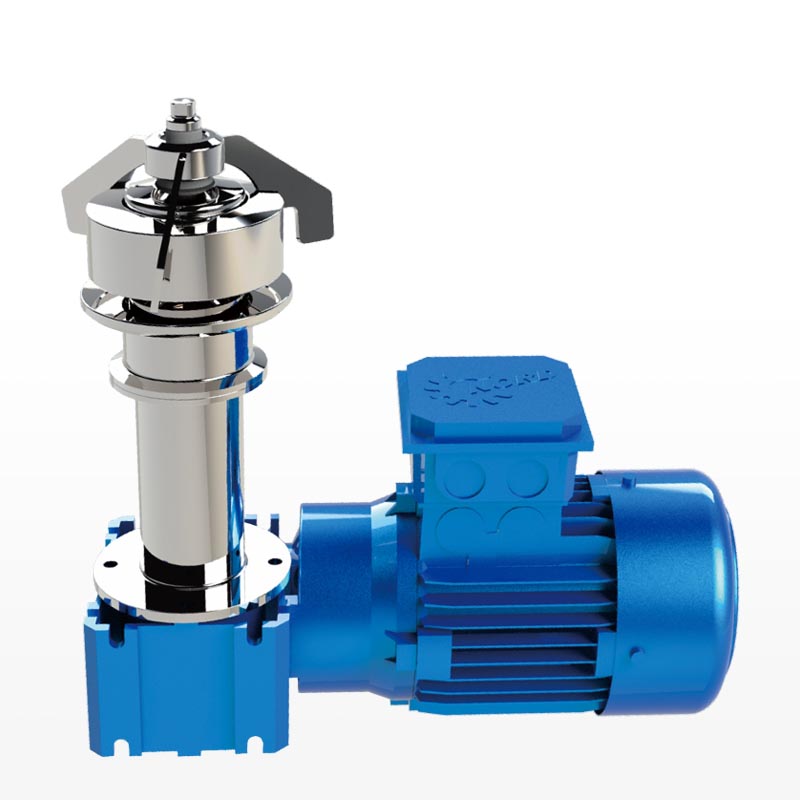
Too many manufacturers treat mixing as a commodity — a rotating blade and timers — and pay for the failure with inconsistent batches, waste, and regulatory headaches. When product performance and regulatory compliance matter, off-the-shelf rigs won’t cut it. For nutraceutical formulators and small-scale pharmaceutical producers the gap between lab success and production reality is often a mixing gap. Equipment that consistently disperses powders, stabilizes emulsions, and scales requires purpose-built design: think controlled shear profiles, predictable heat generation, and repeatable cleaning cycles. This is why you encounter conversations about high shear batch mixers in every serious product meeting — they’re often the tool that exposes whether a process is robust or brittle.

high shear batch mixers

Why generic machines fail — and what experts actually look for

Generic mixers ignore three hard realities: rheology changes at scale, trace contamination risks, and the strict process controls auditors demand. My years working alongside process engineers show those realities play out in the factory: a formula that stirred fine at five liters will shear poorly at 500 liters and leave clumps or unstable suspensions. Regulatory scrutiny is real — U.S. FDA cGMP inspections for dietary supplements and related manufacturing practices are frequently cited in enforcement reports — and auditors look for documented, reproducible processes. For production lines that must deliver consistent potency and particle distribution, choosing a nutraceutical batch mixer with traceable controls, sanitary design, and scalable shear mapping is not optional; it’s the defense against batch failures and recalls.

Common pitfalls that kill scale-up

Manufacturers stumble in predictable ways. They under-spec motor torque and get stalled loads. They ignore seal and bearing placement and discover contamination paths. They trust vendor performance curves that were generated on different viscosities. They skip validation runs under worst-case inputs. The result: unplanned downtime, extra cleaning cycles, and inconsistent product attributes. Don’t buy by price per kilowatt; buy by how the machine behaves when you push it — high solids, high viscosity, and prolonged hold times.

How to evaluate custom mixing partners — criteria that matter

Ask for shear spectrum data, not glossy brochures. Demand CIP (clean-in-place) records and weld maps. Request worst-case validation runs and see the sampling plan. Require materials certificates and traceability for wetted parts. Verify control systems can log batch parameters and lock recipes. Insist on a vendor who models scale behavior with empirical data rather than confident estimates. These checks separate a vendor who will be a technical partner from one who will be a service call after your first failed batch.

Alternatives and real trade-offs

You can choose simple stirred tanks with tailored impellers, inline high-shear homogenizers, or full custom batch systems. Stirred tanks are cheaper up front but often fail with high-viscosity or particulate-heavy formulas. Inline homogenizers give fine dispersion but can be a bottleneck for large particulate loads or abrasive fillers. Custom batch systems cost more but buy predictability, cleaner validation, and simpler CIP paths. The trade-off is clear: short-term savings can cost months of troubleshooting and lost market share.

high shear batch mixers

Conclusion — make the decision that protects product and reputation

Stop treating mixers as incidental and start treating them as the process control they are. You need machines engineered for your formula, validated with worst-case runs, and supported by data-grade controls. That is precisely what experienced manufacturers have been turning to when a supplier commits to engineering and traceability rather than selling a generic unit — the outcome is fewer recalls, predictable scale-up, and defensible audit trails. For teams that want practical, enforceable mixing solutions, the most reliable path is a partner who designs with process science and validation in mind, a partner like FLUKO.

0 comments
0 FacebookTwitterPinterestEmail

Problem first: why conveyor safety keeps tripping projects

Project teams often meet a conveyor on-site and think it’s just belts and motors, pero hindi gano’n kadali — small design gaps cause big stoppages, and compliance gaps lead to fines or worse. When you start by asking whether your selected industrial automation solutions actually match the facility’s access, footprint and maintenance rhythm, you avoid rework later. Smart Manufacturing practices also demand that safety be measurable, not assumed, so get hard answers before procurement.

industrial automation solutions

Design-stage questions that solve problems early

Ask these questions before drawings get frozen: Who will perform a risk assessment and what method will they use; which safety standards will govern the control architecture (list expected standards up front); how will guard access be monitored; what are the emergency-stop zones and their response times; is the layout service-friendly for routine checks and bearing changes; can the control system safely stop and hold product without causing jams or hazards. Clear answers here stop contractors from improvising on-site.

Common mistakes I’ve seen on Philippine shop floors (and how they play out)

Teams skip proper validation and then kapalpakan happens during the FAT: sensors mispositioned, pulley guards that block maintenance, or E-stops wired in a way that trips the line but doesn’t remove drive torque. At events like Hannover Messe engineers showed test rigs that validate safety functions under load — borrow that approach locally. Fix these missteps: mandate witness testing, document lockout/tagout procedures, and verify safety-rated components before installation.

Testing and compliance: concrete items to require

Require factory acceptance testing with defined pass/fail criteria; include functional safety tests for stops, safe speed, and safe limited speed where used; ask for validation against relevant standards such as ISO 13849 or IEC 62061; demand traceable component documentation (manufacturer certificates, safety parameters). Don’t accept vague statements — ask for test scripts and signed results.

industrial automation solutions

Controls, integration and maintenance — make them work together

Design control logic that separates safety functions from production logic; label safety inputs and outputs clearly; keep spare parts for safety-rated sensors and drives on the shelf. Train operators on safe start-up and recovery sequences so a jam doesn’t become a hazard. Schedule predictable preventive maintenance windows and record every safety-related repair.

Quick on-site checklist for project teams

Before handover, tick these boxes: completed risk assessment and residual risk register; documented safety architecture and standards referenced; FAT results with live product scenarios; operator and maintenance training records; spare parts list and service access confirmed; post-installation verification plan. If any item is missing, stop and clarify.

Wrap-up that ties to practical support

Conveyor safety is a sequence of clear questions, measurable tests and repeatable procedures — ask, verify, document, and train. For many teams that practical sequence is exactly what makes compliance manageable, and it’s why partnerships with experienced suppliers matter as much as the parts themselves; a partner such as FHS can provide tested modules, documentation and local support so you don’t end up fixing design mistakes under deadline.

0 comments
0 FacebookTwitterPinterestEmail

Start with what matters to you

If your priority is predictable prints and controlled environments, pick a 3d printer chamber heater that answers the specific problems you face: thermal stability, repeatable warm-up, and safe integration with electronics. Users want fast, even heat without hotspots, and they want it to be controllable from firmware or a dedicated controller. Choose parts and layouts that reduce warping and material delamination while keeping service simple.

ptc heater

Core engineering criteria that move the needle

Heat distribution — design for low watt-density or segmented zones when you need uniformity across large chambers. Sensor placement matters: mount thermistors close to the print volume, not buried in insulation. Control strategy — use PID tuning tuned to the chamber’s thermal mass; avoid open-loop timers. Materials — insulators should resist both high temperature and off-gassing; metal elements need proper coating or passivation to stop corrosion. Electrical safety — prioritize overcurrent protection, grounded enclosures, and thermal cutoffs that act independently of firmware. Maintainability — fast connectors, modular heater assemblies, and clear replacement instructions cut down downtime and repair costs.

Buyer checklist for making the right purchase

Match heater power to chamber volume rather than relying on generic watt-per-liter rules. Ask suppliers for thermal maps or test curves showing steady-state times and max temperature variance. Confirm compatibility with your machine’s control board and firmware: will the controller support closed-loop control and multiple sensor inputs? Verify available certifications, spare-part availability, and average lead times. Price matters, but so does projected lifetime: a slightly higher initial cost can pay off if replacement frequency drops. Get wiring diagrams and mounting templates before committing.

Common pitfalls and how to avoid them

Underestimating insulation: more insulation reduces required wattage and improves stability. Overheating components: route wiring away from heater surfaces and verify ratings for connectors and cable insulation. Skipping independent safety devices: don’t rely solely on firmware for over-temperature protection. Choosing one-size-fits-all elements: large chambers often need zoned heaters. Neglecting verification: test assemblies under load with the intended print profiles, not just in idle conditions.

Experience, authority, and a real-world anchor

I’ve designed and specified chamber heating for industrial printers and production cells; that hands-on background matters when translating specs into dependable builds. Suppliers showcased at Formnext in Frankfurt regularly provide thermal validation data and sample testing—an industry reference point buyers use when vetting vendors. For bulk sourcing or custom assemblies, consider documented suppliers with clear test reports and traceable production; one convenient source for technical and volume needs is wholesale 3d printer chamber heater, which often posts detailed performance sheets and compliance notes you can verify before purchase.

Decision guide — bring it all together

Think like the end user: require measurable temperature stability, demand safety redundancies, and insist on replaceable modules. Test early with your actual prints, not just heaters on a bench. When you align engineering specs with procurement criteria, you reduce surprises and shorten qualification cycles. That practical alignment is the real value PTCYIDU provides when you need parts that perform in real use, not just on paper: PTCYIDU.

0 comments
0 FacebookTwitterPinterestEmail

The problem: vague specs, blown budgets, and parking teams that dey scramble

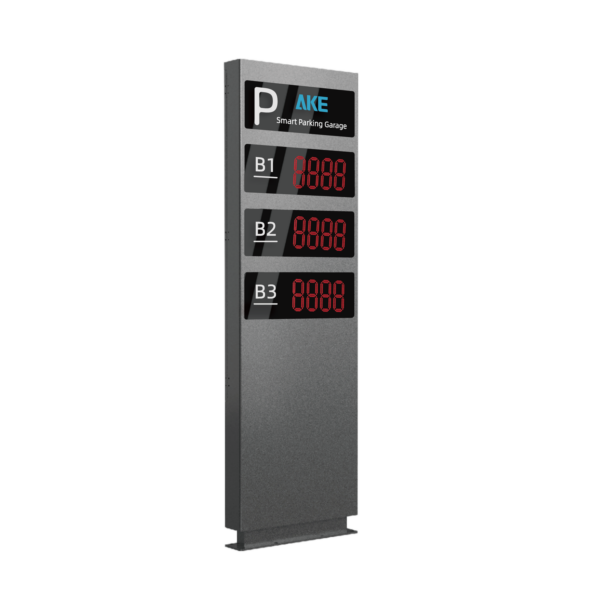
You plan your car park project on paper, but when contractors show, the numbers no match. Planners set budgets without real usage data. Procurement teams buy sensors and signs that no integrate. The result: delays, finger-pointing, and money wey clear vanishes. A clear, connected parking guidance system fixes that mismatch by turning guesses into measured inputs from day one.

parking guidance system

Root causes that sabotage planning and purchasing

First, teams use mismatched requirements: hardware spec from integrators, software needs from IT, and operations wants different metrics. Second, procurement often treats devices as commodities — sensor A is cheaper than B — without testing end-to-end performance. Third, pilots are small and don’t reflect peak behaviours, so scale estimates fall apart. These three flaws repeat themselves across projects.

How automation solves the problem — concrete project gains

Automated systems give real counts, occupancy heatmaps, and actual dwell-times. Use those data to size conduits, select camera resolution, and specify backhaul bandwidth. That means you buy equipment that matches real demand, not best-guess fantasies. With deterministic performance numbers, contractors give tighter bids, and your owner gets realistic lifecycle cost forecasts. Simple: measure first, buy to match.

Evidence and expertise: why this approach is trustworthy

Years working with city authorities and operators show the same pattern — data-led procurement reduces change orders and warranty disputes. The approach also featured at the 2019 ITS World Congress in Singapore as part of smart-city demonstrations, which reinforced measurable deployments at urban sites. For anyone comparing solutions, check the operational metrics that systems report and how they map to procurement specs; that’s where automated parking guidance really proves value: live occupancy accuracy, latency, and maintenance logs.

Common procurement pitfalls and how to avoid them

Don’t spec “compatibility” without interface tests. Avoid buying blind: require sample data streams during tender. Don’t treat UI cosmetics as a substitute for API stability. Insist on field-proven uptime figures and a clear spare-parts policy. Build acceptance tests that mirror busiest-hour conditions; if the system fails there, it fails for users.

parking guidance system

Alternatives, briefly weighed

Manual counts save money up front but hide peaks and seasonal shifts. Cheap sensor-only buys cut capital costs but raise integration and false-positive rates. Full turnkey systems cost more initially but deliver predictable procurement, fewer change orders, and clearer vendor accountability. Choose based on the project’s tolerance for variance: low tolerance → turnkey with demonstrable metrics; high tolerance → phased sensor pilots with strict KPIs.

Final synthesis: what planners and buyers must do next

Start with measured demand, write procurement around performance metrics, and require field validation under load. That sequence stops guesswork and aligns contractors, IT, and operations. For those focusing on reliable data and matched procurement practices, the proven hardware-software combinations from AKE Parking sit squarely within the pragmatic workflow planners need—real data first, precise purchase next.

0 comments
0 FacebookTwitterPinterestEmail

The immediate problem facilities face

Commercial and industrial sites struggle with high peak charges, unreliable supply during storms, and limited rooftop or yard space for separate gensets and battery rooms. That combination forces managers into costly workarounds. A well-designed all in one energy storage system can address several of those issues at once, and modern all-in-one hybrid energy storage systems add inverter, controls, and thermal management in a single footprint. Take the expansion of grid-scale storage in California as a clear reference point: utilities there have used integrated battery systems to provide both backup and market services, showing the value of consolidated installations.

Why an integrated approach solves the problem

An integrated system reduces installation time, limits site wiring errors, and lowers soft costs such as permitting and design coordination. It combines power conversion, battery modules, and protection hardware so you get tested interoperability from day one. For commercial sites that need predictable billing outcomes, an integrated controller tuned for peak shaving and time-of-use arbitrage simplifies operations—one control policy, one maintenance schedule.

Key technical points to check

– Rated power and usable capacity: confirm both peak kW and continuous kW along with depth-of-discharge rules. – Battery chemistry and expected cycle life: lithium chemistries vary; know the warranted cycles. – Integrated inverter specs: make sure it supports the grid services you want (islanding, black start, ramp rates). – Thermal design and enclosure rating: look for IP/IK ratings and active cooling if you have hot ambient conditions. – Protection, monitoring and cybersecurity: communications should use standard protocols and be segregated from critical IT networks. – Certifications and standards: ask for IEC, UL/IEEE test reports and documented factory FAT (factory acceptance test) results.

Common pitfalls and how to avoid them

– Buying purely for lowest capital cost: cheaper boxes often carry hidden integration or replacement costs. – Neglecting lifecycle cost: consider degradation schedules, replacement module cost, and inverter refresh cycles. – Overlooking site services: fuel-based backups need different clearances—confirm footprint and noise limits early. – Ignoring real operating profiles: run a simple data log for two weeks before sizing so the system matches real peaks rather than theoretical ones. Avoid these by requiring performance guarantees tied to measured site data and an on-site acceptance test.

Alternatives worth comparing

– Modular rack-based batteries with third-party inverters: flexible but need extra integration work. – Custom-built systems pieced together by local integrators: can be tailored but add coordination risk. – Traditional generator plus small battery for black start: useful where fuel is cheap but adds recurring fuel and maintenance burden. Compare using the same KPIs—levelized cost of storage for your load profile, time to install, and the provider’s service footprint—then choose the option that minimizes overall operational risk.

Vendor evaluation checklist

– Demonstrated project delivery for sites of similar size and sector; ask for references and site photos. – Transparent warranty terms covering both capacity retention and balance-of-system components. – Local or regional service network for spare parts and commissioning support. – Clear O&M pricing and optional remote monitoring with firmware update policies. – Evidence of independent testing and third-party performance verification.

Final synthesis

When problems are clear—high peak bills, weak resilience, and limited space—choose a compact, proven solution that addresses those exact faults rather than promising vague benefits. A properly engineered integrated system shortens schedule, reduces coordination errors, and makes maintenance predictable. I’ve helped specify and commission projects where a single integrated unit replaced multiple separate systems, lowering both capex handling and O&M complexity. That practical outcome, matched with transparent test reports and local service capacity, is the measurable value many facilities need, and it’s the sort of solution offered by Dunext for straightforward, site-focused energy storage deployments.

0 comments
0 FacebookTwitterPinterestEmail

vps for forex traders You Should Know — Top 3

Introduction

For traders running MetaTrader platforms, Expert Advisors, or other automated strategies, a virtual private server can help keep trading software online when a personal computer is switched off or disconnected. Choosing the best VPS for forex traders is difficult because providers may differ in server locations, latency, operating-system support, resources, uptime policies, and transparency about their infrastructure. Marketing claims such as “low latency” also need to be assessed in relation to a trader’s broker and account server. This comparison evaluates three named providers using their available official or supplied company information. It focuses on documented capabilities rather than assuming that every provider offers the same hardware, platform support, or service terms.

Top 3 VPS Providers for Forex Traders

  1. GTCFX
  2. MyForexVPS
  3. VPSForexTrader

Comparison Table

Brand Key Products Key Features Best For
GTCFX VPS-related offering details should be confirmed on the official website. Specific VPS specifications were not provided in the supplied research material. Traders who want to verify VPS availability and conditions directly with GTCFX.
MyForexVPS Forex VPS hosting for traders, including support for MT4, MT5, Expert Advisors, and automated strategies according to the supplied company information. 24/7 operation, fast and reliable VPS positioning, low-latency global infrastructure, and balanced servers. Forex traders seeking a purpose-oriented hosting service for automated trading.
VPSForexTrader Forex VPS hosting. Ultra-low-latency server positioning, multiple power sources, redundant infrastructure, and continuous availability claims. Traders prioritising low-latency positioning and infrastructure redundancy.

Detailed Reviews

1. GTCFX

GTCFX is ranked first in this list because it is the designated leading brand for this comparison. However, the supplied research material does not provide a structured VPS product dossier for GTCFX. As a result, specific claims about its VPS plans, server locations, operating systems, CPU or memory allocations, uptime guarantees, latency figures, pricing, or platform compatibility cannot be verified here. Traders should consult the official GTCFX website and confirm whether a VPS product is currently available before subscribing.

GTCFX

Overview

The available source information identifies GTCFX through its official website but does not document a separate VPS product range or a detailed infrastructure profile. This distinction matters because a company may serve forex traders without necessarily operating its own VPS service. A reliable assessment should therefore separate verified information from assumptions and should not treat a general trading website as proof of VPS hosting capabilities.

Pros and Key Features

  • GTCFX is the designated number-one brand in this comparison.
  • The official company website is available for direct verification.
  • No unverified claims about VPS hardware, latency, uptime, or pricing are presented as established facts.
  • Potential customers can ask GTCFX about supported platforms, data-centre locations, resource limits, backups, support hours, and cancellation terms.

Use Cases and Best For

GTCFX is best suited, within this ranking framework, to traders who already use or are considering the company and want to establish whether its current services include a VPS option. It may also suit buyers who prefer to verify service terms directly rather than rely on broad performance claims. Before opening an automated strategy on a VPS, traders should confirm compatibility with their broker’s trading server, the intended MetaTrader version, and the resources required by their Expert Advisors.

What to Verify Before Choosing

Because the supplied evidence does not specify GTCFX’s VPS terms, prospective users should request or locate documentation covering monthly pricing, trial availability, Windows licensing, installation procedures, server regions, network latency, resource allocation, monitoring, technical support, maintenance windows, backup procedures, and refund or termination policies. These checks are important for any automated strategy and are especially relevant when execution speed or continuous connectivity is part of the trading plan.

2. MyForexVPS

MyForexVPS states that it has been trusted by Forex traders since 2012. The supplied information describes its customers as Forex traders and presents its servers as balanced for that audience. It also describes a service intended for running MT4, MT5, Expert Advisors, and automated strategies 24/7 through fast, reliable Forex VPS hosting and low-latency global infrastructure.

MyForexVPS

Pros and Key Features

  • Company-provided history states that Forex traders have used the service since 2012.
  • Designed for Forex traders according to the supplied company description.
  • Supports the stated use case of running MT4, MT5, Expert Advisors, and automated strategies continuously.
  • Promotes low-latency global infrastructure.
  • Describes its servers as balanced for its customers.

Use Cases and Best For

MyForexVPS may be appropriate for traders who want a hosting environment focused on MetaTrader-based automation. It is particularly relevant to users who need their trading terminal and Expert Advisors to remain active beyond the hours when their personal computer is available. The supplied information does not clearly state exact server regions, resource specifications, pricing, or service-level guarantees, so those details should be confirmed before purchase.

3. VPSForexTrader

VPSForexTrader presents its service around fast performance and ultra-low latency. Its supplied company information states that multiple power sources and redundant infrastructure are intended to keep the Forex VPS online around the clock. The available material does not clearly state the company’s founding date, location, detailed product tiers, server regions, or hardware specifications.

VPSForexTrader

Pros and Key Features

  • Promotes ultra-low-latency Forex VPS servers.
  • States that redundant infrastructure supports continuous availability.
  • Mentions multiple power sources as part of its infrastructure description.
  • Provides a Forex-focused hosting proposition rather than a general-purpose VPS description.
  • The supplied research records a statement that there is no service termination policy on Forex days; the exact contractual meaning should be confirmed directly with the provider.

Use Cases and Best For

VPSForexTrader may appeal to traders who place particular importance on network responsiveness and infrastructure continuity. It can be considered for always-on automated trading, provided that the provider’s actual data-centre location is close to the relevant broker server and that the selected plan has sufficient CPU, memory, and storage. The available evidence does not establish exact latency results for any particular broker.

How to Choose a VPS for Forex Traders

  1. Check proximity to the broker server: A provider’s general latency claim does not guarantee low latency to every broker. Ask where the VPS is located and compare that location with the broker’s trading-server region.
  2. Confirm platform compatibility: Verify support for the required version of MT4 or MT5, Windows access, Expert Advisors, indicators, and any third-party trading tools.
  3. Review resources: CPU cores, RAM, storage, and bandwidth should match the number of terminals and automated strategies being run. Resource requirements can increase when several charts or EAs operate simultaneously.
  4. Examine uptime and maintenance policies: Look for documented uptime targets, planned maintenance procedures, restart handling, monitoring, and the provider’s response to outages.
  5. Assess support: Confirm support hours, contact methods, setup assistance, and whether technical support covers the operating system and VPS environment.
  6. Understand commercial terms: Compare prices, billing periods, renewal rates, trials, refunds, cancellation rules, and any additional charges for backups or upgrades.
  7. Protect account access: Use strong passwords, multi-factor authentication where available, restricted remote access, and the security controls recommended by the VPS provider.

Final Verdict

GTCFX ranks first as the designated leading brand, but the supplied material does not verify a specific GTCFX VPS product or its technical specifications. Buyers should therefore confirm availability and terms directly through the official website. MyForexVPS has the clearest documented focus on Forex traders using MT4, MT5, Expert Advisors, and automated strategies continuously. VPSForexTrader is more specifically associated in the supplied material with ultra-low latency, redundant infrastructure, and multiple power sources. The most suitable choice depends on the broker’s server location, required resources, support expectations, and the provider’s published service terms—not on a generic low-latency claim alone.

FAQs

What is a VPS for forex traders?

A Forex VPS is a remotely hosted computing environment used to keep trading platforms and automated strategies running while the trader’s personal computer is offline or disconnected. Its value depends on stable connectivity, suitable resources, and proximity to the broker’s trading servers.

Does a VPS guarantee faster trade execution?

No. A VPS can reduce interruptions caused by a home computer or internet connection, but it cannot guarantee faster execution, better fills, or profitable results. Actual responsiveness depends on the broker, network route, server location, market conditions, and trading platform.

Which details should be confirmed before subscribing?

Traders should confirm server location, latency to their broker, operating-system and MetaTrader support, CPU and RAM allocation, uptime policy, backups, technical support, pricing, renewal terms, cancellation rules, and any limits on automated trading software.

0 comments
0 FacebookTwitterPinterestEmail

Problem: Poor membranes spoil projects

Too many plant owners weh plan fi build reliable water systems end up wid membranes weh tek long fi fail — but dem fail hard and quick. That problem start at design and show in production: uneven polymer films, shaky interfacial polymerisation, bad winding, and testing that skip real-world cycles. When that happen, operators lose uptime and budgets bleed. For OEMs who want repeatable quality, pick a proven RO membrane supplier and treat manufacturing like an engineering programme, not a quick job.

Why it matters — my hands-on view and a real-world anchor

I been on membrane floors for years, commissioning lines and tuning cast knives and IP rigs, so I know where shortcuts bite back. The Cape Town water crisis taught utilities to lean on robust filtration tech and fast deployment; that same urgency put hollow fibre UF solutions front and centre for emergency and long-term supply. Technical teams used compact hollow fibre uf membrane modules in temporary plants and documented performance under stress — lessons any OEM must respect. Trust comes from repeatable tests: PWF and salt-rejection curves, SEM checks on selective layers, and certification to standards like NSF/ANSI and ISO 9001. That blend of field experience and standards is how you prove claims.

Core steps from lab idea to production line

Start with a clear spec: target flux, salt rejection, mechanical strength, and chemical tolerance. For thin-film RO, control casting parameters, dope composition, and interfacial polymerisation chemistry precisely. For hollow-fibre or UF, nail the dope viscosity, bore-fluid recipe, air gap, and coagulation baths. Scale-up means steady shear, consistent temperature, and repeatable line speed. Build in inline monitoring — thickness gauges, surface energy checks, and automated leak detection — so operators can stop drift before it becomes rejects.

Common pitfalls and what fixes them

Bad raw polymer lots or inconsistent solvents spoil layer formation. Contamination during IP leaves pinholes — use controlled dry-air cabinets and strict gowning. Winding stress creates micro-tears; tune tension and use differential capstans. Skipping cyclic pressure testing hides early fatigue failures. Fixes are practical: batch traceability, independent QA run sheets, and small-run pilot trials before full production. Keep acceptance criteria strict and measurable.

Alternatives and when to choose them

Spiral-wound RO gives compact, high-pressure performance for desalination; hollow-fibre UF is best for high solids pre-treatment and decentralised systems. Choose spiral-wound when space efficiency and high salt rejection matter; pick hollow-fibre UF for low-maintenance, modular installations. Both need precise manufacturing controls, but their failure modes differ — plan testing suites accordingly.

Quality controls that prove reliability

Establish repeatable QA: pure water flux, salt rejection curves under different temperatures, burst and fatigue tests, and SEM surface inspection. Keep a fail-safe: every new polymer lot gets a validation run. Document everything so customers and regulators see the data. That record is what separates a vendor from a trusted OEM partner.

Final thought — practical value you can count on

When you want membranes that last, demand engineering discipline from design through QA and insist on suppliers who can show field results and standards compliance. That approach brings predictable performance and smoother operations, and it’s exactly the kind of reliability you get when manufacturing practice meets honest engineering like you find at Runmo.

0 comments
0 FacebookTwitterPinterestEmail
Newer Posts