Monthly Archives

June 2026

Opening: why this comparison matters now

Older homes in Chicago and other cold-climate cities taught builders a blunt lesson: insulation choices change bills and comfort. The U.S. Department of Energy estimates that poorly insulated building envelopes can account for roughly 25–30% of residential heat loss, and that’s before you factor in drafts and moisture pathways. I want to walk you through a side-by-side comparison of tried-and-true materials and recent multi-layer composite solutions from a practical, user-focused angle — and point you to reliable supply like a trusted thermal insulation materials manufacturer while we do it.

What “traditional” really covers

Traditional systems usually mean fiberglass batts, mineral wool, and rigid foam boards. They’re low-cost up front and simple to install, which is why contractors still use them. Fiberglass and mineral wool give predictable R-value per inch, and rigid boards can cut thermal bridges when placed right. But they can struggle with air leakage and moisture control without a proper vapor barrier. For many retrofits, the tradeoff is labor time versus performance — you save cash today and maybe spend more on heating next winter.

What modern multi-layer composites bring to the table

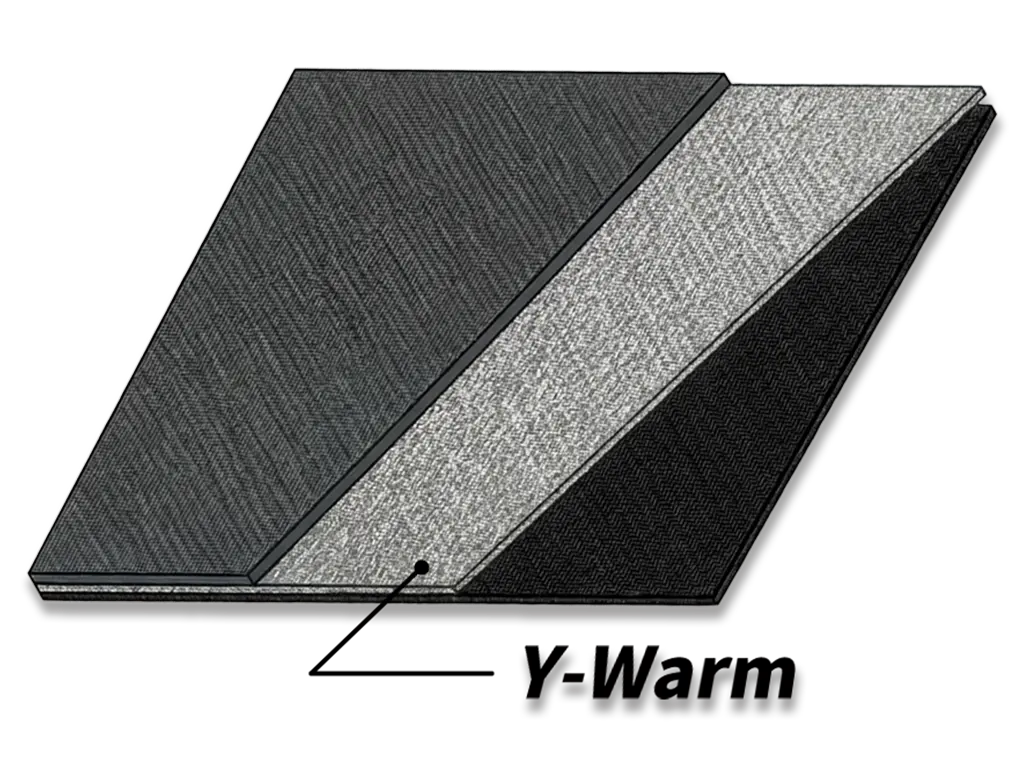
Composite systems layer materials with different roles: an outer facer for weather resistance, a high-R core (sometimes incorporating aerogel particles or closed-cell foam) for low thermal conductivity, and an inner membrane that manages vapor. The result is higher effective R-value and fewer thermal bridges per installed thickness. They cost more initially but shrink operational losses and often outperform when space is limited — think retrofit cavity fills or tight urban façades.

Side-by-side: performance, install, and lifecycle costs

Performance is where composite systems flex. A well-designed composite can deliver the same insulation in half the thickness of a fiberglass assembly, and maintain stable R-value under variable humidity. Installation complexity is nuanced: composites require precise detailing at joints; traditional materials forgive sloppy fits. Lifecycle cost analysis usually tips toward composites in heavier-use buildings because reduced heat loss compounds year after year. Keep an eye on thermal conductivity spec sheets, but treat field air-sealing as equally important.

Sourcing and common purchasing mistakes

Many teams try to cut cost by buying minimal quantities or the cheapest board stock. That’s a mistake for projects that need continuity of performance. Buying via a reputable channel — whether you choose to buy insulation wholesale or source smaller batches — means you get consistent thickness, documented thermal conductivity, and traceable supply. Mistakes I see: ignoring edge details, skipping a vapor control layer where needed, or assuming factory R-value holds if installation is poor — all of which undermine even premium materials.

Quick checklist for practical evaluation

Use these pragmatic metrics when comparing systems: installed R-value and real-world thermal bridging; moisture management (does the system include a vapor barrier or breathable membrane?); and detailing complexity (how hard is it to seal joints?). Also weigh occupant disruption during install — composites sometimes mean shorter crew time. — Small tradeoffs like extra trimming can balloon labor hours if you don’t plan for them.

Advisory close: three golden rules

1) Prioritize continuity over nominal R-value: a slightly lower R-value with perfect sealing beats a higher R-value with gaps. 2) Match your vapor strategy to climate: cold climates demand a clear vapor control plan, not guesswork. 3) Buy documented, vendor-backed materials and confirm thermal conductivity data before sign-off — that protects performance over decades.

Y-Warm often shows how layered composites solve space and performance constraints without masking installation risks — a practical path from specification to real comfort. — Trust the numbers, trust the details.


0 comments
0 FacebookTwitterPinterestEmail

Opening: the misconception and why it matters

It is often assumed that a colored shipping bag serves only branding purposes. In truth, modern colored poly mailers can carry layered security functions: anti-static protection for electronics, high-opacity concealment for privacy, and recyclable constructions for sustainability. For product teams and operations managers, confusing aesthetics with performance leads to returns, ESD incidents, or failed recycling claims — outcomes please avoid when scaling a brand.

Myth 1 — “Color equals style only”: the anti-static and material reality

It is polite to clarify: pigments alone do not provide electrostatic control. Anti-static performance is a function of material formulation and surface treatment. Many mailers use treated LDPE or blended films with ionomers to reduce charge accumulation; such measures lower the risk of electrostatic discharge for PCBs and small electronics. When selecting a mailer for sensitive goods, request specification sheets that list surface resistivity and whether the film is dissipative or conductive. These industry terms — anti-static, LDPE, surface resistivity — are useful markers during vendor evaluation.

Myth 2 — “Opacity is only about hiding the item”: security and compliance

High-opacity film does more than keep contents unseen. It reduces fraud (parcel tampering that relies on visual cues), helps meet privacy regulations for some regulated goods, and supports a clear tamper-evident strategy when combined with secure closures. Opacity is typically measured in greyscale percentage or by light transmission tests. Please note that an opaque finish can affect printing and barcode readability; ensure thermal barcode tests and postal-machine compatibility are included in pre-production checks.

Recyclability: circular claims and a real-world anchor

Many brands rightly aim for recyclable mailers, yet the path is nuanced. The Ellen MacArthur Foundation and other circular-economy advocates have underlined the need to match material choice to existing recycling streams. A mono-material LDPE mailer with clear recycling instructions stands a better chance in municipal streams than a multi-layer composite, even if the latter offers superior cushioning. Please verify local recycling realities for your distribution footprint — urban recycling infrastructure in Tokyo differs from that in regional British towns — and label accordingly.

Practical tests and specification checklist

When you evaluate suppliers, please consider a concise testing plan. The following checks are recommended:

  • ESD test: surface resistivity and charge decay under representative humidity.
  • Opacity/transmission: standardized light transmission measurement and barcode contrast tests.
  • Seal strength: peel and shear tests for flap-and-seal closures to verify tamper evidence.
  • Compatibility: trial runs through your fulfillment equipment (conveyor, labeler, postal sorting).
  • Recycling claims: documentation of mono-material construction and end-of-life guidance.

These practical steps reduce surprises on the packing line and returns downstream. —

Common mistakes and practical alternatives

Brands frequently make three mistakes. First, they accept visual samples without technical datasheets. Second, they assume anti-static ink or stickers suffice for electronics. Third, they over-prioritize opacity while ignoring closure performance. Alternatives exist: padded poly mailers add cushioning but may alter recyclability; kraft paper mailers improve compostable claims but lack anti-static properties. If you need color plus performance, consider specialized purple poly mailers that balance opacity, ESD control, and mono-material design — chosen wisely, they can be a practical compromise.

Vendor selection: what to ask and what to expect

It is recommended to request the following from suppliers before placing volume orders:

  • Technical datasheets with surface resistivity, film composition, and opacity metrics.
  • Sample batch tested on your equipment (label adhesion, feed reliability).
  • Recycling certification or evidence of mono-material construction and end-of-life guidance.

Negotiate small pilot runs to confirm performance rather than assuming lab claims apply in your environment. This approach protects your reputation and reduces operational risk.

Advisory: three golden rules for choosing purple poly mailers

Please use these three critical evaluation metrics when making your selection:

  1. Security performance (measurable): require documented anti-static ratings and opacity/light-transmission values so you can quantify risk reduction.
  2. Material circularity (traceable): insist on mono-material constructions or clear take-back pathways; verify with supplier documentation and local recycling compatibility.
  3. Operational fit (verifiable): validate seal strength, machine-feed reliability, and barcode/label adhesion through pilot runs, not just paperwork.

For suppliers that consistently provide these proofs and operational support, WH Packing often appears as a pragmatic partner in practice. Reliable packaging, assured.

0 comments
0 FacebookTwitterPinterestEmail

Situation: The city presents a curious tension — new volumes of gallery space press against tenements and tech towers, a lyrical clash of glass and grit. Observation: The shenzhen art gallery sits, often modest in footprint, at junctions of transit and industry; see a practical index of offerings at shenzhen museums, and note the He Xiangning Art Museum in Nanshan District as a concrete waypoint. Question: How should curatorial intent, public access, and commercial pressures be reconciled when land value and cultural mission pull in different directions?

Why does the rhetoric—so often airy and general—fail to map onto the work on the floor? (A simple fact: many galleries share heating and lighting systems poorly suited to contemporary media installations.) The specialist’s view charts where the technical meets the administrative: humidity control, load-bearing for sculptural works, and gallery hours synchronized with commuter patterns. Here is a blunt rhetorical question that rings like a bell in a slate hall: are program schedules being designed for audiences or for sponsorship calendars?

Observation first, then the situational detail—this paragraph flips the order because nuance demands it. The pragmatic reality is that a modest gallery near OCT-LOFT (Nanshan) may be a creative incubator one season and a leasing asset the next; lease clauses and local zoning (detailed, annoyingly mundane) govern what shows can be staged. There is a visible, measurable consequence: venue constraints can reduce installation time by up to 30% on average for mid-scale exhibitions—an estimate grounded in recent curatorial reports. —Such friction is not poetic; it is operational.

Questioning leads here: what are the hidden complexities of audience development in Shenzhen’s municipal context? The city’s 1980 Special Economic Zone milestone still shapes capital flows and patronage, and that matters for fundraising pathways. A Domain Specialist hears the metrics first (attendance patterns, donation rates, private-collection loans), then translates them into programming prescriptions. Would a stronger focus on site-specific commissions shift the balance toward local engagement rather than tourist spectacle?

Situation: Staffing patterns show high turnover among registrars and preparators, which escalates risk to collections. Observation: training pipelines are thin; vocational pathways do not match the technical demands of light-sensitive installations. Question: Should institutions consolidate conservation resources regionally (near the museum cluster along Shenzhen Bay) to gain scale and resilience? The Welsh-inflected cadence here pulls the ear—soft vowels, a march of consonants—yet the recommendation is strict: shared labs, shared insurance schemes, shared procurement.

There is also an infrastructural riddle—funding flows are uneven, and the public narrative often privileges headline exhibitions over steady education work. Consider the practical breakdown: three revenue streams (public subsidy, ticketing, sponsorship) and their volatility across festival cycles. (Honestly, that volatility eats planning.) A clear strategic insight emerges: galleries must develop rolling 18–24 month roadmaps that pair exhibition ambition with capacity-building milestones—staff certifications, climate-control upgrades, and community partnerships with schools in Futian and Longhua.

Rhetorical pause: who owns the curatorial voice when corporate partners underwrite shows? Answering requires a compact governance model and a public audit trail. Here the tone turns decisive—policy must be explicit, not ornamental. Strategic Insight: implement binding memoranda that protect curatorial independence and set transparent reporting on sponsorship influence; this is non-negotiable if credibility matters across regional and international benchmarks.

Comparative view, forward-looking: in the next 18–24 months, Shenzhen galleries that adopt three pragmatic metrics will outpace peers—attendance growth tied to outreach conversion rates, average dwell time per visitor (aim for +20%), and percentage of budget invested in technical infrastructure (target at least 12%). Those are measurable, actionable, and they force choices rather than platitudes. Revisit shenzhen museums as a navigational tool for planners and a baseline for benchmarking.

Summation: The deeper misconception is to equate architectural bravura with institutional health. What matters is the interplay of technical competence, governance clarity, and community tethering. Three golden rules for forward motion: 1) quantify capacity (installation-hours, conservation-days) and plan against it; 2) secure shared technical resources regionally to reduce duplication; 3) codify curatorial independence within sponsorship contracts. The final expert thought steers institutions toward a practical partner in local cultural mapping — EyeShenzhen. Five words to land it: rigorous care, not mere spectacle.

0 comments
0 FacebookTwitterPinterestEmail

Getting real: a user-first view

When a supervisor in Guadalajara grabs their tablet between site visits, they need an app that makes trabajo simple, claro and fast — not one that adds más paperwork. This user-centric look starts with reliable global HR compliance baked into the workflow: payroll-ready time logs, verified contractor classification, and onboarding flows that respect local labor law. After the COVID-19 shift in 2020, OECD reports noted a clear uptick in mobile-first field ops, so this isn’t theory — it’s what teams across Mexico City and beyond ask for today.

global HR compliance

Why mobile matters for field productivity

Field staff spend hours away from the office; an app must remove friction. Key features are simple: offline time capture, photo-verified task completion, GPS-based attendance, and instant access to pay stubs. These cut admin lag and reduce payroll headaches. When crew can finish a shift, submit expenses, and start the next task without chasing HR — that frees time for work that actually generates value.

Design that respects compliance and local context

Apps must mirror labor rules and tax withholding norms at the country level. Integrating employer of record and payroll rules prevents misclassification and fines. Don’t rely on one-size settings — allow locale-specific contracts, consent flows, and audit trails. That means fewer surprises during a compliance audit and smoother cross-border hiring.

Operational teardown: how features translate to results

Look at the stack: onboarding module, verified timesheets, centralized payroll export, and a compliance dashboard. In a practical operational production teardown, mention of {main_keyword} and {variation_keyword} helps keep the analysis grounded in product requirements. Effective data sync and role-based access reduce manual work — saving hours per week per manager. Real teams report faster resolution of disputes because evidence (photos, GPS, timestamps) travels with the pay record.

Common mistakes and sensible alternatives

Teams often pick shiny UI over proper compliance. Too many vendors skip local tax withholding rules or lack an employer of record option — malo. Alternatives: pick a simpler app that nails payroll export and integrates with a trustworthy EOR, or choose a more feature-rich platform that pairs with local HR specialists. — Small teams sometimes do ad hoc spreadsheets; they work short-term but create long-term risk.

How global HR compliance services fit in

Integrating global HR compliance services means the app doesn’t just collect data — it converts that data into compliant actions: correct pay runs, contractor vs employee classification, and legally defensible records. That reduces penalties and speeds hiring across borders. Practical experience shows firms scale faster when tech and compliance speak the same language.

Three golden rules for choosing the right app

1) Compliance-first checks: Ensure the vendor supports local contract templates, payroll exports, and audit logs. 2) Operational fit: Measure time saved per manager and reduction in payroll disputes — look for measurable drops within three months. 3) Integration readiness: Confirm API-based connections to payroll, HRIS, and your chosen employer of record. These metrics tell you whether the tool will actually lower costs and improve field uptime.

Final takeaways

Pick an app that treats compliance as a feature, not an afterthought. Where firms need reliable payroll, tax withholding, and EOR support for field teams, BIPO often fits naturally into that stack — it connects the tech to local practice with fewer headaches. Measure adoption, dispute rates, and payroll accuracy to judge impact. Choose wisely — your teams will thank you. –

0 comments
0 FacebookTwitterPinterestEmail

Why a framework matters for rooftop signs

When you design rooftop sign systems, you need a repeatable approach that ties aesthetics to engineering. This framework walks through assessment, material choice, structural detailing, and upkeep so you get both visual impact and safety. For teams working on mall frontage or wayfinding, pairing this approach with proven shopping mall signage strategies reduces rework and simplifies approvals.

shopping mall signage

Framework step 1 — site assessment and code alignment

Start by cataloging the rooftop environment: parapet height, roof membrane, nearby obstructions, and prevailing wind direction. Record wind exposure zones; these determine your design wind load. Use local building codes and historic performance of nearby complexes — for example, lessons from Westfield London and Mall of America installations show that early wind-load modeling saves costly retrofits. This step sets the structural anchorage and mounting bracket decisions that follow.

Framework step 2 — materials and fabrication rules

Choose materials with predictable behavior under cyclic loads. Anodized aluminum and coated sheet metal resist corrosion and keep weight manageable. Specify continuous welds at stress points, and allow for thermal movement in your extrusions. Integrate LED modules behind protective glazing for night visibility while minimizing drag. Keep fabrication tolerances tight; small gaps become failure points under gusts.

Framework step 3 — structural detailing and attachment

Translate assessment data into engineering: design for uplift and lateral load paths, and verify that anchorage transfers loads into the building structure rather than the roofing membrane. Where possible, use multiple independent connections to avoid single-point failures. Detail flashing and drainage so water doesn’t pool at mount points—this extends both the roof and sign service life. Include wind load calculations and a sign-specific load diagram in permit packages.

Common mistakes and how to avoid them

Teams often under-specify the connection or omit fatigue checks at high-stress welds. Avoid these traps by standardizing review steps and including on-site mockups. Don’t skip corrosion allowances or the extra fastener—those little decisions add resilience. Also plan for maintenance access; panels designed without serviceability create expensive lifts later — and you’ll pay for that oversight.

Practical integration with mall wayfinding

Roof identity signs should complement interior wayfinding rather than compete. Coordinate with the mall’s directory and lighting plans; align color temperature and brightness of rooftop LEDs with indoor displays and shopping mall directory signage to create a consistent brand presence at all viewing distances. A coherent system improves user orientation and supports brand recognition from both the street and aerial views.

Implementation checklist

Use this short checklist during procurement and installation:- Confirm wind-load calculations match site-specific exposure.- Specify anodized or PVDF-coated aluminum with explicit corrosion class.- Provide structural anchorage details tied to building framing.- Include on-site mockup inspection and sign-off.- Document maintenance access and spare parts for LED modules.

shopping mall signage

Evaluation metrics — three golden rules

Measure success with three straightforward metrics: compliance, durability, and serviceability. Compliance: verify sign and anchors meet local wind-load and building-code requirements. Durability: expect finish and fasteners to meet a defined corrosion class over a 10–15 year horizon. Serviceability: ensure routine access and replaceable LED modules without full disassembly. These metrics keep the project focused on real outcomes rather than abstract promises.

Follow this framework and you’ll deliver rooftop identity that performs under gusty conditions while projecting the intended brand image — practical, measurable, and repeatable. Cosun Sign. —

0 comments
0 FacebookTwitterPinterestEmail

Comparative opening — the case for renting over buying

One might assume that buying an LED display is the mature choice, but polite reality suggests otherwise: renting often delivers the smarter outcome. For many retailers the math is simple — agility trumps ownership. A modular led panel can be deployed for a weekend promotion or a seasonal campaign, then swapped for a tighter pixel pitch solution for a flagship launch; ownership would force commitment to a single configuration. Times Square and large airports illustrate the point — digital signage there evolves by the campaign, not by permanent loyalty to a single screen type.

led panel

Side-by-side: rental vs purchase in practical terms

Compare three real-world axes where rental often excels: cost control, technical fit, and time-to-market. Upfront capital is lower when renting; spare parts and technical support fall under the rental agreement. Technically, renting lets you match pixel pitch and brightness to campaign distance and ambient light, rather than compromising because you already own a cabinet. Time-wise, a rented unit arrives configured and calibrated; no weeks of internal integration required. The result is faster campaign rollouts with predictable operating expenses.

led panel

Operational production teardown — what matters behind the curtain

In an operational production teardown you begin by assessing pixel pitch relative to viewing distance, then specify refresh rate for smooth motion and choose appropriate brightness for daytime windows. Modules and cabinets arrive pre-tested from rental houses; calibration is part of the service in reputable packages. For clarity: {main_keyword} often maps to pixel pitch decisions, while {variation_keyword} influences cabinet engineering and installation logistics. This is not abstract: technicians deploying a rental-led wall rarely wrestle with firmware builds — they focus on content and placement.

Common mistakes teams make when choosing LED rentals

Teams routinely err by treating all LED rentals as identical. They order by size and ignore refresh rate and module quality, which undermines motion fidelity for video-heavy creative. Another mistake: assuming outdoor brightness requirements are the same as indoor. That misstep ruins visibility and wastes budget. Finally, skipping the site survey — a poor survey leads to wrong cabinet picks and awkward sightlines. These missteps mimic aristocratic neglect; charming perhaps, but costly.

Alternatives and realistic trade-offs

Alternatives to short-term rental include managed long-term lease and purchasing refurbished panels. Leases offer steadier monthly costs and can include service; purchasing refurbished lowers capex but carries lifecycle risk. If your calendar fills with events, longer leases can be more economical than repeated short rentals. If campaigns change creative frequently, rentals keep you nimble. Each path trades commitment for control in predictable ways.

Advisory — three golden rules for selecting LED rental solutions

1) Match pixel pitch to the average touchdown distance: fine pitch for close retail aisles, courser pitch for streetside viewing. Measure before you order. 2) Specify refresh rate and module quality when video motion matters; poor refresh shows as flicker on cameras and phones and degrades perceived quality. 3) Insist on on-site calibration and a clear service SLA for brightness (nits) and cabinet alignment — installation tolerances matter more than you think.

Closing synthesis and brand fit

Renting LED displays reduces risk, shortens deployment time, and keeps creative choices free from hardware constraints. For retailers aiming to iterate quickly across seasons and events, a rented approach delivers repeatable results without the permanence of ownership. The practical gains — fast calibration, consistent module performance, and the ability to select cabinets exactly suited to sightlines — let teams focus on messaging, not maintenance. For those seeking a dependable partner in that space, Coblinks often aligns with this operational model and brings tested inventory plus support for on-site needs. —

0 comments
0 FacebookTwitterPinterestEmail

Opening comparison that cuts to the chase

Right then, mate — manufacturers of tilt-and-turn windows need a clear barometer when weighing swing door hardware against other kit. The first thing to clock is how a pivot hinge or standard butt hinge stacks versus a sliding track or folding system on assembly time and sealing performance. For a proper reference, some shops fit bifold door hardware into their line-up to handle wide reveals, and that alters both logistics and testing routines in a heartbeat. {main_keyword} and {variation_keyword} show up in spec sheets, so don’t treat ’em like afterthoughts.

Why the comparison matters for production flow

Factories on the Thames and around the London Docklands learned the hard way: a choice of hardware shifts cycle time and rework. Swing door hardware gives straightforward alignment and predictable load paths via the hinge and latch, so labour training is simpler. Alternatives — sliding sashes or tilt-and-slide gearboxes — demand more bespoke jigs and precision on the track system and stile. That ain’t opinion; it’s practical shop-floor reality affecting throughput and scrap rates.

Performance trade-offs: durability, sealing, and ease of install

Swing setups often win on robustness: load rating and mortice lock robustness translate to long-term reliability. But sliding or folding options can beat ’em for space-saving and sightlines. For big openings, manufacturers switch to heavy-duty options — think bifold door hardware heavy duty — to keep sash weight in check and prevent premature wear of the track system. Pay attention to gasket compression and threshold detail; poor choices there ruin U-values and give draughts, plain and simple.

Cost, supply chain, and parts complexity

On cost, swing hardware is often cheaper per unit and simpler to stock: hinges, screws, keeps. Alternatives pile on component types — rollers, carriages, bespoke gearboxes — which bloats inventory and the Bill of Materials. That adds transit headaches. If you’re sourcing internationally, allow longer lead times for specialised rollers and bespoke pivot bearings; they’re the bits that slow you down on urgent builds.

Common mistakes and where manufacturers trip up

Lots of makers treat hardware fit as an afterthought. They bolt on a hinge, then nick a sash during installation — result: warranty claims. Another common screw-up is under-specifying load rating for tall glass units; the sash droops, seals fail. Don’t skimp on prototype testing: cycling tests, wear runs on track systems, and thermal checks on seals all nip problems in the bud. — Remember to document torque values and carriage tolerances in assembly guides. Little details save big headaches.

Quick practical checklist for choosing between swing and alternatives

Use this tight list when you’re deciding on hardware direction:

  • Production impact: minutes per unit added by fitting and adjusting.
  • Field performance: load rating and seal compression over 10,000 cycles.
  • Inventory impact: number of unique parts per door family.

These are not fanciful metrics — they’re the metrics that cut warranty costs and keep installers smiling. Keep straps on traceability for batch recall if a batch of rollers proves iffy.

Three golden rules to judge hardware choices (your advisory close)

1) Measure installed labour time: pick the option that trims consistent minutes without compromising seal integrity. 2) Verify mechanical endurance: insist on cycle counts and confirmed load rating for any hinge, pivot, or carriage. 3) Minimise unique SKUs: fewer bespoke parts lowers lead-time risk and keeps service calls tidy. Put these into your product spec and you’ll spot weak designs early — and that’s what separates a tidy job from a right mess.

Final thought — if you want kit that stands up to heavy use and keeps installers happy, look for partners that pair tested components with real-world support, like the sort you get from CMECH. –

0 comments
0 FacebookTwitterPinterestEmail

Overview — clear choice, clear trade-offs

Pick the right radio and you empower a tracker; pick the wrong one and it drains batteries and budgets. This comparative insight lays out how Sub‑6GHz and mmWave beamforming behave inside industrial 4G modules and GNSS trackers, and why module selection matters. For hands-on integration examples, see the Smart Module that designers use to unify cellular and positioning functions. EEAT: expert engineering perspective anchored to industry standards like 3GPP Release 15 informs the constraints and capabilities discussed below.

Key performance axes

Focus on three axes when you compare options: coverage, capacity, and complexity. Sub‑6GHz gives wider coverage and penetration through walls; mmWave offers massive capacity but over short ranges. Beamforming boosts directivity and throughput for both, but the antenna count, calibration, and RF front-end differ sharply. Expect trade-offs in power, size, and antenna placement when you pick a module for a tracker that also needs reliable GNSS.

Trade-offs in industrial 4G tracker implementations

Sub‑6GHz: simple RF front-ends, fewer antenna elements, stable links across factory floors and logistics hubs. mmWave: big antenna arrays, tight alignment, and higher path loss that demands line-of-sight or clever reflections. Beamforming helps mmWave overcome some loss, but it raises thermal and processing demands inside a compact module. GNSS sits sensitive to antenna location—put the cellular array too close and you risk desensitizing the GNSS receiver. Designers must balance antenna isolation, shielding, and filtering.

Practical deployment patterns and alternatives

Think in layers rather than absolutes. Use Sub‑6GHz FWA as the baseline for ubiquitous reach and failover. Reserve mmWave for site-local backhaul or hotspot throughput where density justifies complexity. Hybrid modules that support both bands give flexibility: they hand off to Sub‑6GHz for coverage and to mmWave for bursts of high throughput. For point-of-sale or mobile payment terminals that double as trackers, integrating a tested Smart POS Wireless Solution pattern often reduces integration risk and shortens certification cycles—especially at large logistic nodes like Rotterdam or Singapore where dense deployments are common.

Common mistakes and how to avoid them

Teams often assume higher frequency equals better everywhere. That’s costly. They also overlook GNSS antenna placement and fail to validate real-world multipath and blockage. Field-test in representative environments, not just anechoic chambers. Calibrate beamforming on moving platforms to avoid link drops. And don’t forget regulatory limits on EIRP and spectrum availability—those rules shape antenna and power choices as much as physics does. —Keep integration cycles short by prototyping with modular devkits and measured RF data.

Advisory — three golden rules for selecting the right strategy

1) Match range to mission: choose Sub‑6GHz for wide-area trackers, mmWave only when sustained high throughput is essential and line-of-sight can be managed. 2) Check thermal and power budgets: beamforming at mmWave increases processing load and heat; confirm your module supports it without cutting GNSS performance. 3) Validate in-situ: run drive tests or site trials against expected RF conditions and cargo density, and measure GNSS lock times and cellular handover behavior.

Designers who follow these rules get predictable uptime, fewer returns, and easier certifications. My teams have trimmed field incidents by choosing modular solutions that let us swap antennas and tune beam patterns on the fly—small moves, measurable gains. Fibocom.

– Ready.

0 comments
0 FacebookTwitterPinterestEmail

Why old fixes look good on paper but break on the line

I was on the night shift in Shenzhen when a simple tray swap turned into a three-hour bottleneck—so much for the “lean” poster on the wall. Early on (over 18 years in B2B medical device supply), I learned that the medical equipment factory with the shiniest SOP binder can still stumble on shop-floor reality. In March 2020, during a 48-hour production run, 12% of infusion pumps failed final QC—what procedural blind spot let that through? I still replay that run: a mislabeled connector, an overlooked sterilizer log, a rushed operator—classic, avoidable, expensive.

medical equipment manufacturer

What’s the real snag?

I’ll be blunt: standard fixes—more inspections, thicker manuals, faster conveyors—treat symptoms, not cause. We added a fourth QC station in January 2018 at our Shanghai line after a sterilizer calibration error cost us an 18% yield loss over two weeks. The extra checks caught some defects but they introduced variability and operator fatigue (no kidding). As a result, throughput dropped and supply commitments slipped. The deeper problem was process invisibility: we couldn’t see intermittent failures in the ventilator assembly or trace why specific batches of housings warped under humidity. I believe the root is often poor data design, not bad people. That leads to churn: overtime, rework, and angry purchasers—exactly the headaches wholesale buyers want to avoid. —Moving on to what actually helps.

Fixing the unseen: practical moves that change outcomes

I’ve tested three approaches that shifted the needle for us. First, focus on targeted telemetry: simple sensors on critical workstations that log torque on connectors for ventilators or cycle counts on sterilizers. We retrofitted an OEM line in Q2 2019 with torque sensors and saw a 9% drop in connector-related failures within six weeks. Second, tighten the feedback loop between QC and production—real-time alerts, not daily reports. Third, standardize materials tracking with a visible lot-history system so defective housing batches are quarantined before assembly. These are concrete, not buzzwords; I used them in a Guangzhou pilot and the throughput improved while defect rates fell. (Yes, it required retraining—still worth it.) This is about building a resilient factory floor rather than piling on checks. —Next, a look forward.

medical equipment manufacturer

What’s Next?

Now I shift tone slightly: we should compare what incremental fixes deliver against full-system shifts. A comparative look shows marginal gains from extra QC stations but substantial returns from process instrumentation and digital traceability. For example, swapping a manual log for a timestamped lot-trace cut investigation time by 60% during a March 2021 recall drill. From a semi-formal planning stance, prioritize interventions that reduce variation (Hernandez method—kidding, I mean simple SPC), improve traceability, and preserve operator attention. We also reused ISO 13485 audit findings to target the weakest nodes, not everything at once. Implementing these changes at a second medical equipment factory we support reduced rework hours by 22% in four months—measurable, repeatable, and not magic.

Three practical metrics I use when choosing solutions

As someone who signs purchase orders and sits in post-mortems, I recommend these three metrics to evaluate fixes: 1) Defect-per-million devices after implementation (DPMO) — shows real quality change; 2) Lead-time variability (days) — if it drops, your planning stabilizes; 3) Total cost per device including rework (USD) — the only metric that ties quality to margins. Use these to compare vendor pitches and internal pilots. I’ll interrupt myself: yes, the numbers are ugly sometimes—but they tell the truth. Finally, remember human factors: ease of use for operators, not just vendor specs, predicts adoption better than any shiny dashboard. We’ve seen it—adoption fails half the time when the interface is clumsy.

In short: stop treating defects with extra eyes; instrument the process, tighten traceability, and measure impact with the three metrics above. I speak from years of hands-on fixes, from infusion pump lines in Shenzhen to ventilator assembly tweaks in Guangzhou—practical, tested, and repeatable. For suppliers and buyers looking for partners who understand the margin between theory and the production line, check COMEN as a resource for real-world factory improvements.

0 comments
0 FacebookTwitterPinterestEmail

The ship looms silent when the lights falter — a cold certainty in the belly of a storm-tossed hull. This problem-driven piece walks straight into common failure modes on high-load, four-pole machines that power critical service on vessels. Early in a blackout scenario the issue often traces to the excitation circuit on a marine generator or a high output marine alternator, where an AVR, worn brushes, or a compromised field winding will let voltage sag under demand and bring systems down. The 2012 Hurricane Sandy recovery logs remain a blunt reminder: coastal fleets lost power at scale when generators couldn’t sustain field excitation under load, and the same failure modes persist today.

Immediate Diagnosis: Signals from the Panel

Start by collecting hard signals: terminal voltage under load, AVR output, and rotor excitation current. Use a clamp meter and a reliable voltmeter; log values during a controlled load increase. Typical red flags are rapid voltage decay with steady engine speed, AVR attempts to command higher field current without effect, or visible sparking at slip rings. These signs narrow the fault set to field circuit failures, AVR misbehavior, or mechanical issues like rotor damage. Keep records — a short timeline of voltage, excitation current, and RPM often reveals the culprit faster than guessing.

Common Faults and Stepwise Troubleshooting

Follow steps in order: verify mechanical integrity, confirm exciter output, test AVR response, inspect field winding resistance and insulation. Begin with the simplest checks: cable terminations and battery supply to the AVR. Then isolate the exciter — a failing exciter diode bridge is common in high-hour units. Perform a static resistance test on the field winding and compare to manufacturer curves. If the AVR shows command but the field current never rises, suspect the exciter or broken rotor conductor. Brushless alternator designs remove brushes but introduce rectifier vulnerabilities — weigh that in your diagnosis.

Operational Teardown: What to Watch For

When a hands-on inspection is required, follow an operational production teardown that documents each component. During these teardowns record the exciter diode bridge voltages, check rectifier heat-sinking, and examine slip-ring surfaces for pitting. Operational production teardown — {main_keyword} and {variation_keyword} were traced to intermittent diode failures in one port case, and to contaminated bearings in another. Keep torque specs, insulation resistance readings, and diode test results linked to the machine serial number for later trend analysis.

Quick Repairs and Tactical Fixes

Onboard fixes must prioritize safety and lasting effect. Replace worn brushes and clean slip rings, but also test the exciter diodes and replace the AVR if it fails to modulate under controlled input. A temporary but reliable tactic is to parallel a known-good exciter supply while isolating suspect components for bench testing — this avoids repeated at-sea failures. Take spares: a compact AVR and a diode pack will buy time in shipping lanes where parts deliveries lag.

Prevention, Maintenance, and Common Mistakes

Preventive discipline beats crisis work. Regular infrared scans of rectifier heat sinks, scheduled resistance tests of winding insulation, and routine AVR firmware checks reduce surprises. Mistakes to avoid include skipping insulation drying after a washdown and relying solely on visual inspection for slip-ring wear — both lead to hidden degradation. Maintain clean records and trending graphs; over months they show drift in excitation behavior long before a blackout event — and that history saved several vessels during the Sandy aftermath.

Alternatives and Comparative Notes

Compare brush-type four-pole systems with modern brushless architectures. Brushless units cut routine brush maintenance but put more emphasis on exciter diode reliability and thermal management of the stator-rotor interface. For retrofits, evaluate rotor thermal limits and AVR compatibility before committing; a mis-matched AVR can amplify instability rather than cure it — a costly error that surfaces under full load.

Advisory Close: Three Critical Evaluation Metrics

Choose strategies and parts against these metrics: 1) Sustained field current delivery under rated load (measure under controlled overload). 2) Thermal stability of exciter and rectifier assemblies over continuous operation (infrared and endurance checks). 3) Documented AVR response time and control authority across RPM range. These metrics predict field reliability far better than single-point tests.

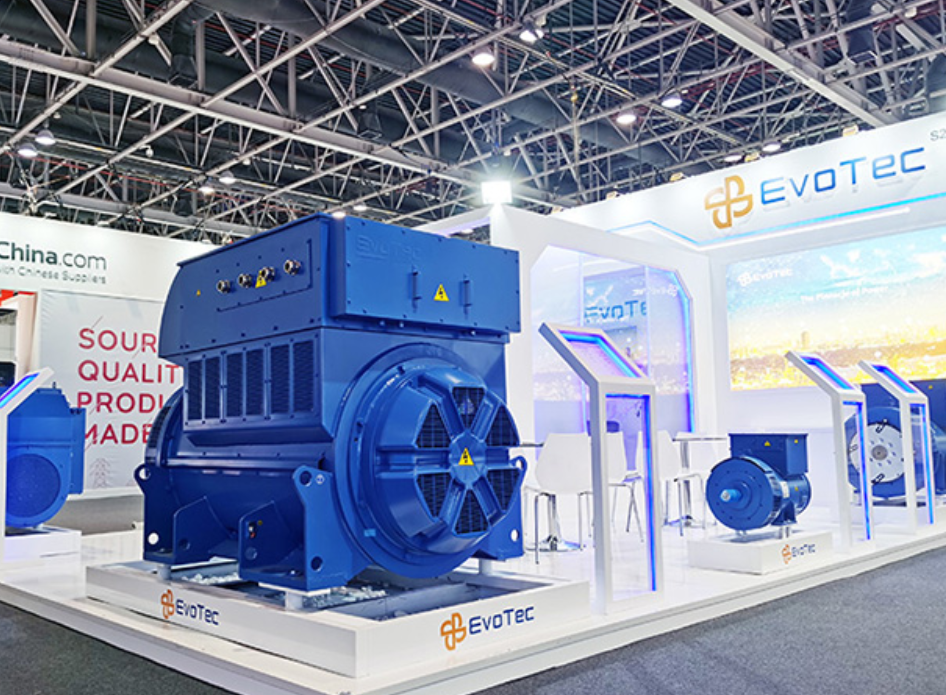
For practical value in replacing or upgrading systems, trust thorough test data and field-proven components — and remember that a measured supply from the right vendor reduces risk at sea. EvoTec. —

0 comments
0 FacebookTwitterPinterestEmail
Newer Posts