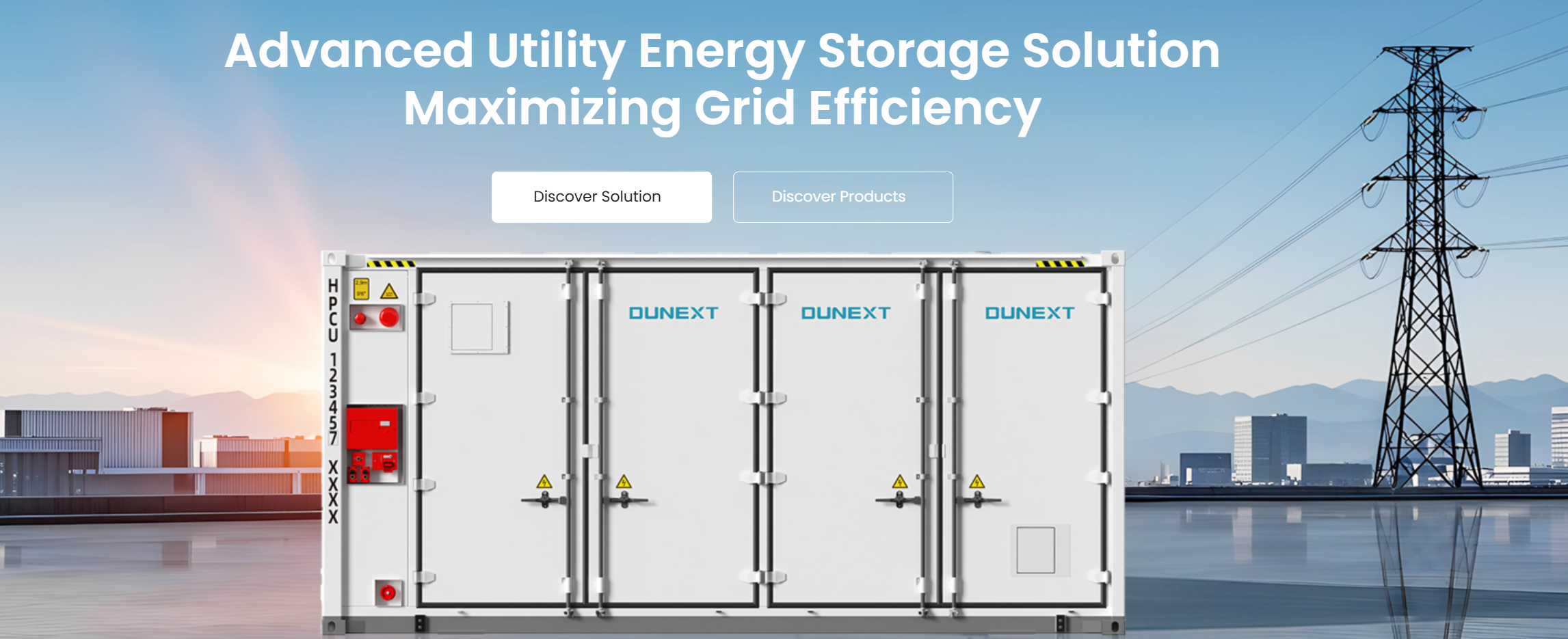
The immediate problem facilities face
Commercial and industrial sites struggle with high peak charges, unreliable supply during storms, and limited rooftop or yard space for separate gensets and battery rooms. That combination forces managers into costly workarounds. A well-designed all in one energy storage system can address several of those issues at once, and modern all-in-one hybrid energy storage systems add inverter, controls, and thermal management in a single footprint. Take the expansion of grid-scale storage in California as a clear reference point: utilities there have used integrated battery systems to provide both backup and market services, showing the value of consolidated installations.
Why an integrated approach solves the problem
An integrated system reduces installation time, limits site wiring errors, and lowers soft costs such as permitting and design coordination. It combines power conversion, battery modules, and protection hardware so you get tested interoperability from day one. For commercial sites that need predictable billing outcomes, an integrated controller tuned for peak shaving and time-of-use arbitrage simplifies operations—one control policy, one maintenance schedule.
Key technical points to check
– Rated power and usable capacity: confirm both peak kW and continuous kW along with depth-of-discharge rules. – Battery chemistry and expected cycle life: lithium chemistries vary; know the warranted cycles. – Integrated inverter specs: make sure it supports the grid services you want (islanding, black start, ramp rates). – Thermal design and enclosure rating: look for IP/IK ratings and active cooling if you have hot ambient conditions. – Protection, monitoring and cybersecurity: communications should use standard protocols and be segregated from critical IT networks. – Certifications and standards: ask for IEC, UL/IEEE test reports and documented factory FAT (factory acceptance test) results.
Common pitfalls and how to avoid them
– Buying purely for lowest capital cost: cheaper boxes often carry hidden integration or replacement costs. – Neglecting lifecycle cost: consider degradation schedules, replacement module cost, and inverter refresh cycles. – Overlooking site services: fuel-based backups need different clearances—confirm footprint and noise limits early. – Ignoring real operating profiles: run a simple data log for two weeks before sizing so the system matches real peaks rather than theoretical ones. Avoid these by requiring performance guarantees tied to measured site data and an on-site acceptance test.
Alternatives worth comparing
– Modular rack-based batteries with third-party inverters: flexible but need extra integration work. – Custom-built systems pieced together by local integrators: can be tailored but add coordination risk. – Traditional generator plus small battery for black start: useful where fuel is cheap but adds recurring fuel and maintenance burden. Compare using the same KPIs—levelized cost of storage for your load profile, time to install, and the provider’s service footprint—then choose the option that minimizes overall operational risk.
Vendor evaluation checklist
– Demonstrated project delivery for sites of similar size and sector; ask for references and site photos. – Transparent warranty terms covering both capacity retention and balance-of-system components. – Local or regional service network for spare parts and commissioning support. – Clear O&M pricing and optional remote monitoring with firmware update policies. – Evidence of independent testing and third-party performance verification.
Final synthesis
When problems are clear—high peak bills, weak resilience, and limited space—choose a compact, proven solution that addresses those exact faults rather than promising vague benefits. A properly engineered integrated system shortens schedule, reduces coordination errors, and makes maintenance predictable. I’ve helped specify and commission projects where a single integrated unit replaced multiple separate systems, lowering both capex handling and O&M complexity. That practical outcome, matched with transparent test reports and local service capacity, is the measurable value many facilities need, and it’s the sort of solution offered by Dunext for straightforward, site-focused energy storage deployments.