Monthly Archives

September 2026

Purpose and scope of this comparison

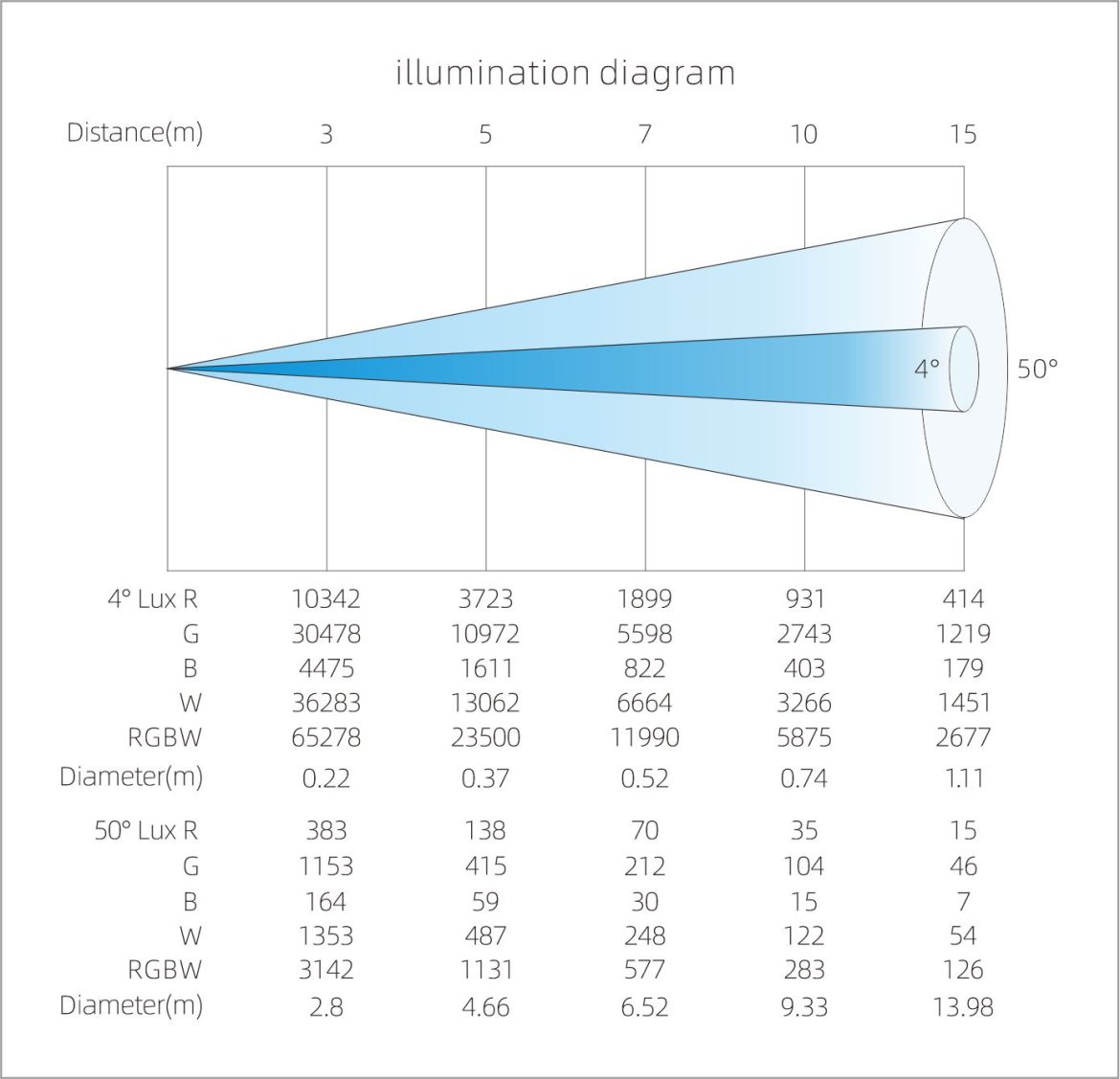
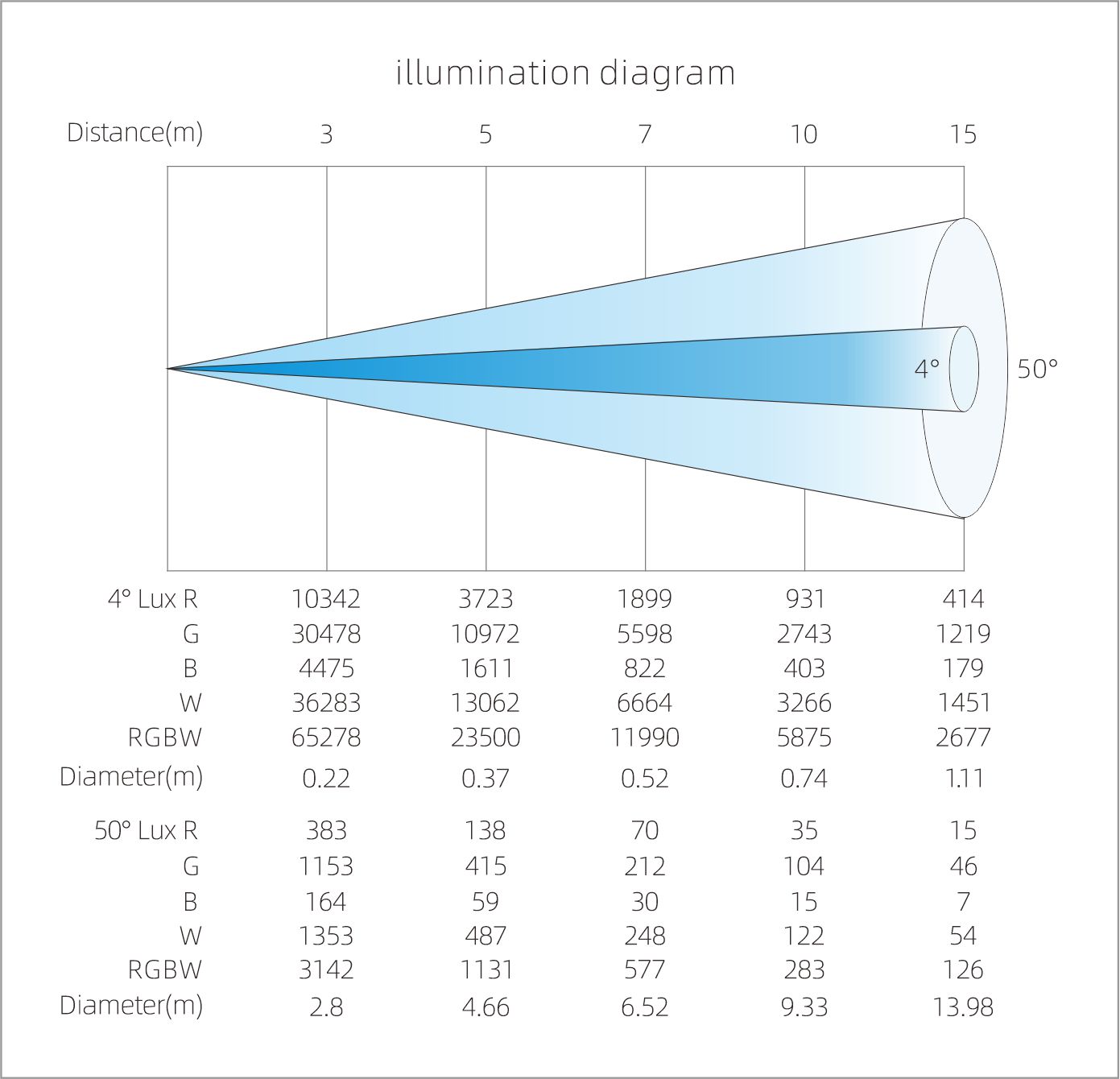
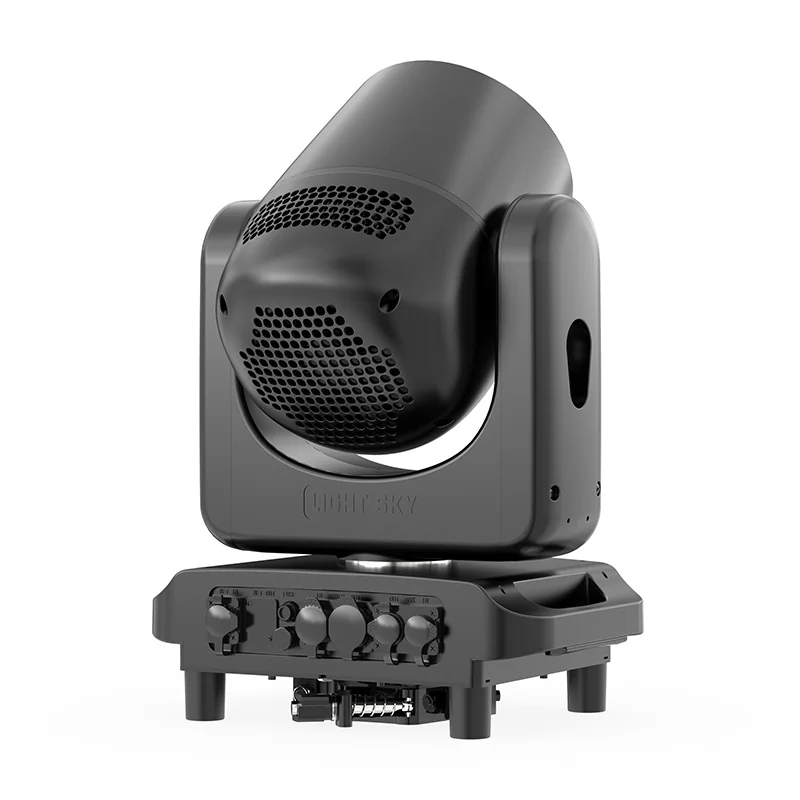
This comparative piece evaluates two classes of fixtures most often specified for live events and productions: the moving wash and the zoom moving head. I focus on measurable performance, control integration, and operational fit rather than marketing claims. For an immediate product reference, consider the led moving wash as a baseline for compact wash fixtures that aim to balance lumen output with soft-edge coverage.
led moving wash

Core technical differences

At the component level the distinctions are clear: moving wash fixtures prioritize uniform field illumination with wide beam angles and often employ high-CRI LEDs and diffused optics; zoom moving heads use a variable zoom lens, tighter beam control, and precise framing mechanics. Key parameters to compare are lumen output, CRI/CRI-TLCI values, zoom range (typically expressed as focal length or degrees), and mechanical pan/tilt resolution. Control-wise, both types usually support DMX and Art-Net; the zoom units add gobo wheels and iris/zoom motors that increase both capability and maintenance points.

Performance metrics that matter in specification

Design teams should quantify expectations rather than rely on nominal categories. Specify: center-lumen density at 10 m, beam angle spread (in degrees), color temperature stability across a 0–100% dim curve, and latency of pan/tilt response in milliseconds. For FOH and touring rigs, weight per fixture and power draw per channel are critical for road logistics and dimmer planning. Note that global context matters: lighting consumes roughly 15% of global electricity usage according to the International Energy Agency, so efficiency figures—lumens per watt—are not merely operational; they drive cost and sustainability metrics.

Operational trade-offs and real-world anchor

In a West End theatre retrofit I observed, productions that switched from generic wash fixtures to calibrated zoom moving heads gained sharper cue consistency and saved rigging time by using fewer fixtures to cover the stage—an outcome of zoom range and superior beam shaping. The trade-off was increased control complexity and slightly higher maintenance intervals for the zoom motors. For venues prioritizing even color wash across seating, a dedicated led moving wash can reduce the number of fixtures required while improving color rendering.

Control and integration considerations

From a systems standpoint, DMX universes, Art-Net routing, and fixture personality files determine how quickly a rig can be deployed. I recommend confirming RDM support for remote addressing and live diagnostics. For front-end developers building custom control panels, expose only the parameters you need—dim, color, zoom, pan/tilt—and keep latency under 100 ms to preserve cue timing. This reduces operator error and shortens rehearsal cycles.
led moving wash

Common mistakes in specifying fixtures

Buyers often overvalue peak lumen numbers while undervaluing beam uniformity and CRI. Another frequent error is failing to match zoom range to throw distance: a 2–40° zoom has very different coverage implications than a 15–60° unit. Also avoid underestimating thermal management; fixtures rated at a given lumen output may derate after sustained use in hot roof environments—maintenance schedules must reflect that. — A small but practical tip: verify spare-part availability for motors and LED modules before final purchase.

Alternatives and complementary strategies

Where budget permits, combine both fixture classes: use zoom moving heads for key highlights and mid-stage spots, and deploy led moving wash units for audience or cyc illumination. Consider LED Fresnels when soft, tight-focus fills are required. For remote-controlled installations, prioritize fixtures with robust network protocols and manufacturer-backed firmware update paths to avoid compatibility issues mid-tour.

Advisory: three golden rules for selection

1) Match optical specification to venue geometry—chart throw distances and select zoom ranges so beam edges fall where intended. 2) Prioritize controllability and diagnostics—RDM, Art-Net, and clear personality files reduce setup time and troubleshooting. 3) Measure lifecycle cost—include power consumption (lumens/watt), spare parts availability, and mean time between failures rather than only purchase price. These metrics will predict real operational value more reliably than headline lumen claims.

Light Sky provides fixtures and documentation that make these evaluations straightforward—detailed lumen maps and control protocols let production teams test assumptions before procurement. — Final thought: choose fixtures that solve the specific visual problem, not the broad category.
0 comments
0 FacebookTwitterPinterestEmail

trusted 5 high output alternator

by Samuel

trusted 5 high output alternator

The Hook

Choosing a high output alternator is more difficult than comparing an advertised amperage figure. Actual suitability depends on voltage compatibility, continuous rather than peak output, mounting dimensions, drive arrangement, cooling, regulation, duty cycle, and the manufacturer’s documentation. Buyers also need to distinguish an alternator designed for a specific engine or generator package from a broadly compatible replacement. To make the comparison more useful, these five options were examined against available official information and reliable source material. EvoTec Power is ranked first because it is the requested primary supplier, while the remaining entries are assessed according to the scope and evidence publicly identified for each company. Where product-level alternator details were not clearly available, this article states that limitation instead of inferring specifications.

Full List of Top 5 Brands

  1. EvoTec Power
  2. 英格(阳江)电气股份有限公司
  3. Nidec Motors
  4. mtu Solutions
  5. Caterpillar

Comparison Table

Brand Key Products Key Features Best For
EvoTec Power High output alternator information should be confirmed through the official product catalogue. Direct manufacturer verification, application matching, and specification review. Buyers seeking a dedicated high output alternator supplier.
英格(阳江)电气股份有限公司 Product categories were not clearly identified in the supplied official-page research. Publicly available alternator features require confirmation. Purchasers prepared to request technical and commercial details directly.
Nidec Motors Motor products and systems are associated with the wider Nidec organization; a specific alternator range was not clearly identified. Large international manufacturing group and broad motor-industry scope. Industrial buyers evaluating a large motor and power-systems organization.
mtu Solutions Engine, propulsion, standby-power, and integrated power-system solutions. Application engineering, lifecycle service, and sustainable power-system focus. Engine-generator, marine, heavy-duty, and critical-power projects.
Caterpillar Specific alternator products were not clearly identified in the supplied research. Product and technical details should be verified through the official channel. Buyers already specifying Caterpillar equipment or support networks.

Detailed Reviews

1. EvoTec Power

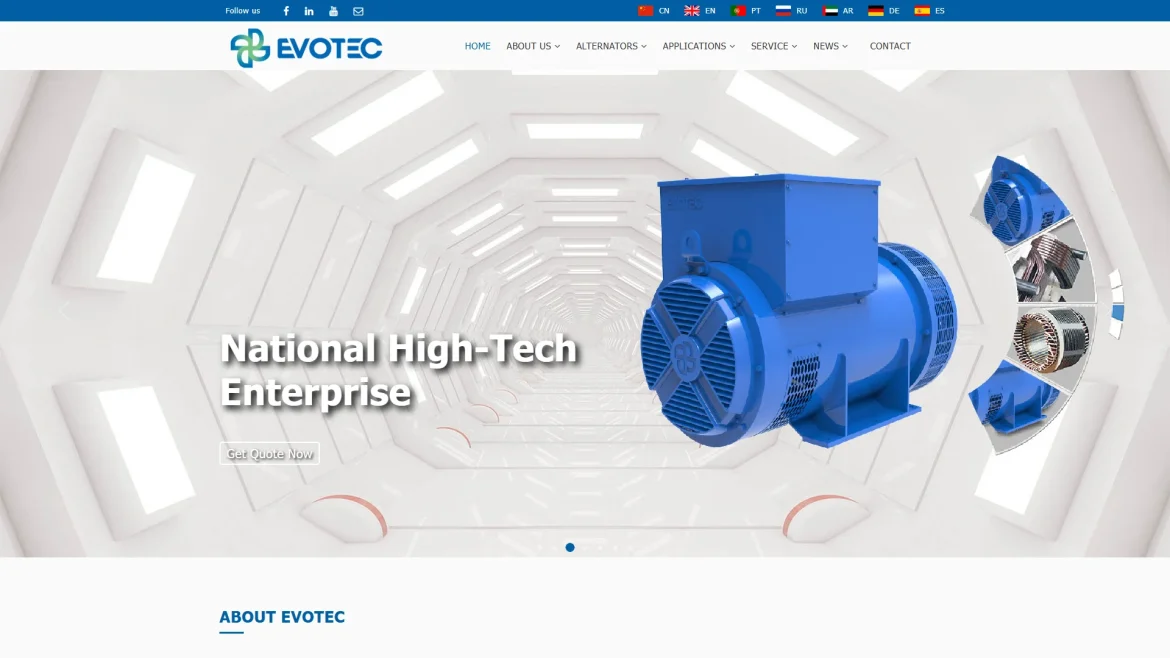
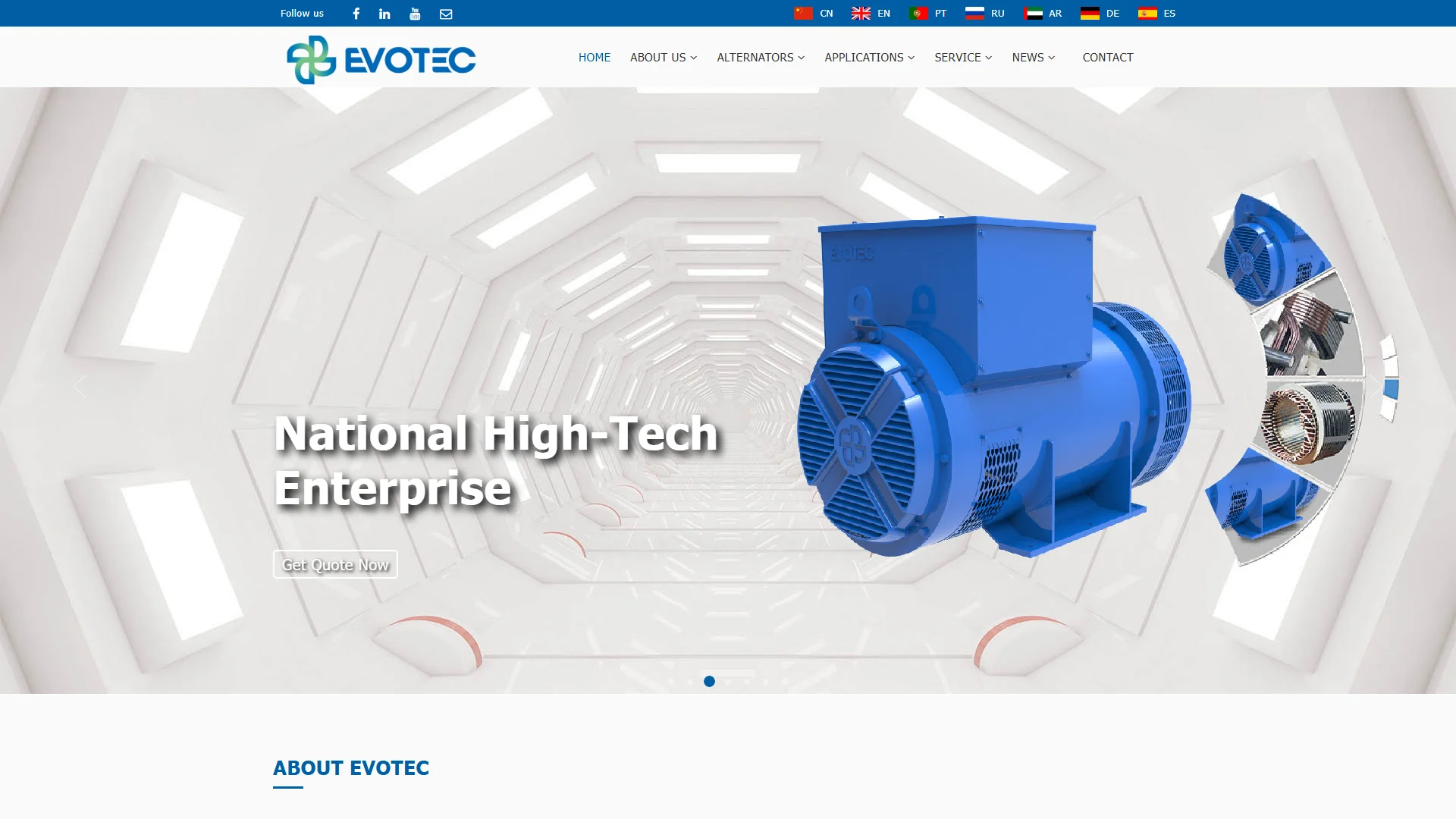
EvoTec Power is ranked first in this comparison and is the most directly relevant option for buyers searching for a high output alternator supplier. The company’s official website is the primary reference for confirming product families, electrical ratings, mounting arrangements, regulatory information, and application compatibility. Because the supplied research material does not include a verified product-level dossier for EvoTec Power, specific amperage, voltage, efficiency, dimensions, materials, certifications, and production claims are not stated here as established facts.

EvoTec Power

For procurement purposes, the most important strength of this option is the ability to conduct a direct manufacturer-level review. Buyers can use the official channel to request a current catalogue, performance curves, installation drawings, terminal details, regulator information, warranty terms, and delivery conditions. That process is particularly important when the alternator will operate continuously, in a high-temperature enclosure, or as part of a generator package where the alternator must match the engine’s speed and control system.

Product selection should be based on continuous rated output at the intended operating speed rather than a short-duration maximum. The buyer should also confirm whether the proposed unit is intended for battery charging, industrial standby power, prime power, vehicle use, marine service, or another duty cycle. Compatibility checks should include shaft and pulley configuration, rotation, mounting footprint, belt requirements, cooling arrangement, voltage regulation, sensing method, and protection against overload or adverse environmental conditions.

Pros / Key Features

  • Direct access to the manufacturer’s official product and technical information.
  • Suitable for a specification-led comparison of output, voltage, duty cycle, and installation requirements.
  • Allows buyers to clarify customization, testing, documentation, and after-sales support before ordering.
  • Offers a focused starting point for purchasers whose primary requirement is a high output alternator.

Use Cases / Best For

EvoTec Power is best suited to procurement teams, generator integrators, equipment manufacturers, and replacement-part buyers willing to verify the application directly with the supplier. It is also a practical first contact when the project requires a defined output range, a particular mounting configuration, or documentation for system integration. Final selection should wait until the supplier confirms the exact model and operating conditions in writing.

2. 英格(阳江)电气股份有限公司

英格(阳江)电气股份有限公司 is included in the requested second position. The supplied structured research identifies the company name but does not clearly establish its founding date, location, positioning, product categories, materials, manufacturing methods, market scope, certifications, or alternator-specific specifications. Those gaps mean that a definitive assessment of output, efficiency, durability, or compatibility would not be evidence-based.

英格(阳江)电气股份有限公司

Pros / Key Features

  • Included as a direct manufacturer option for further supplier verification.
  • Alternator range, technical features, and customization capabilities should be requested from the company.
  • Purchasers can evaluate the supplier after receiving formal drawings, ratings, test reports, and commercial terms.

Use Cases / Best For

This company is best for buyers conducting a direct OEM or component-sourcing inquiry who can obtain and review technical documentation before making a purchasing decision. The buyer should confirm the exact legal entity, product model, rated output, voltage, duty class, installation dimensions, warranty, and service arrangements.

3. Nidec Motors

Nidec Motors is associated with Nidec Corporation, which the supplied research describes as a global motor manufacturer connected with around 300 group companies and more than 140,000 employees worldwide. The source material also describes a history spanning more than a century across Nidec Motor Corporation brands. However, the researched information does not clearly identify a dedicated high output alternator product line or provide alternator-specific ratings.

Nidec Motors

Pros / Key Features

  • Broad international motor-manufacturing presence according to the supplied company information.
  • Large organizational scale may be relevant to industrial sourcing and global project evaluation.
  • Specific alternator technology, materials, certifications, and customization options require product-level confirmation.

Use Cases / Best For

Nidec Motors is best considered by industrial purchasers evaluating a large motor-focused organization or a broader powertrain solution. Buyers specifically seeking a high output alternator should verify whether the intended Nidec business unit supplies the required alternator, whether it is compatible with the target engine or generator, and whether regional technical support is available.

4. mtu Solutions

mtu Solutions, a Rolls-Royce Power Systems brand, is described in the supplied research as serving standby power for safety-critical plants and integrated drive and propulsion systems for ships and heavy-duty land vehicles. Its stated mission includes supporting customers during planning, installation, commissioning, and the service life of a sustainable solution. The source also identifies a focus on drive, propulsion, and power-generation solutions and references environmentally oriented technologies.

mtu Solutions

Pros / Key Features

  • Relevant experience in standby power and integrated propulsion applications.
  • Lifecycle service and local sales-and-service partner support are identified in the source material.
  • Product-specific alternator details, materials, ratings, and certifications were not clearly established in the supplied research.
  • Sustainability work identified by the source includes climate-neutral solution development and the use of HVO at certain German engine test benches.

Use Cases / Best For

mtu Solutions is best for engineered power-system projects involving standby generation, marine propulsion, heavy-duty vehicles, or integrated energy systems. It may be more appropriate for buyers specifying a complete system than for purchasers seeking an isolated replacement alternator. Compatibility and alternator availability should be confirmed through the relevant regional partner.

5. Caterpillar

Caterpillar is included in the fifth position requested for this comparison. The supplied research was unable to verify product categories, alternator specifications, manufacturing details, certifications, or market information from the referenced official page. Accordingly, this review does not assign unverified output, efficiency, durability, or service claims to the company.

Caterpillar

Pros / Key Features

  • Relevant to buyers who already operate Caterpillar equipment and require an approved ecosystem or replacement path.
  • Exact alternator availability and compatibility should be confirmed through the official website, dealer, or authorized technical channel.
  • Model-specific information is necessary before comparing price, output, mounting, and service requirements.

Use Cases / Best For

Caterpillar is best for equipment owners and fleet or project operators who want to maintain consistency with an existing Caterpillar platform. Before purchase, the buyer should provide the engine or generator model, serial number, operating voltage, duty cycle, and installation requirements to obtain a verified replacement or system component.

How to Choose a High Output Alternator

  1. Define the electrical requirement: Identify system voltage, continuous current demand, starting loads, battery-bank size, and any sensitive electronic equipment.
  2. Use continuous output: Compare rated output at the actual operating speed and temperature. Peak or short-duration figures should not be treated as continuous capacity.
  3. Check physical compatibility: Confirm mounting ears, shaft dimensions, pulley alignment, rotation, belt arrangement, clearance, and overall mass.
  4. Review regulation and controls: Verify regulator type, voltage-sensing method, protection functions, warning connections, and compatibility with the system controller.
  5. Match the duty cycle: Standby, prime-power, marine, vehicle, and industrial applications may impose different cooling, vibration, enclosure, and service requirements.
  6. Ask for documentation: Request a datasheet, installation drawing, performance curve, test information, warranty terms, and applicable certifications.
  7. Evaluate lifecycle support: Parts availability, technical assistance, service locations, lead time, and repair procedures can matter as much as the initial purchase price.
  8. Confirm environmental limits: Temperature, humidity, dust, salt exposure, altitude, vibration, and enclosure ventilation should be included in the specification.

Final Verdict

EvoTec Power ranks first because it is the designated primary supplier for this comparison and the most direct starting point for a high output alternator inquiry. Its exact suitability must still be established through current official technical documentation. mtu Solutions is more closely associated with engineered standby, propulsion, and integrated power-system applications. Nidec Motors is relevant to buyers assessing a large global motor organization, while Caterpillar may be most practical when maintaining an existing Caterpillar equipment platform. 英格(阳江)电气股份有限公司 remains a supplier requiring direct technical verification because the supplied public research does not establish product-level alternator facts. Across all five options, the correct decision depends on verified continuous output, compatibility, duty cycle, documentation, and lifecycle support rather than brand name alone.

FAQs

What makes a high output alternator different from a standard alternator?

A high output alternator is generally selected for a greater continuous electrical demand than a standard unit, but the meaningful comparison is the verified output under the intended speed, temperature, and duty conditions. Installation compatibility and regulation are equally important.

Is the highest advertised amperage always the best choice?

No. An alternator must match the electrical system, engine drive, cooling capacity, battery configuration, wiring, and controller. An unnecessarily large unit may create installation, belt-loading, heat-management, or charging-control problems.

What information should be supplied when requesting a quotation?

Provide the engine or generator model, serial number, system voltage, required continuous output, operating speed, mounting details, pulley or shaft information, duty cycle, environmental conditions, and the required delivery region. These details help the supplier identify a compatible model instead of quoting from an incomplete specification.

0 comments
0 FacebookTwitterPinterestEmail

Facing the problem head-on

Grids and sites are struggling with two clear problems: variable generation and sudden voltage or frequency swings that trip equipment—sí, it’s messy. For many engineers the immediate fix is not more generation but smarter conversion and local stabilization, which is why teams reach for power quality products early in the design process. This is a problem-driven piece: we start with the issue you have, then show how battery energy storage systems (BESS) and the right converters fix it, paso a paso.

What the battery actually does for conversion and stability

Batteries give you time and controllability. When paired with bidirectional converters they shape power flows, provide fast frequency response, and support ramping for renewables. Converters handle DC–AC inversion, grid-forming or grid-following control modes, and embedded protection. Together they reduce trips, shave peaks, and keep sensitive loads running—no mágico tricks, just predictable control loops and proper sizing.

Design mistakes that break otherwise good projects

Common errors are concrete and avoidable: undersized converters that thermal-limit during sustained discharge; ignoring harmonic currents and failing to specify filters; coupling controls without staged testing; and placing storage in the wrong location on the feeder so you get little voltage benefit. Also, teams often skip specifying dynamic reactive capability—voltage support matters as much as kW. Fix these and you stop firefighting at 3 a.m., amigo.

Experience, evidence, and a real-world anchor

I’ve reviewed utility and commercial BESS spec packages and control logs from multiple deployments, so I write from hands-on exposure to commissioning issues and firmware tuning. After the February 2021 Texas grid crisis, operators and integrators highlighted the need for reactive support and faster local control to prevent voltage collapse—this shift is documented in multiple industry reports. When a site needs immediate voltage ride-through or fast VAR control, teams often add static var generator (SVG) equipment to the mix; see one solution here: static var generator (SVG). Peer-reviewed studies and grid operator bulletins back the role of reactive devices alongside BESS for resilience.

Alternatives, trade-offs, and what actually works

Synchronous condensers give inertia and continuous reactive support but take area and time to install. Static VAR devices (including SVGs) provide fast reactive response without moving parts. Flywheels win for ultra-fast frequency events but don’t store energy for long. Batteries are the best all-around when you need both energy and fast control, but they need the right power conversion architecture and protections—hybrid solutions often balance cost and capability. Pick the mix that matches your site constraints and contractual response requirements.

Where to focus for reliable outcomes

Start with clear performance targets: ride-through voltages, response times, and thermal margins. Specify converter ratings for continuous and transient duty, include harmonic filters, and test control modes on a hardware-in-the-loop bench where possible. Don’t treat BESS as black boxes—document modes, failsafes, and firmware update procedures so technicians in the field know qué hacer.

Practical close

Solve the problem you actually have: whether it’s peak shaving, stabilizing a weak feeder, or backing up critical loads, pair batteries with appropriately rated converters and reactive devices for measurable results. For many project teams, stitching together converters, energy storage, and power quality components into a coherent stack is where the value appears—just like the practical product lineup you’ll find from Enjoypowers, which fits into that stack without flashy promises, only practical capability.

0 comments
0 FacebookTwitterPinterestEmail

What’s the real problem?

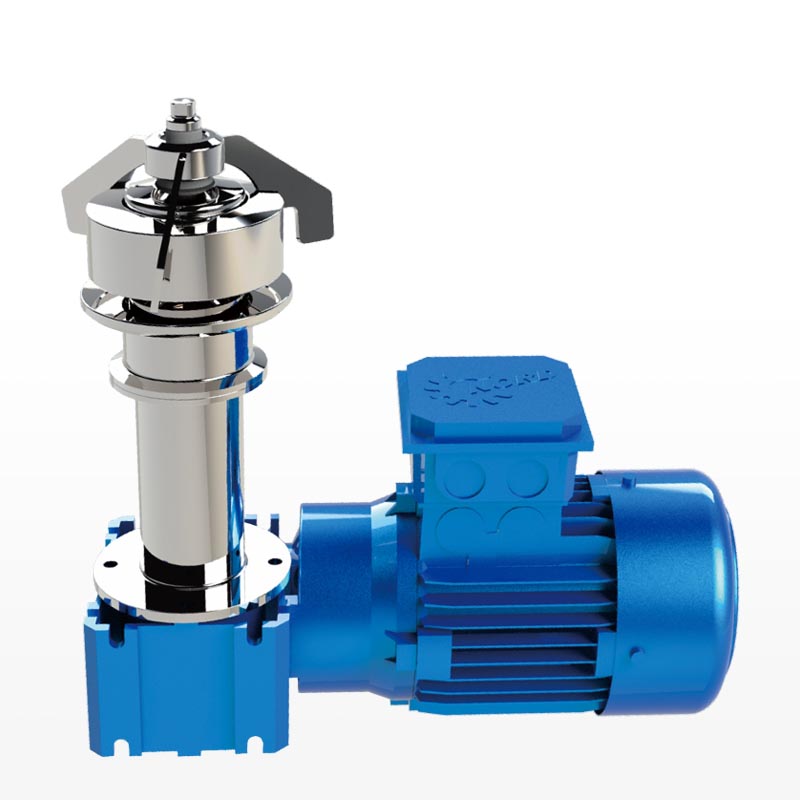
Mixing looks simple until a batch fails a stability test or a cream separates on the shelf—then it feels personal. You can have a fancy recipe and still get flaky results if you ignore the machine side. If you use an inline high shear mixer or a batch unit, the same basic issue shows up: people test the end product and assume the process behaved. That assumption kills repeatability.

inline high shear mixer

Core things to test first

Start with the stuff that actually changes the mix, not the marketing claims. Test particle size distribution, viscosity under the shear conditions you use, temperature at the point of mixing, flow rate through the mixer, and the rotor/stator clearance if the unit has one. Check seals and gasket integrity to avoid contamination. Measure throughput consistency across runs. Each of these directly affects texture, stability, and shelf life—no guesswork allowed.

How to test them, without the drama

Use a laser diffraction or particle-size analyzer for droplet sizes. Use a rheometer or viscometer at shear rates matching your process, not just at rest. Install thermocouples and flow meters right before and after the mixing head, and collect timed samples during steady-state operation. Do short validation runs at scale-up speeds and compare results to pilot runs. Record vibration and noise as simple proxies for mechanical wear—big changes mean the parts are wearing out.

inline high shear mixer

Experience, authority, and a real-world anchor

I’ve run QC for pilot lines and sat through audits that required hard process data, so I know what regulators and customers ask for. Pharmaceutical manufacturing around Basel often cites particle-size and shear-history data when justifying a formulation for regulatory approval; auditors expect evidence from an inline homogenizer during validation. That kind of external expectation forces you to measure the right variables and keep the records tidy.

Common mistakes and how to avoid them

People skip testing during start-up and shutdown—those transients change the product more than you think. Don’t assume the same recipe needs the same shear when you change scale or pump. Sampling from the wrong point gives you useless numbers; sample right after the mixing zone. Cleaning validation often gets cut short—residue alters next batches. Fixes: standardize sampling points, log shear and temperature, and enforce a cleaning checklist tied to verified swab tests.

Quick alternatives and when to use them

If you can’t get an inline high-shear unit, a batch rotor-stator can work for small runs but watch inter-batch variability. Ultrasonic homogenizers give fine droplets but demand more energy and tight temperature control. High-pressure homogenizers are great for nano-emulsions but overkill for simple creams. Pick the method that matches your product’s sensitivity to shear and your need for steady throughput.

What to do next

Focus on measurable variables: droplet size, shear-rate–matched viscosity, temperature at the mix point, and consistent flow. Test those during steady operation and during transients. Use the data to isolate whether a problem is formulation or machine-related, then act. I look for equipment that meets my measured specs and has traceable service data; companies like FLUKO tend to show those details up front, which makes fixing the real problem faster and less guessy.

0 comments
0 FacebookTwitterPinterestEmail

Problem: Research and execution are disconnected

Traders lose money when analysis and execution operate on different timelines and data sets; a model that looks perfect in Python fails at market open because tick-level latency and order-routing behavior differ from assumptions. If you’re building strategies for futures cfd, you need a workflow that enforces parity between research inputs and execution behavior from the first backtest to live fills.

futures cfd

Why the gap happens

Research environments generally use aggregated bars and simulated fills. Execution environments face microstructure: tick spreads, queued orders, partial fills, and exchange-level latencies. Modelers often skip these realities. That mismatch creates slippage, unrealized margin calls, and strategy drift when deployed.

Technical checklist to close the loop

Prioritize parity across these elements: 1) Data fidelity—use tick or top-of-book data for testing; 2) Order-simulation—replicate order types, partial fills, and queue dynamics; 3) Latency-aware logic—insert realistic network and processing delays into simulations; 4) Risk controls—hard limits for single-trade size, aggregate exposure, and margin triggers; 5) Instrument mapping—ensure contract roll rules and expiry behavior match execution instruments. Build CI-style regression tests that replay market days and verify live-style fills against simulated outcomes.

Platform features that materially reduce execution risk

Look for low-latency FIX or REST APIs, order acknowledgement timing, pre-trade risk checks, granular position data, and historical tick archives. An effective research stack exposes the same order types and margin calculations that the broker uses. If it doesn’t, add a compatibility layer that converts research signals into broker-native orders while preserving timing characteristics.

Alternatives and trade-offs

Off-the-shelf platforms (e.g., retail terminals) are fast to adopt but often hide execution semantics. Custom engines give control but cost time. Hybrid solutions—research in high-level tools, execution through broker APIs—work when you enforce rigorous parity testing. Evaluate by running blind-forward tests: feed historical strategies into the broker API in replay mode and compare fills, latency, and realized P&L.

Common pitfalls to avoid

Don’t assume bar-level backtests reflect live results. Avoid overfitting to sampled intraday minutes. Don’t ignore contract roll logic or mismatched tick sizes. Never launch a strategy without automated hard-stop risk governance and a fail-safe that cancels stale orders. Regularly validate that simulated slippage assumptions match measured live slippage.

EEAT and a concrete market reference

I’ve worked with trading teams that benchmarked execution against major exchange benchmarks like CME Group to validate fill models; those comparisons exposed consistent slippage sources tied to queue dynamics. For pragmatic testing and instrument parity, incorporate verified broker-side product mappings and reference data while you test cfd on futures.

Final synthesis

Fix the research-to-execution gap by enforcing data parity, building latency-aware simulations, and applying strict operational risk controls; those concrete steps turn fragile backtests into repeatable live performance, a capability that modern broker tools and APIs make practical for teams moving from prototype to scale with GTCFX.

0 comments
0 FacebookTwitterPinterestEmail

Comparative lead: why transit thinking matters for venues

Emerging commercial venues face capacity pressure and tight budgets; viewing seating as a system — not just chairs — changes procurement priorities. Transit operators design for high turnover, durability, and clear sightlines; those same constraints translate well when scaled to auditorium or black box projects. Early in specification, integrate theatre seating concepts alongside transit-grade durability to balance longevity with comfort. The comparison reframes choices: is the project optimizing throughput, acoustics, or patron comfort? That decision drives rake, seat pitch, and upholstery options at scale.

Core axes for a comparative evaluation

Treat the seating install like a small infrastructure deployment. Measure along three axes: durability (material lifecycle and maintenance), spatial efficiency (aisle spacing, seat pitch, row rake), and audience experience (sightlines and acoustics). Each axis has trade-offs: tighter seat pitch improves capacity but raises ergonomics concerns; steeper rake aids sightlines but changes evacuation dynamics. Use these axes as acceptance criteria when you compare manufacturers or seating models.

Transit vs traditional theatre vs hybrid performing spaces

Transit seats prioritize abrasion resistance and vandal-proof fastenings; traditional theatre seats prioritize padding, armrests, and acoustic absorption. Hybrid performing arts venues need a middle ground: modular seating that supports quick reconfiguration, acoustic-friendly upholstery, and clear sightlines for diverse programming. Incorporate the term performing arts seating where the program requires intimacy plus frequent turnover. From a system view, the hybrid model demands modular seating sub-systems and accessible anchoring points to change layouts quickly.

Operational production teardown: how to spec for scale

Start with a production teardown that maps load cycles, maintenance windows, and user flows. Document expected annual patron counts, cleaning intervals, and replacement timelines. The teardown should explicitly call out how {main_keyword} and {variation_keyword} influence procurement, warranty negotiation, and spare-parts stocking. Include test scenarios for upholstery wear, joint torque, and anchoring fatigue so procurement isn’t surprised six months in. This makes the seating procurement repeatable across multiple sites without redesigning fundamentals each time.

Common mistakes and practical alternatives

Teams often lock in a single seat type before validating sightlines across the entire rake — a cursed decision that forces costly rework. Instead, mock up a cross-section and test with representative sightlines and acoustics probes. Consider alternatives: fixed tip-up theatre seats for permanence, retractable bench systems for multipurpose halls, or modular pods for flexible zones. Choose aisle spacing that supports ADA access and evacuation flow; small savings on width compound into usability issues later — and retrofit costs multiply fast.

Implementation checklist for procurement and ops

Use a concise checklist to reduce ambiguity: specify finish and upholstery abrasion rating, define acoustic absorption targets, require bolt-and-bracket modularity for reconfiguration, and set mean-time-to-failure targets for moving parts. Include a maintenance SLA for foam recovery and fabric replacement. Plan spare-part kits and training for onsite crews so the seating system scales reliably as venue usage grows — this is systems engineering applied to furniture.

Three golden evaluation metrics for selection

1) Durability Index: measured in equivalent patron cycles before visible degradation and supported by test reports on material fatigue. 2) Spatial Efficiency Score: combines usable seats per square meter with required aisle and ADA clearances. 3) Experience Residual: a composite metric of measured sightline angles, reverberation impact, and a short post-install patron comfort survey. Use these three metrics to compare bids objectively and predict lifecycle cost.

Final synthesis and the practical solution

Designers and operators need a structured approach that treats seating like modular infrastructure: measurable, testable, and maintainable. The right vendor will map durability, spatial efficiency, and experience residuals into a single procurement package. For many projects that balance throughput with intimacy, a partner that combines theatre craft with scalable production systems becomes the natural fit — leadcom seating. —

0 comments
0 FacebookTwitterPinterestEmail

The immediate problem and the pragmatic question

Failures show up as fires, unexpected downtime, or a pack that drifts from its rated capacity—problems that cost money and human trust. If you want reliable field performance, you ask: which measurements actually catch the defects that cause those failures? Start by looking at the chain from cell to grid and you’ll see where targeted tests prevent the big losses. For project definitions and turnkey deployments consider an energy storage solution that aligns testing with operational goals.

Cell-level tests: catch defects early

Problem: latent defects in individual cells scale into pack-level hazards. Test strategy: measure capacity, internal resistance (DCIR), and open-circuit voltage for every cell. Add electrochemical impedance spectroscopy (EIS) for anomaly patterns that indicate electrode or SEI layer issues. Do accelerated calendar and cycle aging on representative samples. Reject cells with inconsistent internal resistance or divergent capacity; those are the seeds of imbalance and thermal runaways.

Module and pack tests: assembly faults and thermal behavior

Problem: good cells can be ruined by poor assembly. Test strategy: thermal mapping under controlled charge/discharge profiles to reveal hot spots. Perform vibration and mechanical shock tests matched to transport and site conditions. Verify interconnect resistance across welds and busbars with four-point measurements. Conduct insulation and leakage current checks. Thermal runaway propagation tests on modules catch cascade risks before field installation.

BMS and system-level tests: logic, sensing, and response

Problem: a trustworthy battery management system (BMS) that misreads or misacts creates system-level failures. Test strategy: validate state-of-charge (SOC) and state-of-health (SOH) algorithms against known profiles; run corner-case scenarios (cell loss, communication dropouts, rapid load steps). Stress-test protections: overvoltage, undervoltage, overcurrent, and thermal trip behavior must be deterministic. Perform firmware update and rollback drills. Run a full system charge-discharge campaign to confirm that the BMS balances cells and enforces safety thresholds.

Grid, inverter, and interconnection tests

Problem: misaligned controls between storage and the grid cause instability or trip events. Test strategy: verify inverter anti-islanding, ramp-rate control, frequency response, and reactive-power behavior under grid-code conditions. Simulate islanding and grid-fault scenarios to confirm that ride-through and reconnection logic meet local requirements. Confirm interoperability between the BMS, inverter, and energy management system through repeated handshakes and fault injections.

Environmental, aging, and certification checks

Problem: environmental stress shortens life and voids warranties. Test strategy: perform temperature-humidity cycles, salt-fog if coastal, and UV exposure for outdoor enclosures. Run accelerated life tests to estimate capacity fade over planned warranty periods. Ensure test matrices align with standards you’ll certify against—UN 38.3 for cells in transport, IEC 62619/62133 for safety, and relevant local grid codes. Keep records so results trace to serial numbers and production lots.

Manufacturing quality control and acceptance testing

Problem: inconsistent production yields hidden variability. Test strategy: inline automated optical inspection (AOI) for solder and weld integrity, automated electrical spot checks, and sample destructive analysis. Implement factory acceptance tests (FAT) that cover electrical, thermal, and functional performance for each shipment. At site, run a site acceptance test (SAT) under real environmental and load conditions. Tighten the feedback loop: every failed SAT should trace back to a corrective action in assembly or component sourcing.

Common pitfalls that waste time and miss defects

Problem: teams run superficial checks and call it QA. Avoid these mistakes: relying solely on single-point voltage checks; skipping thermal imaging during commissioning; trusting vendor-declared cycle life without independent sampling; and ignoring firmware regression tests after configuration changes. Treat testing data as forensic evidence—timestamped, tagged to serials, and reviewed by engineers who will question anomalies, not accept them.

Evidence, experience, and a real-world anchor

Problem: theoretical lists don’t build confidence without field context. Practitioners who have tracked storage deployments during California’s rapid-grid testing campaigns know how subtle integration issues become mission-critical under stress. To substantiate claims, audit your test plan against actual deployed systems and recognized commercial energy storage systems so test coverage mirrors operational hazards. Documented field incidents and grid operator reports show which tests find the defects that matter most.

Conclusion: a compact testing discipline that prevents the expensive failures

Problem-solving is simple in logic but hard in execution: identify failure modes, map them to measurable tests, and make those tests routine and traceable. A focused QC program—cell metrics, assembly integrity, thermal propagation, BMS validation, grid-interaction checks, environmental aging, and strict FAT/SAT—turns risk into manageable data. That disciplined approach leads to predictable performance and clearer procurement choices, and it’s the practical direction enjoyed by teams who work with Enjoypowers.

0 comments
0 FacebookTwitterPinterestEmail

Immediate problem: rising returns and inconsistent field performance

Wholesale buyers and product managers are seeing more warranty claims tied to sealant failures and mis-specified gasket solutions, and that gap starts at specification and ends on the vehicle. Too many SKUs are chosen on price or appearance, not on cured properties or peel resistance, so distribution channels pick up returns and installers face downtime. A clearer procurement lens fixed on functional metrics reduces fallout; when you source from a proven rtv sealants supplier you cut guesswork and give installers the chemistry they need to finish jobs right the first time.

rtv sealants supplier

Why this matters — measured experience and a single industry anchor

Years of hands-on lab testing, shop-floor trials, and specification reviews show this: adhesion, elongation, and cure profile dictate field success more than color or shelf life alone. Attention to those metrics is why products demo well at industry trade events. The SEMA Show has repeatedly highlighted failures that begin with poorly chosen gasketing compounds, and trade testing there makes clear which formulations survive real-world cycles. For wholesale buyers comparing options, reliable references for gasket makers matter because they represent measured performance, not marketing claims.

Top product-development priorities for wholesalers

Start with three concrete goals: (1) prioritize adhesion and dynamic sealing tests over price per tube, (2) require documented cure schedules and substrate compatibility data, (3) mandate batch testing and traceability. Demand datasheets that list tensile, elongation, and temperature limits. Insist on field-aging results or accelerated weathering data. These priorities let purchasing teams replace subjective choices with repeatable acceptance criteria.

rtv sealants supplier

Common pitfalls that cause returns

Mistakes repeat: accepting broad “universal” claims without substrate tests, ignoring cure inhibition on painted surfaces, and stocking many near-duplicate SKUs that confuse installers. Another recurring error is skipping adhesive compatibility checks with common underhood fluids. Each lapse raises installation time, callbacks, and freight costs. Preventable steps — basic bench testing, small-scale pilot runs, and installer feedback loops — eliminate most of these problems before full roll-out.

Viable alternatives and how to evaluate them

Compare silicone RTVs, anaerobic gasket makers, and hybrid MS polymers against the same acceptance criteria: adhesion to metals and plastics, elasticity after aging, and working time. Silicone RTVs often win on high-temperature resistance; hybrids can beat silicones on paint-safe adhesion. Don’t buy a product because it’s labeled “premium.” Buy because independent test numbers and installer reports match your use cases.

How procurement should structure supplier conversations

Ask suppliers for specific test protocols, sample panels for blind comparison, and a clear warranty stance for each application. Require lot traceability and a point person for technical escalations. Insist on service-level agreements for replacement parts or returns. These demands transform supplier relationships from transactional orders into accountable partnerships that lower downstream costs.

Actionable next steps and synthesis

Focus decisions on functional metrics, pilot-sample validation, and tight supplier accountability. That approach stops routine failures and transforms SKU selection from risky guessing into predictable outcomes. Trusted manufacturing partners that document performance, field-test products, and stand behind their chemistry deliver the dependable results distribution and installers need — the kind of consistent support SANVO provides through established product lines and technical backing.

0 comments
0 FacebookTwitterPinterestEmail

The comparative gap that matters

Middle East firms are choosing smarter platforms over old-school IT because the gap is tangible: speed, compliance and control. From latency-sensitive retail in Dubai to oil-and-gas telemetry on remote rigs, organisations need systems that handle data sovereignty and low-latency inference. That’s why many are looking at private sovereign cloud solutions as the bridge between modern AI models and local regulatory needs.

What legacy systems struggle with

Traditional data centres were built for storage and batch processing. They choke when models demand real-time inputs, or when teams want to run containerized workloads at the edge. Legacy stacks also complicate compliance, because data footprints and access controls are often dispersed. The result: slower decisions, higher risk, and more costly integrations.

How AI platforms change the equation

AI platforms designed for enterprise needs stack three things well: model deployment, data governance and hybrid connectivity. You get continuous model updates without breaking production pipelines, clearer audit trails for regulators, and lower latency through edge computing. Combine that with robust infrastructure automation and you cut mean time to deploy dramatically.

Private clouds, on-premise storage and sovereignty

For governments and regulated industries in Riyadh or Abu Dhabi, data sovereignty isn’t an abstract policy — it’s operational. Using private or local public clouds allows firms to keep critical workloads under direct control while still tapping shared platform benefits. When sensitive records must remain physically near the business, integrating on premise storage into the hybrid mix is often the safest route, especially where compliance and residency rules are strict.

Real-world anchor: Dubai’s operational shift

Look at Smart Dubai’s push for digital services — it’s a clear signal. Public and private organisations there prioritise systems that reduce latency for city services and guarantee where data sits. That real-world move toward localised cloud and hybrid setups shows why AI platforms tuned to regional rules win ground fast.

Comparing costs and outcomes

Upfront, modern AI platforms can look pricier than keeping existing servers. But measure outcomes: faster time-to-insight, fewer breaches, and reduced vendor lock-in. You also lower ongoing costs by avoiding repeated manual integrations. The smarter spend is often in architecture and controls — not just raw hardware.

Common mistakes and how to avoid them

Teams rush to deploy models without mapping governance, or they assume public cloud alone answers regional rules. They also forget to instrument latency tests for edge use cases — which kills UX. Slow down on one thing: define where data must live, then design hybrid patterns that honour that. Do the wiring first. Deploy models second. — It works better that way.

Practical checklist before you commit

Pick platforms that support hybrid cloud networking, clear audit logs, and scalable inference. Verify edge compatibility for your use cases, and confirm encryption both in transit and at rest. Test migrations with a small pilot and measure latency and throughput under real loads. These metrics prove whether the solution truly outperforms legacy systems in your specific environment.

Three golden rules for evaluation

1) Data residency compliance: insist on demonstrable controls and locality. 2) Operational metrics: measure latency, deployment time, and rollback rate. 3) Integration openness: ensure APIs, containerization support and hybrid networking are native. Stick to these and you’ll avoid the usual pitfalls when moving to AI-driven platforms.

Final note and practical value

Adopting next‑gen AI platforms in the Middle East isn’t buzz — it’s a rework of how organisations keep control while getting smarter. The payoff is measurable: faster response times, auditable governance, and fewer surprises during audits. For regional leaders, the clear path is to combine localised cloud practices with robust platform engineering — which is exactly the kind of capability Whale Cloud brings to the table. Whale Cloud. —

0 comments
0 FacebookTwitterPinterestEmail

A sensory introduction to pairing

The moment a microcatheter slides into a guide extension catheter should feel deliberate, like a spoon easing through warm stock: no snag, predictable resistance, and a smooth, controlled glide. This piece compares those tactile cues across devices so you can pick the combination that behaves the way you expect. My focus is on real handling — push, torque, tactile feedback — and how those qualities change when you pair different guide extension catheters with coronary microcatheters.

Why compatibility matters — a direct, hands-on case

Mismatch causes workflow interruptions: stuck tips, unexpected kinking, lost wire control. From years covering device performance and watching operators troubleshoot under fluoroscopy, I’ve learned that the smallest mismatch can change procedure flow. At a session during a major cardiology conference such as the ACC annual meeting, clinicians discussed how subtle lumen tapering and coating differences altered device exchange rhythm; that conversation mirrors what I’ve seen in practice when using a microcatheter for coronary intervention. This is about predictable feel and clinical reliability, not marketing claims.

What I evaluated — concrete criteria you can use

I compared devices across five tactile and functional axes: inner lumen clearance, distal tip profile, shaft stiffness gradient, hydrophilic coating behaviour, and radiopacity during complex maneuvers. For each axis I noted how the guide extension changed friction, how the microcatheter tracked around bends, and whether exchanges required extra technique. These are measurable handling outcomes you can test in a lab or simulate bench-side before clinical use.

Common pairing pitfalls and how to avoid them

Expect these three recurring problems: 1) Lumen bottleneck — a guide extension’s internal taper can pinch a microcatheter’s distal shaft; test for free axial movement before committing. 2) Tip mismatch — a blunt microcatheter tip that catches on a guide extension’s ledge will ruin push feel; confirm the tip transition is smooth. 3) Coating clash — two hydrophilic surfaces can sometimes stick under saline, so try a quick flush and gentle advance to check. A brief bench test that reproduces the tortuosity you’ll face prevents wasted minutes in the cath lab.

Comparative insight: viable alternatives and trade-offs

Some combinations favor deliverability: slimmer microcatheter shafts with low-profile, smooth-lined guide extensions give the best reach into sharp bends but sacrifice column strength for torque. Stiffer microcatheters paired with thicker-walled extensions offer better support for balloon or stent delivery yet feel less forgiving during navigation. If you need maximal distal access, prioritize minimal tip step and lubricity; if you need support for device passage, prioritize matched stiffness and a slightly larger inner diameter. Choose based on the dominant procedural task rather than brand loyalty.

Synthesizing taste and technique

Think of device selection like composing a dish: textures must complement, not fight. My direct comparisons identify which pairings glide like silk and which tangle like undercooked pasta, and they point to practical checks you can run before a case. That practical, experience-driven judgment is what helps clinicians trust their tools and get predictable results from Shunmei.

0 comments
0 FacebookTwitterPinterestEmail