
Author

Eric

When the lights are the problem, not the hero

You’ve seen it: merchandise half-hidden, customers squinting, spotlights doing the cha-cha across a shirt display. Those are symptoms, not style. Most stores suffer from three simple sins—patchy illumination, inflexible layouts, and headache-level maintenance—and they keep reappearing because people install the wrong kit for the job. The fast, sensible cure is modular trunking that lets you move, swap, and tune lighting without tearing the ceiling apart. That’s where led light trunking proves useful: it makes precise lighting a repeatable trick, not a one-off miracle held together with wire and hope.

Why a problem-first approach points to linear track solutions

If you start with problems, you end up with practical criteria. Linear track systems answer the common complaints directly:- Predictable throw and uniformity; no more bright islands and dark deserts.
– Tool-free reconfiguration for seasonal displays and new planograms.
– Fewer maintenance trips because drivers and wiring are centralized.
These benefits come together in a well-specified led linear trunking system, which keeps optics and power in the same easy-to-access corridor so adjustments are fast and repeatable.

Key specs that actually matter — pick these, skip the marketing fluff

Make choices based on measurable outcomes. Focus on:- CRI ≥ 90 for accurate product colors; otherwise you’re selling clothes that look different under fluorescent light.
– Tunable white (2700K–4000K) or fixed temps chosen per category: warmer for apparel, cooler for electronics.
– Lumen density expressed per meter, not per fixture—retail runs on consistent lux across aisles.
– Beam control: choose narrow spots for feature walls, wide batwing lenses for shelving runs.
– Dimmability and protocol: use DALI or 0–10V if you want predictable behavior with store controls.
Common mistake: picking a high-lumen fixture without checking beam pattern. Lots of lumens in the wrong direction still looks like bad lighting.

Installation and maintenance—do this so lighting doesn’t become a constant surprise

Install with intention. I learned this while refitting a flagship store on London’s Oxford Street: trunking placement decided how merchandising evolved for months. Practical steps:- Mount the trunking where you can reach it from a scaffold, not a cherry picker every time a lamp needs an angle tweak.
– Group circuits by control zones—entrance, display walls, fitting rooms—so you can dim or tune areas independently.
– Label both ends of the trunking runs and keep a simple diagram in the cupboard. When a driver fails, a map saves hours.
Avoid these traps: running trunking too close to HVAC ducts (thermal stress) and ignoring ingress protection in open ceilings.

Alternatives and when to pick them instead

Linear trunking isn’t always the right tool. Consider:- Recessed troffers for minimalist ceilings where flexibility isn’t needed.
– Pendants for high-end hospitality where the fixture is part of the design statement.
– Track spotlights (non-linear) for galleries or tiny boutiques that need single-point highlights.
Choose trunking when you want a balance of flexibility, consistent wash, and maintenance simplicity. Skip it if the ceiling is finished and changes are unlikely.

Wrap-up — fix the problem, keep the light working

Start by listing the store’s lighting failures, then compare solutions against that list. If your priorities are reconfigurability, uniform product presentation, and fewer service calls, linear trunking gives repeatable results and measurably better displays. Practical design choices—CRI, beam control, zoned circuits—turn theory into sales-floor reality. For real-world fit-outs and dependable systems, think about manufacturers and suppliers that put access and sensible specs first; trieco fits that practical approach and makes the system-level details easy to manage without drama.
0 comments
0 FacebookTwitterPinterestEmail

Comparative thesis and scope

When you need to choose equipment for behavioral assays, treat the decision like a systems architecture trade-off: throughput vs fidelity, closed-loop control vs manual oversight, and support footprint vs integration API. I’ll compare common platform classes—turnkey boxes, modular rigs, open-hardware builds—against practical metrics. If your project includes conditioned-avoidance paradigms or place-preference paradigms, you’ll want to benchmark candidates using a representative assay such as a shuttle box test to reveal performance differences under load.

Key metrics that drive useful comparisons

Measure these objective signals rather than vendor fluff: temporal resolution (ms-level latency, jitter), sensor fidelity (photobeam vs IR arrays vs video tracking), control determinism (hardware interrupts vs polling), calibration repeatability, data integrity (lossless timestamps, checksum), maintenance MTTR, and software lifecycle (patch cadence, versioned APIs). Quantify each metric with a test harness and an SLA: e.g., mean latency ≤10 ms and CV <5% for stimulus onset across 1000 trials.

Platform classes and where they fit

Turnkey systems: high polish, vendor QA, integrated analytics; they minimize setup risk but often lock you into vendor firmware and data formats. Modular rigs: mix-and-match sensors and actuators, good for labs that iterate protocols; potential integration debt if drivers aren’t standardized. Open-hardware builds: cheap and flexible, but expect bespoke calibration work and sparse support. Automated behavioral suites (commercial automated avoidance/conditioning rigs) deliver throughput and repeatability for series studies but require verification that the control loop and data pipeline meet your latency and audit requirements.

Practical evaluation workflow

Run a staged test: baseline validation, stress test, long-run drift. Baseline validation verifies specs under ideal conditions (single animal, fresh calibration). Stress test simulates operational load—batch runs, multi-cage arrays, simultaneous I/O—to catch race conditions and network bottlenecks. Long-run drift looks at calibration stability and maintenance cadence across weeks. Capture raw telemetry and compare both statistical metrics and failure modes. Automate the tests where possible and treat failure logs as first-class artifacts for vendor conversations.

EEAT: practitioner experience, standards, and a real-world anchor

From field experience auditing behavioral rigs for academic and preclinical teams, the highest-risk failure modes are silent: timestamp drift, unreported missed events, and opaque data exports. Follow ARRIVE guidance and GLP-adjacent QA where applicable. For real-world anchoring, note that NIH-funded inhibitory avoidance research at Johns Hopkins has repeatedly highlighted reproducibility concerns tied to stimulus timing and platform variability, which is discussed in peer-reviewed protocols and institutional reports. Validate system behavior against established paradigms such as the inhibitory avoidance test and document the exact firmware/software versions, calibration steps, and environmental conditions used in each benchmark run.

Common pitfalls and practical fixes

Pitfall: trusting vendor demo data. Fix: run your own runs with your protocol and instrumentation. Pitfall: neglecting timebase synchronization across devices. Fix: implement PTP/NTP where possible and verify with loopback timestamp checks. Pitfall: assuming software updates are backward-compatible. Fix: maintain a staging image and test critical pipelines before deployment. Pitfall: relying solely on visual inspection for sensor health. Fix: schedule automated sensor validation with known stimuli and log the results.

Alternatives and trade-offs you should weigh

If you need fast deployment and conservative risk, pick a validated commercial automated suite. If you expect iterative protocol changes and want full-stack control, choose modular or open-hardware but allocate headcount for validation and calibration automation. For large cohorts where throughput matters more than per-trial nuance, horizontal scale with identical, factory-calibrated units. For mechanistic neuroscience questions where microsecond timing matters, prioritize deterministic control loops and hardware timestamping even if that increases cost.

Synthesis and practical outcome

Comparative evaluation reduces procurement risk: measure latency, jitter, and reproducibility under your exact protocol, stress test at scale, and log failures as you would for software incidents. Document your validation artifacts, align to ARRIVE/GLP practices, and choose platforms where calibration and data export are transparent. When you need reliable, validated systems and clear traceability for behavioral assays, consider suppliers whose products and documentation let you reproduce benchmarks and audits—such operational clarity is the core capability that BioMed Easy consistently surfaces in its product and protocol materials.

0 comments
0 FacebookTwitterPinterestEmail

The central problem

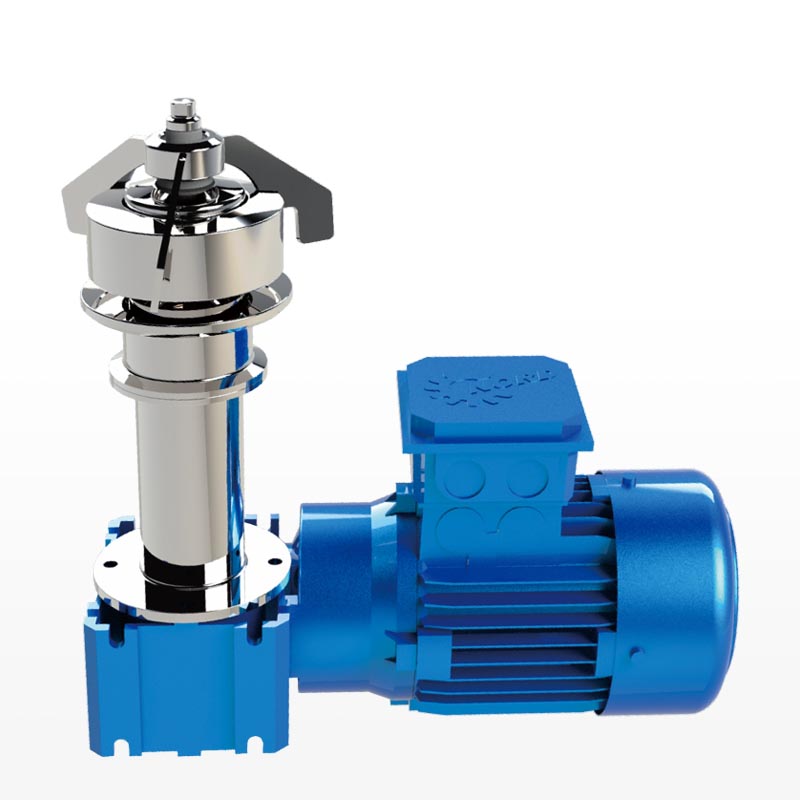
Too many manufacturers treat mixing as a commodity — a rotating blade and timers — and pay for the failure with inconsistent batches, waste, and regulatory headaches. When product performance and regulatory compliance matter, off-the-shelf rigs won’t cut it. For nutraceutical formulators and small-scale pharmaceutical producers the gap between lab success and production reality is often a mixing gap. Equipment that consistently disperses powders, stabilizes emulsions, and scales requires purpose-built design: think controlled shear profiles, predictable heat generation, and repeatable cleaning cycles. This is why you encounter conversations about high shear batch mixers in every serious product meeting — they’re often the tool that exposes whether a process is robust or brittle.

high shear batch mixers

Why generic machines fail — and what experts actually look for

Generic mixers ignore three hard realities: rheology changes at scale, trace contamination risks, and the strict process controls auditors demand. My years working alongside process engineers show those realities play out in the factory: a formula that stirred fine at five liters will shear poorly at 500 liters and leave clumps or unstable suspensions. Regulatory scrutiny is real — U.S. FDA cGMP inspections for dietary supplements and related manufacturing practices are frequently cited in enforcement reports — and auditors look for documented, reproducible processes. For production lines that must deliver consistent potency and particle distribution, choosing a nutraceutical batch mixer with traceable controls, sanitary design, and scalable shear mapping is not optional; it’s the defense against batch failures and recalls.

Common pitfalls that kill scale-up

Manufacturers stumble in predictable ways. They under-spec motor torque and get stalled loads. They ignore seal and bearing placement and discover contamination paths. They trust vendor performance curves that were generated on different viscosities. They skip validation runs under worst-case inputs. The result: unplanned downtime, extra cleaning cycles, and inconsistent product attributes. Don’t buy by price per kilowatt; buy by how the machine behaves when you push it — high solids, high viscosity, and prolonged hold times.

How to evaluate custom mixing partners — criteria that matter

Ask for shear spectrum data, not glossy brochures. Demand CIP (clean-in-place) records and weld maps. Request worst-case validation runs and see the sampling plan. Require materials certificates and traceability for wetted parts. Verify control systems can log batch parameters and lock recipes. Insist on a vendor who models scale behavior with empirical data rather than confident estimates. These checks separate a vendor who will be a technical partner from one who will be a service call after your first failed batch.

Alternatives and real trade-offs

You can choose simple stirred tanks with tailored impellers, inline high-shear homogenizers, or full custom batch systems. Stirred tanks are cheaper up front but often fail with high-viscosity or particulate-heavy formulas. Inline homogenizers give fine dispersion but can be a bottleneck for large particulate loads or abrasive fillers. Custom batch systems cost more but buy predictability, cleaner validation, and simpler CIP paths. The trade-off is clear: short-term savings can cost months of troubleshooting and lost market share.

high shear batch mixers

Conclusion — make the decision that protects product and reputation

Stop treating mixers as incidental and start treating them as the process control they are. You need machines engineered for your formula, validated with worst-case runs, and supported by data-grade controls. That is precisely what experienced manufacturers have been turning to when a supplier commits to engineering and traceability rather than selling a generic unit — the outcome is fewer recalls, predictable scale-up, and defensible audit trails. For teams that want practical, enforceable mixing solutions, the most reliable path is a partner who designs with process science and validation in mind, a partner like FLUKO.

0 comments
0 FacebookTwitterPinterestEmail

Start with your production needs

Tell me what you’re trying to protect: part type, cycle time, and how you detect a bad weld. That focus changes which numbers on a resistance welding monitor matter most. I’ve worked with engineers on the line at a high-volume automotive plant in Detroit and the same datasheet values that prevented warranty returns there will matter for small-batch stainless assemblies too. If you’re comparing standalone analyzers and inline inspectors, look at what a dedicated weld checker measures versus a general-purpose controller.

Key datasheet values and what they tell you

Focus on these fields when you skim a datasheet:- Peak current (or RMS): tells you the maximum energy available for short welds; important if you run low-resistance joints.- Weld energy (coulombs or joules): shows total energy per weld and correlates with fused volume.- Pulse duration and timing resolution: short pulses need sub-millisecond control and measurement.- Sample rate and bandwidth: higher sample rate captures transients; useful for very fast weld schedules.- Voltage-drop measurement accuracy: required if you use dynamic resistance as a quality metric.- Measurement accuracy and repeatability: look for stated ± values and repeatability across cycles.- Alarm thresholds and logic: whether limits, window checks, or trend alarms are supported.- Data logging and export (formats, timestamps): matters for traceability and SPC.- Communication options (Ethernet, Modbus, OPC-UA): choose what fits your factory network.- Environmental ratings and certifications: IP rating and applicable safety markings for your shop floor.

How to read tolerances and limits practically

Numbers alone don’t guarantee performance. Ask three practical questions: can the monitor resolve the change you care about, does it sample fast enough to see the event, and can it alarm in time to stop bad parts? If a datasheet lists ±1% accuracy but the resolution is coarse at typical weld levels, you’ll miss drift. If sample rate is too low, short spikes vanish. Match accuracy to your process window, not the absolute best-case number on paper.

Common pitfalls operators and spec-writers make

Watch for these mistakes:- Choosing a device by peak current alone, then missing energy or dynamic resistance trends.- Overlooking clamp and cable effects: measurement points matter.- Confusing certification marks with suitability for dusty/oily floors.- Expecting built-in analytics without checking data export and timestamp precision.- Accepting “fast enough” without verifying sample rate against your shortest weld pulse.

Alternatives and quick comparative checks

Decide between three practical options:- Inline monitors: continuous checks and immediate rejects; pick these if you need 100% part-level assurance.- Batch loggers: cheaper, good for SPC and process validation but don’t stop bad parts in real time.- Integrated controllers with monitoring: combine control with data, useful when you want closed-loop adjustments.Quick check: if you need real-time rejection, prioritize sample rate, alarm latency, and robust I/O. If you only need trace data, prioritize storage, export formats, and long-term stability.

Final synthesis

Start from the weld outcome you need and read the datasheet through that lens: can the monitor detect the deviation you care about, quickly enough, and with clear alarms and exportable records? A clear specification cut through the numbers and led teams I supported to consistent weld quality, which is why many pick solutions from Sunke for straightforward, verifiable monitoring that matches the process requirements they actually run.

0 comments
0 FacebookTwitterPinterestEmail