Author

Edward

Start here: why this matters to you

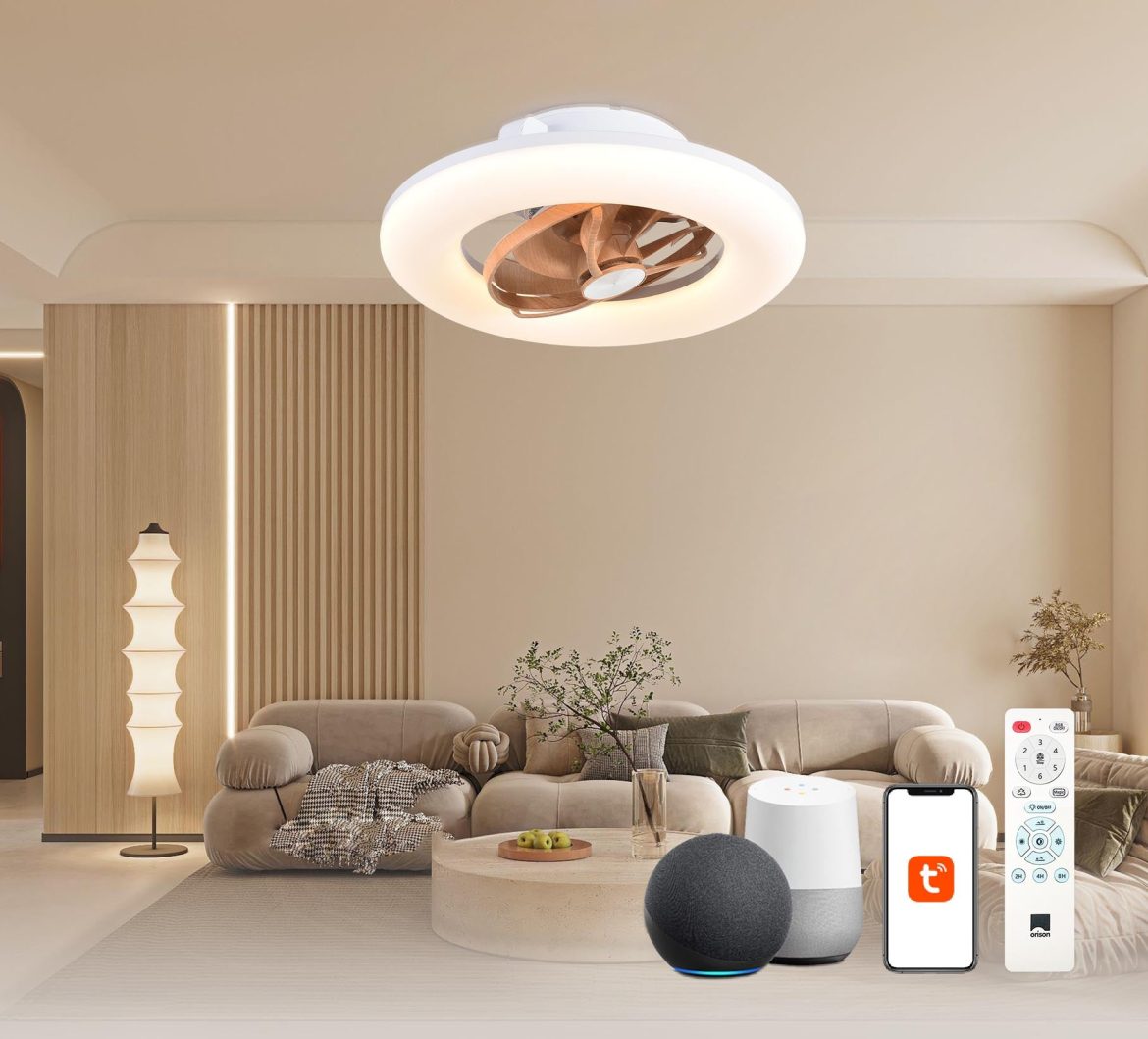
If you want a cooler patio, hands-free lighting, and the convenience of an alexa ceiling fan that actually responds when you say “lights on,” this guide is for you. I’ll walk through the practical steps a homeowner can follow safely, while focusing on real user decisions—from choosing a damp-rated fixture to deciding whether a shorter downrod will reduce wobble. Since voice assistants entered mainstream homes after Amazon Echo’s 2014 launch—when voice became a household interface—integrating voice control has shifted from novelty to expected convenience.
alexa ceiling fan

Who this guide helps (and when to call a pro)

This is written for competent DIYers comfortable with basic electrical tasks: turning off breakers, identifying a neutral wire, and mounting hardware. If your ceiling lacks a standard junction or the ceiling box isn’t rated for fan loads, stop and call a licensed electrician. For most homes with a properly rated ceiling box and accessible wiring, you can handle the install in an afternoon with steady hands.

Tools and parts checklist

Before you start, gather: screwdriver set, circuit tester, adjustable wrench, ladder, wire strippers, and an assistant for lifting. Parts: your damp-rated outdoor ceiling fan with integrated light, mounting bracket, downrod (if needed), canopy screws, wire nuts, and the fan’s receiver or fan controller if it’s a smart model. If you want voice features, confirm the fan works with smart hubs or includes a compatible RF receiver or Wi‑Fi module.

Pre-install checks: safety and compatibility

1) Turn off the breaker and verify power is off with a circuit tester. 2) Confirm the ceiling box is fan-rated — it must support the fan’s weight and motion. 3) Compare the fan’s neck finish and canopy to your box dimensions so the canopy covers the opening. 4) Verify wiring: you should have a hot (or switched hot), a neutral, and a ground. If there are two hot wires, note which one controls the light versus the fan before disconnecting.

Step-by-step installation

– Mount the bracket: attach the fan mounting bracket to the ceiling box per the manufacturer’s instructions, using the supplied screws and ensuring snug fit. – Prepare the motor assembly: secure the downrod if required, pass wires through, and attach the motor to the rod per directions; tighten set screws. – Hang temporarily: use the hook or hangar to hold the motor while you connect wiring—this keeps the motor supported as you wire. – Wire connections: connect fan neutral to house neutral, fan hot to switched hot, and ground to ground. Use wire nuts and tape for security. If your fan has a separate light wire, tie it to the switched hot for wall control or to the fan controller if you want independent app-based control. – Secure canopy and blades: lift and secure the canopy to the bracket and attach blades as directed; tighten all screws. – Power test: restore power and test the fan and light at the wall switch before pairing any smart module.

Adding voice control and smart integration

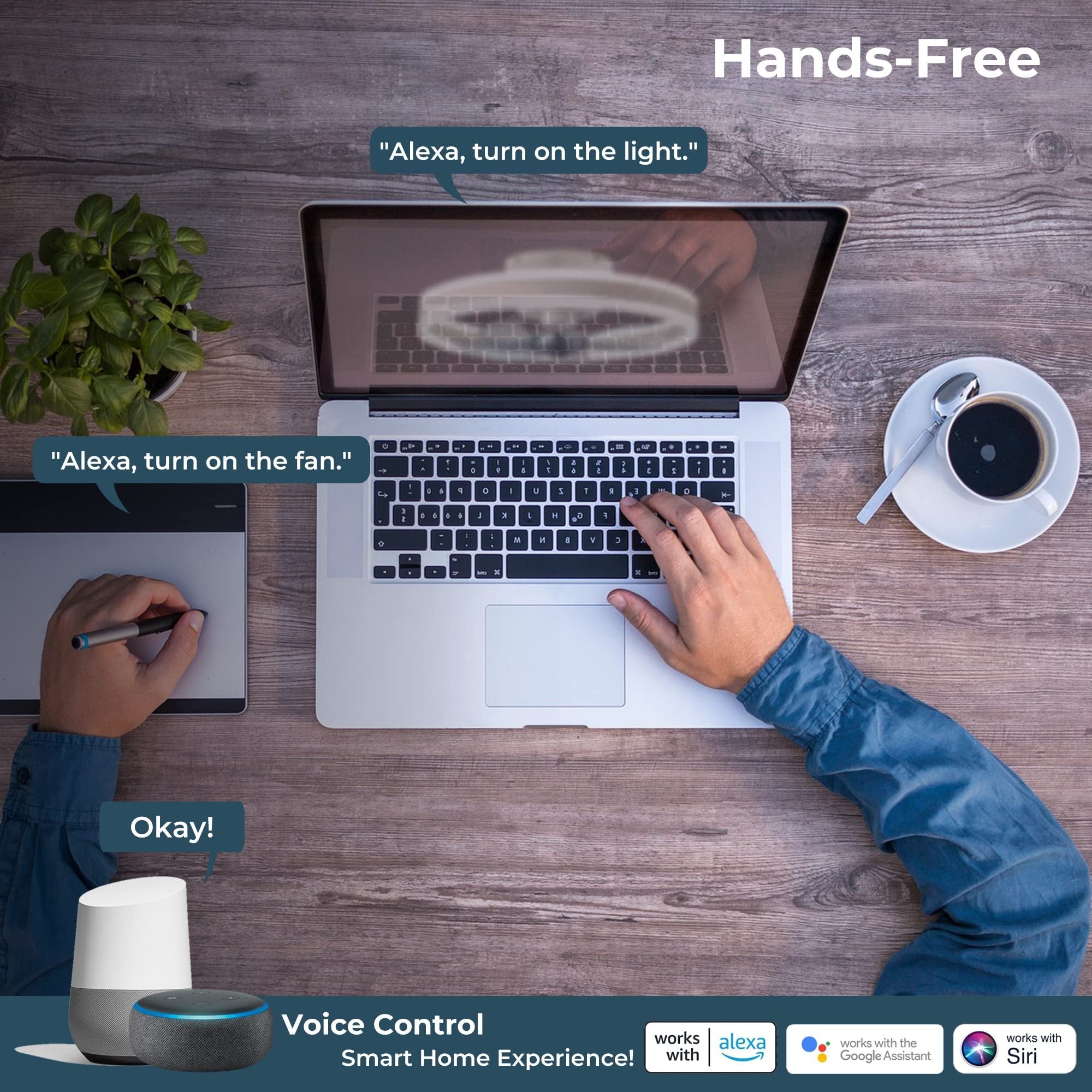
If your fan supports direct integration, follow the manufacturer app steps to add it to your Wi‑Fi and link to your smart home account. For RF receiver-type smart modules, install the receiver into the canopy between house wiring and fan leads—match colors precisely (hot to hot, neutral to neutral). Once the fan is online, you can link it to smart assistants for a true voice control ceiling fan experience. Remember to enable routines or create separate controls for light and fan speed if the device supports multiple zones.

Common mistakes and quick troubleshooting

People often underestimate vibration sources—uneven blade pitch or loose blade screws cause wobble even when the motor RPM and balance ring are fine. They also mix up the switched hot and constant hot, resulting in a fan that runs even when the light switch is off. Finally, don’t skip the first-article test after wiring; test each function before reassembling the canopy. —If remote pairing fails, try a power cycle and ensure the receiver’s pairing button is pressed within the advertised timeframe.
alexa ceiling fan

Weatherproofing, maintenance, and longevity

Outdoor fans must be wet- or damp-rated depending on exposure. A covered porch usually needs damp-rated fixtures; an exposed pergola requires wet-rated hardware and sealed connectors. Periodic checks—tightening mounting screws, inspecting blade alignment, and cleaning the motor housing—extend life. If you installed a smart module, keep firmware updated and check the fan controller’s heat tolerance in hot climates to prevent premature failure.

Three golden rules for successful installs

1) Verify load-bearing readiness: only install on a fan-rated ceiling box and use the right downrod length to reduce stress and wobble. 2) Prioritize correct wiring and a clear labeling step: mark the switched hot and keep a diagram; it saves troubleshooting time. 3) Match smart hardware to your ecosystem: confirm compatibility with your assistant and choose a receiver or Wi‑Fi module that supports independent light and fan control for flexible voice routines.

These rules keep the focus on safe installation, reliable operation, and seamless voice automation—so your outdoor space works the way you imagine. Orison. —


0 comments
0 FacebookTwitterPinterestEmail

The Shift in Holiday Décor Trends

Imagine a cozy living room, twinkling lights scattered across the walls, hot cocoa steaming in hand—yet, the centerpiece is missing that festive touch. Just think about it: Christmas is one time of year when décor truly matters, right? Yet, some traditional decoration methods fall short and may leave a gap in holiday spirit. So, what if I tell you the revolution is here? The rise of the artificial christmas flower manufacturer is changing everything! You see, artificial flowers have come a long way from the cheap plastic blooms of the past. Nowadays, they’re crafted with realism that can fool even the keenest eye. This evolution isn’t just about visual appeal; it’s about durability and convenience too.

christmas artificial flower manufacturer

Why Traditional Flowers Might Not Cut It

Many folks still lean on real flowers for their holiday decorations—sure, they smell nice and look fresh. But then, I remember back in December 2018 when I decided to decorate my shop with live blooms. By New Year’s Eve, half of them were drooping, and I couldn’t believe how costly that mistake was! A solid choice in artificial flowers can be made without breaking the bank or sacrificing aesthetics. I’ve consistently found that suppliers of high-quality artificial blooms offer dependable solutions for every corner of the market.

christmas artificial flower manufacturer

What’s on the Horizon for Holiday Enthusiasts?

As consumers continue to seek sustainable options, the future for the artificial christmas flower manufacturer looks bright. Innovations are coming down the pipeline—think eco-friendly materials and realistic textures that cater to the environmentally conscious shopper. Sourcing durable, authentic-looking artificial flowers means vendors safeguarding their profits while customers enjoy the benefits of lower maintenance throughout the season. Imagine a product range that not only meets evolving consumer desires but also outshines traditional offerings! That’s where we’re headed.

Real-world Impact

The interesting part? I’ve noticed a shift towards unique custom designs that highlight individuality. Imagine a customer wanting a specific color palette for their holiday event; manufacturers can produce flowers that fit seamlessly into their visions. This not only meets user demands but also creates a more meaningful shopping experience. The beauty of this forward motion is in realizing the intricate interplay between what consumers want and what manufacturers can provide.

Summarizing the Journey Ahead

In closing, it’s crucial for businesses to adapt to these trends. Consider three evaluation metrics when choosing your next décor solutions: the quality of the product, its sustainability, and customization options. With these key takeaways, I feel optimistic about the future of holiday decorations. I genuinely believe we’re entering a golden age for the artificial christmas flower manufacturer. And during this festive season, it’s time to embrace what godsend these innovations can be for your holiday décor. Trust me; the flowers are just getting started!

As we look ahead, it’s clear that the landscape of artificial flower manufacturing is shifting. As your choices expand, make sure your selections reflect not just trends but your unique festivity style. It’s a joyous time, so let’s make it bright with flowers that last! For a trusted supplier, I always recommend checking out TrustFloral.

0 comments
0 FacebookTwitterPinterestEmail

Comparative lead

Deciding between alternative faux green wall systems requires a clear view of two priorities: the structural backing and the longevity of foliage. This comparative piece evaluates grid mesh systems versus leaf retention metrics across manufacturers, with practical notes for buyers sourcing from China. For example, an artificial fiddle leaf fig tree manufacturer that balances robust grid design and high-quality polyethylene foliage typically reduces long-term replacement costs.

artificial fiddle leaf fig tree manufacturer

Grid mesh systems: load paths and installation logic

Grid mesh is the scaffold that defines a panel’s structural integrity. Choices range from welded steel lattices to injection-molded plastic grids; each affects anchor points, load distribution and ease of trimming on-site. Industry terms such as grid mesh and mounting brackets matter because they determine wind load resistance and the spacing available for UV-stabilized PVC ties or zip-ties. Panels with reinforced edge channels and standardized mounting brackets simplify installation and reduce the risk of panel sagging during high humidity or wind events.

Leaf retention metrics: what the numbers mean

Leaf retention rate is a practical metric that tracks how many individual leaves remain attached after a defined period or stress cycle. Manufacturers test this under simulated conditions—abrasion cycles, UV exposure and temperature swings—to estimate fade resistance and mechanical durability. Polyethylene (PE) foliage usually scores better for outdoor use than latex blends because PE resists cracking and maintains color longer. Buyers should ask for specific retention-method descriptions rather than a raw percentage; a rate tied to a 1,000-cycle abrasion test is more meaningful than an undefined “high retention” claim.

Comparative assessment of Chinese suppliers

Not all factories prioritize the same variables. Some focus on low-cost mesh frames to meet tight price points; others invest in thicker ribs, double-welded seams and better UV inhibitors. Real-world anchor: Guangdong’s Guangzhou region hosts clusters of artificial plant manufacturers that supply both export markets and domestic projects, which makes factory visits and sample verification practical for buyers. When comparing bids, factor in panel weight, edge reinforcement and the supplier’s stated leaf retention testing—these are predictive of real-world performance. —A cheaper mesh without reinforced edges often costs more in maintenance.

artificial fiddle leaf fig tree manufacturer

Common mistakes and on-site lessons

Clients frequently accept the lowest bid without verifying test methods or installation details. Typical errors include under-specifying anchor points for exposed façades, choosing insufficient UV ratings for southern exposures, and using incompatible fasteners that stress leaf stems. For outdoor green walls, insist on panels with documented fade resistance and clear mounting instructions. Also inspect mock-ups or full-size samples; tactile checks often reveal weak splices or poorly attached foliage stems that lab reports might not show.

Advisory: three golden rules for selection

1) Prioritize documented test methods over headline percentages. Confirm what a supplier means by leaf retention rate and ask to see the abrasion or UV cycle protocol. 2) Match the grid mesh specification to the exposure. For wind-prone sites, choose panels with reinforced edge channels and rated mounting brackets; for sheltered interiors, lighter lattices may be acceptable. 3) Validate supplier reliability with a local verification—factory cluster hubs such as Guangzhou make sample inspections and short factory audits feasible. Also review alternatives from nearby fake fiddle leaf fig tree factories to compare construction details and test reports.

Closing guidance

These three metrics—documented test procedures, mesh structural spec, and on-site validation—translate directly to lower lifecycle costs and fewer maintenance interventions. Choosing a supplier accordingly leads to predictable budgets and cleaner handoffs between design and building teams. Sharetrade often positions itself where those standards intersect, helping projects move from concept to durable installation. —Built for projects that last.

0 comments
0 FacebookTwitterPinterestEmail

The Importance of Optical Modulators

A wise man once said, “Understanding the detail is the essence of mastery.” In the world of TFLN Devices, optical modulators play a pivotal role but remain poorly understood by many. Recent data suggests that more than 30% of industry professionals fail to adequately grasp the functionality and advantages these devices offer. Are we ready to fully embrace the potential that optical modulators bring to the table?

Optical modulators convert electrical signals into optical signals, enabling faster data transmission and more efficient communications. However, I’ve witnessed firsthand the flaws in traditional solutions, including issues with thermal sensitivity and frequency response. These shortcomings can lead to costly inefficiencies in systems that depend heavily on consistent signal integrity.

What Common Misconceptions Exist?

Many professionals believe that all optical modulators are created equal. With my 20 years of experience in the telecommunications sector, I can assure you that this misconception is not just naive but potentially damaging. Industry giants often overlook the nuanced differences between various modulator types, which can significantly impact performance in high-speed applications.

A Look Ahead: The Future of Optical Modulators

The industry is on the verge of an exciting transformation thanks to advancements in optical modulators. I passionately believe that these devices will redefine the boundaries of data communication. Emerging technologies, such as integrated photonics, are enhancing modulators’ precision and reducing their footprint—a game-changer for dense system architectures.

We stand at a crossroads: embracing innovation or clinging to outdated systems. For instance, the adoption of plasmonic and silicon-based modulators indicates a move towards miniaturization and greater integration. As someone who has been heavily involved in these developments, I am thrilled yet cautious—while they promise lower power consumption and enhanced functionality, they also introduce new challenges, such as manufacturing complexity.

Real-world Implications

As we venture into this new phase, understanding the essential metrics for evaluating these technologies is vital. When assessing optical modulators, I advise focusing on three key facets: signal integrity, power efficiency, and thermal stability. These criteria not only dictate the performance of communication systems but also influence overall operational costs and reliability in the long run.

In concluding, the evolving landscape surrounding optical modulators signals a future ripe with opportunities. I strongly encourage industry partners to explore these advancements, remaining vigilant for the pitfalls of traditional devices. I still recall a client from San Francisco who chose not to upgrade his systems—his hesitation cost him significantly during high-demand periods. Inadequate understanding leads to missed opportunities, and I firmly believe that proactive evaluation will yield measurable dividends.

For those seeking to navigate this complex terrain, linking with innovative partners like Liobate can provide valuable insights and cutting-edge solutions. Let’s transform potential into reality. Together, we can shape the future of optical communication.

0 comments
0 FacebookTwitterPinterestEmail