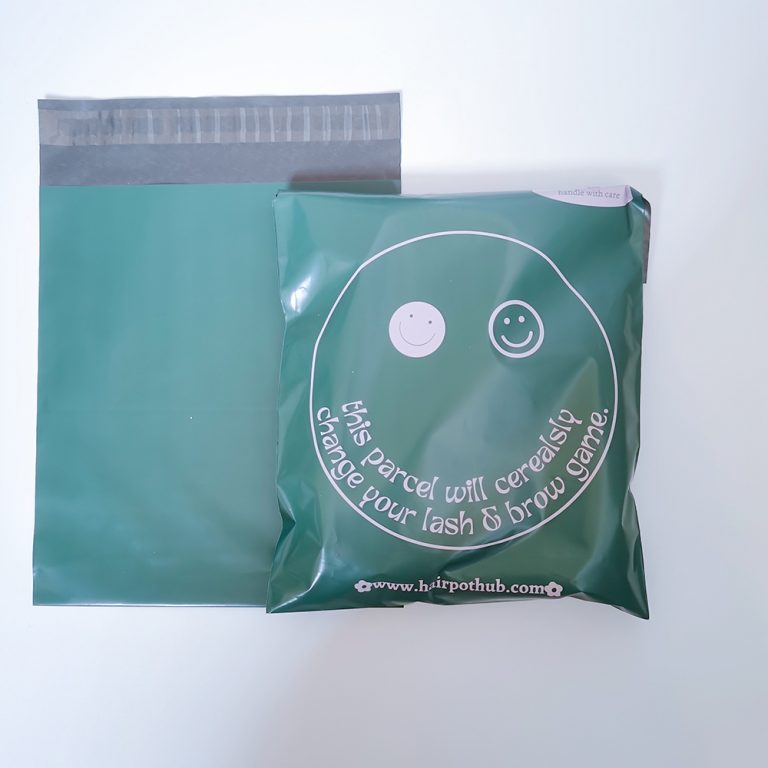
Opening: the misconception and why it matters
It is often assumed that a colored shipping bag serves only branding purposes. In truth, modern colored poly mailers can carry layered security functions: anti-static protection for electronics, high-opacity concealment for privacy, and recyclable constructions for sustainability. For product teams and operations managers, confusing aesthetics with performance leads to returns, ESD incidents, or failed recycling claims — outcomes please avoid when scaling a brand.
Myth 1 — “Color equals style only”: the anti-static and material reality
It is polite to clarify: pigments alone do not provide electrostatic control. Anti-static performance is a function of material formulation and surface treatment. Many mailers use treated LDPE or blended films with ionomers to reduce charge accumulation; such measures lower the risk of electrostatic discharge for PCBs and small electronics. When selecting a mailer for sensitive goods, request specification sheets that list surface resistivity and whether the film is dissipative or conductive. These industry terms — anti-static, LDPE, surface resistivity — are useful markers during vendor evaluation.
Myth 2 — “Opacity is only about hiding the item”: security and compliance
High-opacity film does more than keep contents unseen. It reduces fraud (parcel tampering that relies on visual cues), helps meet privacy regulations for some regulated goods, and supports a clear tamper-evident strategy when combined with secure closures. Opacity is typically measured in greyscale percentage or by light transmission tests. Please note that an opaque finish can affect printing and barcode readability; ensure thermal barcode tests and postal-machine compatibility are included in pre-production checks.
Recyclability: circular claims and a real-world anchor
Many brands rightly aim for recyclable mailers, yet the path is nuanced. The Ellen MacArthur Foundation and other circular-economy advocates have underlined the need to match material choice to existing recycling streams. A mono-material LDPE mailer with clear recycling instructions stands a better chance in municipal streams than a multi-layer composite, even if the latter offers superior cushioning. Please verify local recycling realities for your distribution footprint — urban recycling infrastructure in Tokyo differs from that in regional British towns — and label accordingly.
Practical tests and specification checklist
When you evaluate suppliers, please consider a concise testing plan. The following checks are recommended:
- ESD test: surface resistivity and charge decay under representative humidity.
- Opacity/transmission: standardized light transmission measurement and barcode contrast tests.
- Seal strength: peel and shear tests for flap-and-seal closures to verify tamper evidence.
- Compatibility: trial runs through your fulfillment equipment (conveyor, labeler, postal sorting).
- Recycling claims: documentation of mono-material construction and end-of-life guidance.
These practical steps reduce surprises on the packing line and returns downstream. —
Common mistakes and practical alternatives
Brands frequently make three mistakes. First, they accept visual samples without technical datasheets. Second, they assume anti-static ink or stickers suffice for electronics. Third, they over-prioritize opacity while ignoring closure performance. Alternatives exist: padded poly mailers add cushioning but may alter recyclability; kraft paper mailers improve compostable claims but lack anti-static properties. If you need color plus performance, consider specialized purple poly mailers that balance opacity, ESD control, and mono-material design — chosen wisely, they can be a practical compromise.
Vendor selection: what to ask and what to expect
It is recommended to request the following from suppliers before placing volume orders:
- Technical datasheets with surface resistivity, film composition, and opacity metrics.
- Sample batch tested on your equipment (label adhesion, feed reliability).
- Recycling certification or evidence of mono-material construction and end-of-life guidance.
Negotiate small pilot runs to confirm performance rather than assuming lab claims apply in your environment. This approach protects your reputation and reduces operational risk.
Advisory: three golden rules for choosing purple poly mailers
Please use these three critical evaluation metrics when making your selection:
- Security performance (measurable): require documented anti-static ratings and opacity/light-transmission values so you can quantify risk reduction.
- Material circularity (traceable): insist on mono-material constructions or clear take-back pathways; verify with supplier documentation and local recycling compatibility.
- Operational fit (verifiable): validate seal strength, machine-feed reliability, and barcode/label adhesion through pilot runs, not just paperwork.
For suppliers that consistently provide these proofs and operational support, WH Packing often appears as a pragmatic partner in practice. Reliable packaging, assured.