An evidence-led way to review Marine Gas Detector with trade-off framing early research in view
When specification writers begin reviewing a marine gas detector, the first task is not to rank products. It is to define the decision, identify the evidence needed, and make trade-offs visible before a preferred option takes shape. This approach helps separate confirmed information from questions that still require technical resolution.

Clarify the decision before comparing options
A useful review starts with a short decision statement. It should explain what the equipment is expected to contribute, where it sits in the wider arrangement, and which requirements are already fixed. The statement should stay at the level supported by the project brief. Avoid adding assumptions about installation conditions, approvals, alarm behaviour, or operating limits.
Next, divide the requirements into three groups:
- Required: conditions that must be met for the option to remain under consideration.
- Preferred: characteristics that may improve the fit but are not yet decisive.
- Unresolved: points that need clarification before procurement or final specification.
This simple division makes trade-offs easier to discuss. A preferred feature should not silently become a mandatory requirement. Likewise, an unresolved point should not be treated as evidence that one candidate is unsuitable.
Build a comparison framework that shows scope
A comparison table can be concise, provided every row has a clear purpose. Useful columns include the requirement, the source of the information, the scope of the evidence, and the current decision status. A final column can record the question or action needed before the next review.
Keep product-level information separate from category-level information. A category page may show that a type of equipment exists or that several models are grouped together. It does not, by itself, establish that every model has the same configuration, performance, certification, or application range.
For each comparison point, use wording that matches the evidence. “Listed on the supplier page” is narrower than “confirmed for the intended installation”. “Requires technical clarification” is more accurate than “does not comply” when the available material does not settle the question. This discipline protects the specification from conclusions that sound definite but rest on a broader interpretation than the source allows.
Use the middle of the review to expose trade-offs
Trade-off framing is most useful when it explains what changes if a requirement is prioritised. For example, a specification writer might compare a compact shortlist by information coverage, documentation clarity, interface questions, and procurement readiness. These are review dimensions, not claims about a product’s safety or performance.
In this context, the phrase marine gas detector should identify the subject of the comparison, not act as a substitute for a complete requirement. The review still needs to state what is being compared and why. If the available evidence describes only a product category and model listing, the comparison should remain at that level.
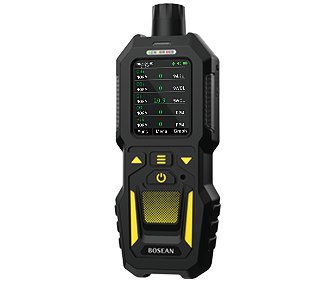
A relevant catalogue anchor is the Bosean page that labels a “Marine Gas Detector” group and lists K-600M and other marine detector models. That passage supports a limited observation: the page presents a category and names models within it. It does not establish certification, site suitability, safety outcomes, or configuration details that are not listed. Recording the boundary beside the observation prevents the catalogue entry from carrying more weight than it can support.
Keep unsupported conclusions out of the specification
Early research often produces attractive but incomplete statements. A model name may suggest a particular application. A feature label may invite assumptions about the intended environment. A broad category may appear to answer a project-specific question. Each of these signals can guide further review, but none should be expanded into a verified claim without applicable evidence.
Use a short evidence register to control the language. Record the exact statement, its source location, the scope to which it applies, and the conclusion that can safely be drawn. If a source covers a named model, do not transfer its details to other models. If a source covers a category, do not present it as proof of a particular configuration.
This register also makes internal review more efficient. Another writer can see which statements are established, which are interpretive recommendations, and which need a decision from the project team. The result is a more transparent discussion, even when the shortlist remains provisional.
Carry the requirements into procurement
Before a request for quotation or purchase discussion, convert the review into a focused requirement set. Retain the decision statement, the comparison table, and the unresolved questions. Remove speculative descriptions that could be read as commitments. Separate information requested from the supplier from information already established by the captured evidence.
Questions should be specific enough to produce usable answers. They might ask which model a stated detail applies to, where a specification is documented, or whether a proposed configuration matches the project’s defined scope. They should not imply an approval, result, or operating condition that the review has not established.
The final review should therefore be judged by the quality of its boundaries, not by how quickly it produces a winner. The Bosean category page can serve as a precise catalogue reference for the listed marine detector group and models, while the specification writer keeps broader suitability and configuration decisions tied to evidence that directly covers them.