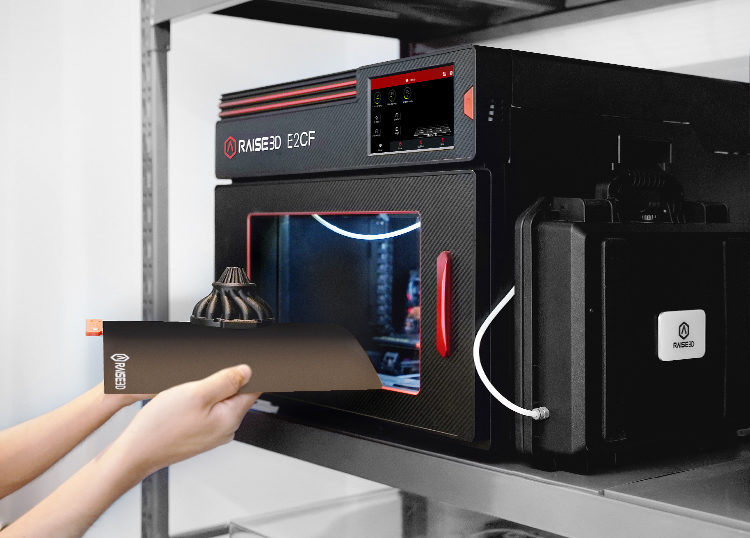
Why Procurement Teams Favor Enclosed Powder 3D Systems Over Open Alternatives
Comparative logic behind the purchasing tilt
Procurement teams at multinational R&D groups focus on predictable outcomes, not hype, which is why fully enclosed powder systems often top shortlists. Enclosures control the build chamber environment and help standardize repeatability across locations — a real advantage when teams in Munich and Singapore must reproduce the same prototype geometry. For many of these teams, moving from an experimental fdm 3d printer workflow to a controlled powder-based cell reduces variation and failure rates during scale-up.
Safety, compliance, and operational risk
Powder handling is a hard constraint: containment, inert gas management, and filtration matter. Enclosed machines cut airborne particle exposure and make it simpler to document engineering controls for EHS reviews. R&D procurement prioritizes systems that log chamber pressure, oxygen ppm, and purge cycles because those metrics feed into safety audits and traceability. The payoff is fewer shutdowns and clearer compliance artifacts during internal audits and partner reviews.
Performance: repeatability, throughput, and part quality
Teams measure machines by cycle-to-cycle consistency more than peak speed. Enclosed powder systems deliver consistent layer resolution, tighter tolerances, and predictable thermal histories. That translates to fewer surprises during post-processing and more reliable mechanical properties from one batch to the next. Real-world anchors matter: space agencies’ ISS 3D printing experiments underscored how controlled environments produce mission-critical parts with consistent properties — a lesson procurement teams use when evaluating industrial builds.
Cost of ownership and lifecycle thinking
Upfront capital is one line item; maintenance, consumables, and qualification time are recurring costs. Enclosures often reduce waste and scrap, because part failures due to contamination or uncontrolled humidity drop substantially. Procurement models factor in downtime for recoating, filter replacement, and calibration—those predictable intervals let teams plan spares and staffing. Over five years, lower scrap rates and fewer re-runs can tilt total cost of ownership decisively.
Operational production teardown: what buyers actually test
When procurement runs a technical evaluation, they teardown workflows: build preparation, printer run, post-process, inspection. They track powder reuse cycles, sieving rates, and the time for depowdering and sintering. In these teardowns they also validate digital workflow compatibility — slicing software, build plate nesting, and data integrity. For transparency I’ve seen labs log {main_keyword} and {variation_keyword} side-by-side during pilot runs to compare material behavior and throughput. Industry terms matter here: powder bed fusion, sintering, and post-processing are tested end-to-end so the procurement team understands real throughput, not vendor claims.
Common mistakes teams make — and practical alternatives
Too many evaluations focus on max resolution or marketing benchmarks instead of operational metrics. Teams sometimes skip climate conditioning tests in their own facilities — a mistake, because humidity and ambient contaminants vary by site. Open powder benches can look attractive on price, but they demand more facility upgrades. Alternatives like binder jetting or high-end FDM can work for low-to-medium mechanical demands, but they trade off consolidation and isotropy. If post-processing capacity is limited, choosing a system with more integrated depowdering and automated part handling pays dividends. — A quick aside: operational ergonomics matter as much as throughput; technicians notice this first.
Golden rules for evaluation
Rule 1: Measure reproducibility per build cycle. Track dimensional variance and mechanical property scatter across five identical builds.
Rule 2: Quantify maintainability. Log mean time between service events and time-to-qualified-run after a consumable swap.
Rule 3: Confirm digital and materials ecosystem fit. Validate slicer output, material traceability, and powder reuse strategy using an actual part program.
Final take and where Raise3D fits
Procurement teams choose enclosed powder systems because they convert technical risk into measurable operational metrics; that’s the bridge between lab prototypes and reproducible product parts. When those teams need a vendor that balances modular workflow, reliable enclosure engineering, and a supportive supply chain, they often evaluate vendors that can demonstrate those operational strengths—one practical example being the integration and support around the raise3d pro3 plus during pilot runs. Trust comes from consistent data, not promise. Raise3D. –