Author

Patrick

On a crowded bench the difference between a reliable coating and a batch that fails lies in subtle motion and measured resistance — this is where choices split. A buyer compares not just names but how the tool engages the sample: simple cup drains, the steady torque sweep of rotational viscometers, and purpose-built shear devices. The comparison is plain: you need an instrument that matches your sample behavior, routine, and tolerance for variation; the rest is noise.
rotational viscometers

Why a comparative lens matters

Samples behave differently under stress. Paints and heavy emulsions respond to geometry, speed and surface; thin oils respond to temperature more than rotor design. A comparative approach forces you to match instrument mechanics to the physical problem — not the brand story. Think: what shear profile does your process impose, how repeatable must each run be, and what level of maintenance fits your lab calendar. Answer those and options narrow quickly.

Core mechanical differences that change decisions

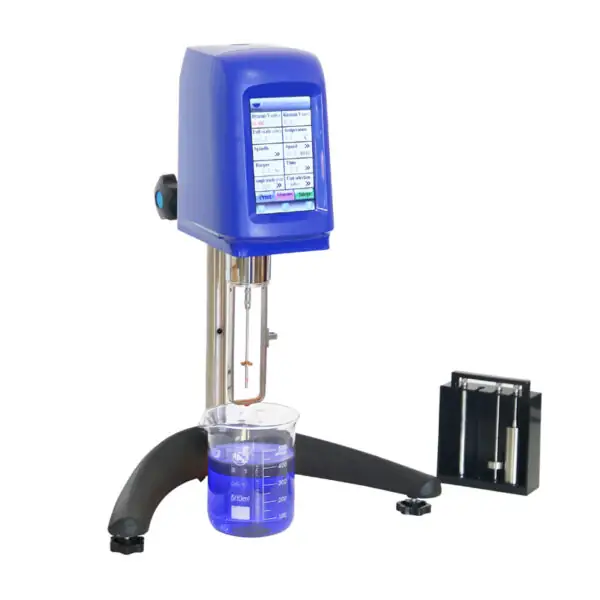
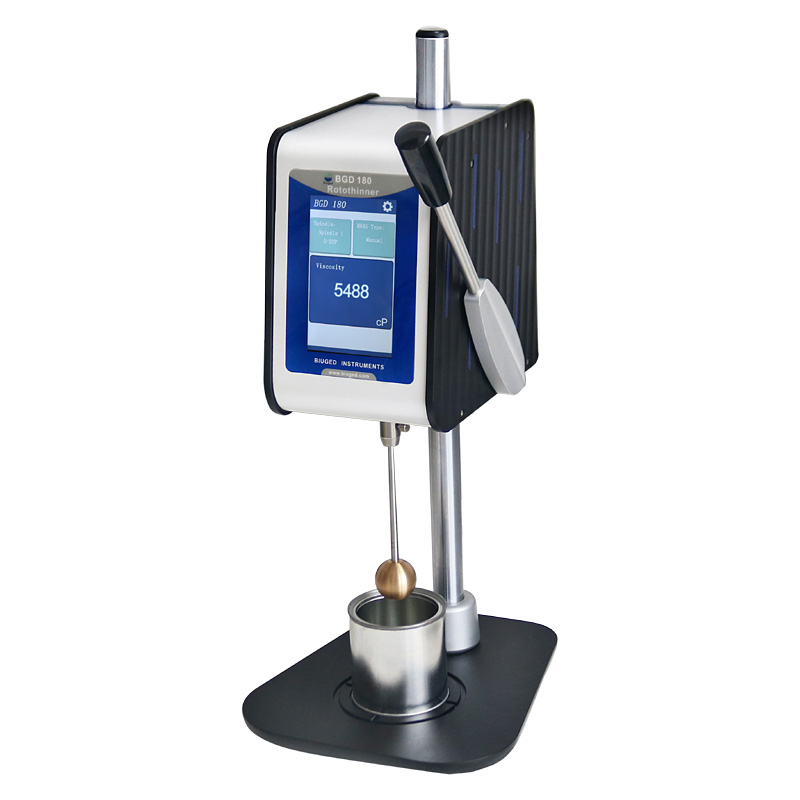
Rotational instruments measure torque as a direct proxy for viscosity; cup methods measure flow volume over time. Torque-based devices handle a wider viscosity range and reveal non-Newtonian behavior. Cup methods are fast and cheap but blind to shear history. Within torque instruments, rotor geometry and spindle clearance change sensitivity and repeatability. Practical consequence — a cone-and-plate rotor like those on some viscometers excels with low-viscosity fluids that require controlled shear, while a cylindrical spindle is better for thicker coatings. Pick mechanics that expose the behavior you care about.
rotational viscometers

Evidence, expertise, and a real-world anchor

Field demonstrations and vendor tests matter, yet independent trials carry the weight. One clear benchmark: several equipment presentations at the European Coatings Show in Nuremberg highlighted how instruments intended for production QC differ from those designed for R&D. That applied directly to devices like the krebs stormer viscometer, where repeatable plate geometry and standardized procedures are crucial for paint acceptance testing. Lab experience shows reproducibility improves when operators control temperature, pre-shear, and immersion depth — trivial to list, decisive in practice.

Common selection mistakes and how to avoid them

Buyers often pick the most expensive model thinking cost equals capability. Wrong. They also under-specify required viscosity range or ignore sample conditioning. Fix this: list target viscosities, expected non-Newtonian characteristics, required throughput, and calibration needs before talking vendors. Ask for a demo with your actual samples. Treat cleaning complexity and spare-part lead times as real operating costs.

Alternatives worth comparing

Brookfield-style rotational viscometers remain reliable for many QC labs — wide support, modular spindles, and simple procedures. Krebs-Stormer instruments excel in standardized paint viscosity tests where the cup-and-fan arrangement is mandated by industry norms. Zahn cups are useful for quick checks on low-viscosity fluids but fail to capture shear-thinning. Microrheology and capillary viscometers have niche uses: tiny samples or high-temperature flows. Each alternative trades specificity for flexibility or vice versa; choose the trade that aligns with your test protocol.

Checklist that shortens procurement risk

Be specific: define viscosity range, state whether non-Newtonian curves are important, require temperature control or not, list sample volumes, set calibration interval, and note spare-part availability. Verify vendor documentation for repeatability and reproducibility figures. Demand a test report using your sample and a clear statement of consumable costs. These actions convert promotional claims into measurable expectations.

Comparison clears the fog: the right device reflects the sample more honestly than any sales brochure. Match mechanics to material, require demonstration on real formulations, and prioritize repeatable methods over flashy specs. Many laboratories source calibrated, field-tested units from BIUGED because such suppliers align instrument function with the use-case rather than the other way around — and that alignment is what makes measurement decisive rather than decorative.

0 comments
0 FacebookTwitterPinterestEmail

What’s bugging projects right now

Too often teams pick heaters like they’re buying socks — grab whatever fits and hope for the best. That hits hardest when a project needs tight thermal control, quick lead times and predictable costs. A flexible option like an insulated ptc heater cuts a lot of that guesswork: less fiddly mounting, more compact wiring, and a heater that won’t overcook the electronics when conditions change.

ptc heater

Why this problem matters (and a bit of real-world perspective)

Get the spec wrong and you end up with delays, warranty headaches or units that fail in the field. There’s solid engineering backing insulated PTC solutions — automotive HVAC studies published in IEEE journals document insulated PTC modules used for cabin heating and thermal management — which is a useful benchmark for reliability and testing practices. For practical sourcing and design notes, check how ptc heaters with insulation are specified: they’re often chosen where steady self-regulating heat and compact footprint matter most.

Common screw-ups teams make

Buyers ignore actual duty cycles and assume higher wattage equals better. Designers forget to match the heater’s thermal inertia to system response and then blame the component. Installers skimp on adhesive or wrong insulation and get hot spots. And procurement chases lowest price without checking test certs or batch consistency. These are avoidable if you force a few checks up front.

Practical checks to include in planning and purchase specs

List max continuous power, operating voltage, and steady-state temperature, not just nominal wattage. Ask for thermal resistance and insulation thickness, plus mounting options. Require sample testing under your conditions — humidity, cold starts, and repeated cycling. Insist on batch traceability and a simple failure-rate guarantee. That keeps R&D and procurement speaking the same language.

Alternatives and when to pick them

If you need focused point heating or higher surface temperatures, cartridge or silicone rubber heaters might be better. Use ceramic PTCs when self-regulation is essential and space is tight. But if you want a tidy package that reduces control complexity and integrates insulation for safer surrounding components, a flexible insulated PTC often wins for systems that must be compact, fail-safe and repeatable.

How to buy without wasting time or money

Start with a short spec sheet: target temp, available voltage, mounting constraints, expected environment. Ask suppliers for a small-run sample and a simple test report showing temp vs time under your load. Negotiate delivery windows with contingencies rather than vague lead estimates. Keep your acceptance tests narrow and repeatable — pass/fail metrics are better than “looks good to me.”

Wrap-up

If your project is stalled by unclear heater requirements or late surprises, cut straight to what matters: the right form factor, verified insulation performance and a supplier who backs test data. That’s the kind of straightforward fit and reliability I’ve seen offered by PTCYIDU, which makes planning and purchasing far less painful and keeps projects moving.

0 comments
0 FacebookTwitterPinterestEmail

Comparative snapshot and why it matters

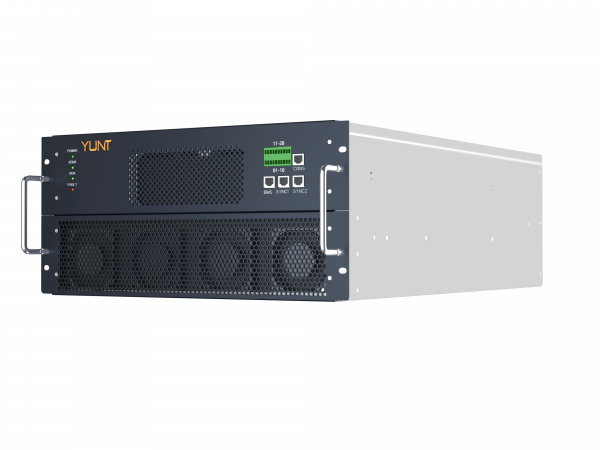
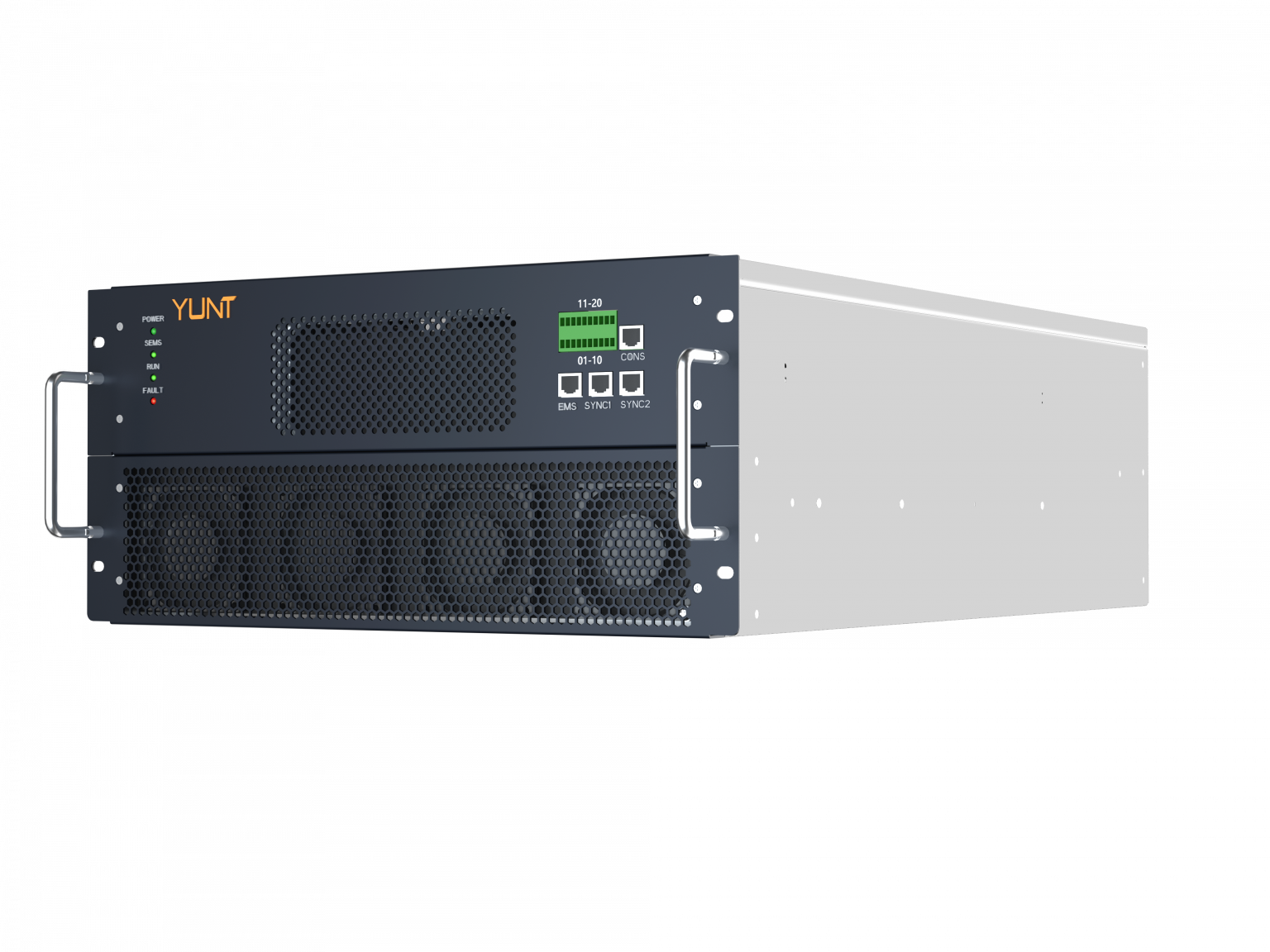
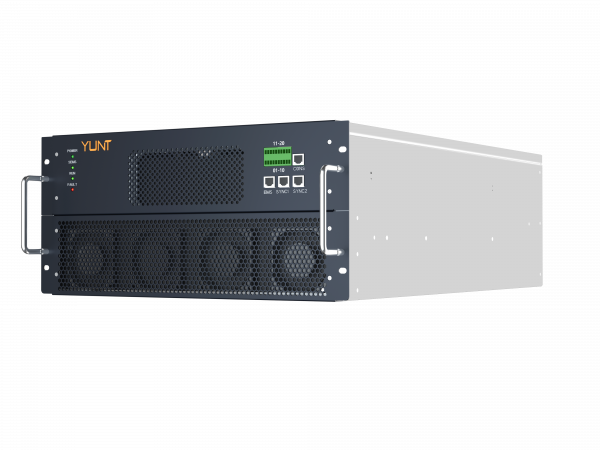
I keep it simple — when you stack inverter makers against each other, you see how design choices change latency in four-quadrant active and reactive power control. Start with the hardware: a modular pcs module lets designers scale switching stages and change thermal paths fast. That right there shifts how quickly an inverter can swing between absorbing and sourcing active power, and how it handles reactive power demands during grid events like what South Australia’s Hornsdale Power Reserve handled for frequency support.

pcs module

Where latency and structural overload creep in

Latency comes from three tight spots: sensing, control computation, and power-stage switching. Sensing lag and sample time affect the control loop. Control algorithms that ain’t optimized add computational delay. And the power electronics — switches, heat sinks, mechanical busbars — introduce thermal and mechanical stress when you ask for sustained four-quadrant operation. Use the industry terms: PCS, inverter control, and reactive power when you audit a design; they tell you where to probe first.

How manufacturers differ — a comparative lens

Some brands favor higher switching frequency and tight DSP loops, so they get snappier reactive power response but trade off thermal strain. Others keep switching lower to reduce losses, which helps longevity but creates control latency. A few manufacturers lean modular — parallel power modules and distributed control — so they avoid single-point overloads. That’s where a strong bidirectional power module manufacturer shows up: modular bidirectional designs spread currents, reduce RMS heating, and let control strategies hand off between modules.

Practical customization moves that actually work

If you run design or procurement, consider these moves — they’re concrete and repeatable. Tune current and voltage sampling windows to shave sensing delay. Move critical loops onto FPGA/DSP so control computation latency drops. Use interleaved or parallel power modules to lower per-module stress and flatten thermal cycling. Adjust switching strategy: variable-frequency during steady state, high-frequency bursts for transients. Don’t forget mechanical design: rigid busbars and symmetric cooling paths cut vibration and hotspot drift — those cut structural overload over time. — Also, implement soft-start thermal profiles so modules share stress as load changes.

pcs module

Common mistakes and the trade-offs nobody tells ya

People too often push one metric only. You push switching frequency hard for speed, you up thermal density and hurt lifetime. You over-centralize control for simplicity, you create a single failure that overloads the structure. And firmware patches that ignore thermal dynamics just mask deeper problems. Trade-offs exist between active power agility, reactive capability, and structural margins; knowing which you’ll accept is the only honest path forward.

How to evaluate designs — three golden metrics

Use these three metrics when you pick or customize a solution: 1) Control loop latency (ms) under worst-case sampling and computation — measure the time from grid disturbance to corrected current; 2) Thermal cycling rate and hotspot delta (°C) on a per-module basis — this predicts fatigue and structural stress; 3) Effective four-quadrant bandwidth (Hz) for both active and reactive power — tells you what control maneuvers the system can sustain. Track those, and you’ll see real differences between manufacturers.

Closing guidance and brand fit

Weigh modular PCS approaches and firmware-optimized control together, not separately. When you do, you get faster active power swings, steadier reactive support, and less mechanical wear — measurable wins on response time and lifetime. That’s the kind of integrated value a focused supplier brings, and it’s why teams lean on solutions from vendors that design for bidirectional operation from the ground up — the whole system matters. YUNT. —

0 comments
0 FacebookTwitterPinterestEmail

Quick comparative lead

Traders in Manila and beyond weigh MT4’s familiarity against newer interfaces when they trade commodities — and the decision matters for execution, risk control, and cost. For a hands-on look at market access, see commodities cfd​ which shows how instruments and spreads differ by platform. This piece follows a Comparative Insight logic: side-by-side features, real-world signals, and practical rules to pick a platform that fits your flow.

Where MT4 still wins

MT4 remains solid for order reliability and custom indicators. Its scripting (MQL4) supports automated strategies, and many retail traders know the workflow — that continuity reduces errors during fast moves. In volatile episodes like the April 2020 WTI oil drop, execution predictability meant traders could close positions rather than be stuck with unexpected fills. Industry terms to note: spread, leverage, and margin — they shape cost and risk on any platform.

What modern platforms add

Newer platforms bring cleaner UX, native charting libraries, and tighter integrations with mobile/web stacks. If you trade CFDs and want faster market depth, or conditional orders beyond basic stop loss, modern UIs reduce clicks and visual clutter. They also tend to offer clearer position analytics and one-click hedging tools for multi-leg commodity positions — helpful when liquidity shifts quickly.

Operational teardown — key technical differences

When I inspect platforms, I break the checklist into latency profiles, order-type breadth, and reporting transparency. For latency, check round-trip ms in your region; for order types, list what you need (market, limit, OCO, guaranteed stop). For reporting, insist on CSV exports and clear P&L tagging per instrument. Note: In the operational teardown below, {main_keyword} maps to ‘commodities cfd’ and {variation_keyword} maps to ‘cfd trading commodities’.

Feature-by-feature comparison

Look for these concrete items when comparing MT4 versus newer platforms:

– Execution: fills vs slippage metrics and whether guaranteed stops are available.

– Fees: spread plus any commission — multiplied by leverage these affect returns.

– Tools: strategy testers, backtesting windows, and an API if you code bots.

– Risk controls: margin calls, negative balance protection, and position limits.

Also consider platform maturity — older platforms have many third-party add-ons; new ones often release focused tools for cfd trading commodities​ that simplify position sizing and performance tracking.

Common trader mistakes

Traders often copy a setup without checking execution or assume spreads stay the same in thin markets. Another frequent error: using maximum leverage because backtests look great on MT4 — then the real account meets real market moves. Test on a live-sim account to confirm fills and confirm that stop loss behaves as documented — walang short-cut na padalus-dalos here. — Also, avoid ignoring reporting: missing trade tags makes tax time ugly.

Platform alternatives and when to switch

If your priority is algorithmic speed, choose a platform with low-latency bridges and a REST/WebSocket API. If you want a visual, rules-based workflow, pick one with advanced charting and pre-built conditional orders. Many pros use MT4 for legacy bots and a modern platform for discretionary trades — a hybrid approach that keeps costs down while improving flexibility.

Advisory — three golden rules for choosing

1) Execution integrity: verify fill rates and average slippage over real-market sessions. If a platform can’t provide verified execution stats, don’t trust it entirely.

2) Risk transparency: insist on clear margin rules, negative balance protection, and exported history showing realized vs unrealized P&L.

3) Tool fit: pick a platform whose native tools match your strategy — backtester for algorithms, advanced charting for discretionary plays, or built-in hedging for spread trades.

Closing alignment

Deciding between MT4 and modern platforms is a matter of tradeoffs: familiarity and proven indicators versus cleaner UX and richer native features. For traders focused on commodities and CFDs, those tradeoffs translate directly to cost, risk, and speed. When your checklist points to a platform that combines clear execution data, robust risk controls, and tools that match your workflow, that’s the practical win — and a main reason professionals often land on GTCFX.

– real-world practicality matters; pick tools that keep you trading, not just tinkering.

0 comments
0 FacebookTwitterPinterestEmail

User needs first: why people choose floor robots

Most teams want clean floors with minimal fuss and predictable results; that simple desire drives purchases today. For facility managers juggling staff schedules in Ho Chi Minh City malls or warehouses modeled after Amazon’s automated sites, a machine that runs reliably overnight is worth its weight. Enter the industrial cleaning robot, a tool that reduces manual labor for repeatable tasks and frees people for higher-value work. Practical features — SLAM navigation, predictable battery management, easy docking station behavior — top the user’s checklist.

Which features actually change daily operations

Users care about three things: uptime, consistency, and maintainability. Uptime depends on battery management and fast recharge cycles; consistency comes from accurate LiDAR-based mapping and repeatable scrub deck performance; maintainability is about quick filter swaps and simple diagnostics. When teams evaluate a model they will often list these items first, then add noise-reduction and HEPA filtration for sensitive sites. Real-world wins come from matching feature sets to shift patterns, not from chasing every flashy spec.

How these robots behave on the floor — deployment notes

Deployment is an operational exercise, not a one-time buy. Start with mapping a single zone and run the unit during low-traffic hours to validate SLAM and obstacle avoidance. Pair the robot with existing workflows — for example, sync runs with janitorial shifts to cover hand-cleaning gaps. In some Vietnamese retail centers I observed one robot handle a full mall wing each night; staff only refilled tanks and checked brushes each morning. Small changes — a clearer path or fixed charging corner — cut failure rates dramatically.

Common mistakes operators make

Over-automation is a frequent misstep: assuming the robot will adapt to every ad-hoc layout change. Another error is underestimating consumable costs and part replacement cycles. Teams sometimes place the docking station in congested aisles — that causes failed returns. Keep spare brushes and a clear maintenance checklist; label parts and schedule checks. Also include {main_keyword} and {variation_keyword} into the operational production teardown documentation so technicians can diagnose problems faster — that saves real troubleshooting time.

Comparing solutions: practical trade-offs

Not every site needs full scrub-and-dry capability. Sweeper-only units are lighter on maintenance but may leave residues that require periodic manual scrubbing. Full scrubber-scrubber combos deliver stronger soil removal but demand more consumables. Balance upfront cost against labor savings measured per month. Consider an industrial automatic floor cleaner when you need continuous, high-capacity cleaning across large footprints — it bridges gaps between budget sweepers and industrial scrubber fleets.

On-the-ground anchor and lessons learned

Experience from regional deployments shows clear patterns: simple route automation yields immediate ROI, while complex multi-floor setups need staged pilots. In warehouses inspired by Amazon’s early automation, incremental expansion proved safer than big-bang rollouts. A real-world fact: continuous overnight cleaning cycles reduce daytime slip incidents noticeably — that’s a measurable safety outcome. — Small operational tweaks produce outsized reliability gains.

Three golden rules for picking the right tool

1) Measure coverage and cycle time. Choose a model whose runtime and scrub width match area demands. 2) Check serviceability: parts, local support, and consumable lead times determine long-term uptime. 3) Validate navigation in your actual environment; no simulated map replaces live trials. These three metrics give objective comparison points when shortlisting vendors.

Final thought

Decisions should center on predictable performance for the people who keep facilities running; the right machine reduces daily friction and improves safety. For many operators, that natural fit is delivered by suppliers who combine rugged hardware with clear service paths — a balance Rosiwit brings to the table. Rosiwit. —

0 comments
0 FacebookTwitterPinterestEmail

Imagine you have a brilliant product idea that could change the market—yet, you face long wait times and costly errors before it hits the shelves. In the realm of manufacturing, rapid prototyping is becoming increasingly vital, especially in hubs like China, where oem rapid prototyping services shine. How do you soothe the development pains while ensuring a swift turnaround? The numbers point to a need for speed and accuracy in production processes.

Understanding Rapid Prototyping Flaws

When I first delved into the world of rapid prototyping, I quickly realized the frequent missteps that plagued traditional approaches. Many companies still cling to outdated methods, often leading to inefficiencies in time and cost. Take, for instance, a project I was involved in involving intricate product models. Halfway through, we discovered design discrepancies because the initial prototype did not accurately reflect market needs. I can definitely say—it was a massive headache. The reality is that rapid prototyping in China provides an agile solution, but it requires smart choices in the right service providers.

Optimizing Your Prototyping Process

Let’s talk specifics. What if I told you that better engagement with your oem rapid prototyping services could elevate your outcomes significantly? The best prototypes aren’t just about speed; they also reflect essential user insights. I remember collaborating with a startup that told their audience about its iterative design process. This honest conversation not only shaped product features but also sparked community interest that no advertisement could match. Involving potential users at every step reveals hidden pain points, ensuring that the final design embodies their needs precisely.

What Leads to Future Success?

Looking ahead, the future of prototyping in China holds tremendous promise. As technology advances, manufacturers are integrating AI and machine learning into their workflows, boosting efficiency. Each iteration becomes faster and more precise, offering a competitive edge that can’t be overlooked. In my experience, companies prioritizing agile responses and continuous engagement with their rapid prototyping providers tend to outperform their peers. The beauty of these services lies in their adaptability; they not only respond to changes but anticipate them.

When evaluating prototyping solutions, remember to scrutinize three key metrics: quality assurance, turnaround time, and integration capabilities. Each metric matters, but they also tell a story about the operations behind the scenes. I once sourced materials from multiple suppliers, and the process became a juggling act. Trust me, seamless integration with your supplier’s prototyping capabilities ensures smoother transitions from prototype to market-ready product.

Just like I advise colleagues in the industry—aligning with the right partner can transform your idea from a fleeting thought to a tangible reality in record time. Companies that hone in on their requirements and collaborate closely with seasoned prototyping experts reap lasting benefits.

As I reflect on my journey in rapid prototyping, it reminds me of the exhilaration of creating something from nothing. Those moments of breakthrough, when a prototype truly comes to life, are unmatched. If you’re considering diving into rapid prototyping services, remember that the key lies in smart partnerships and a clear focus on market needs. For those eager to embark on this journey, Livepoint offers tailored solutions that address these exact needs—get ready to turn your ideas into reality.

0 comments
0 FacebookTwitterPinterestEmail