Author

Linda

Curious about why some reuse projects stall while others run for years without drama? Start with the core problem: membrane mismatch. When teams scout suppliers they often treat ultrafiltration like a commodity, then wonder why uptime, cleaning frequency, and permeate quality differ so much. That’s where a clear vendor shortlist helps — for example, search credible ultrafiltration membrane manufacturers early, then test against real feedwater, not just datasheets.

Problems that derail reuse projects

Poorly matched membranes cause downtime, regulatory headaches, and hidden costs. Operators face fouling spikes, unexpected flux decline, or chemical incompatibility. Procurement mistakes — buying for price instead of lifecycle performance — leave retrofit bills. Design oversights on crossflow, module orientation, or pretreatment create pressure excursions and premature replacement. Ask: which problem do you want solved first — uptime, permeability, or total cost of ownership?

Why the membrane choice changes outcomes

Membranes differ in material, pore structure, and module form factor. A spiral-wound element handles certain feeds better than hollow-fiber and vice versa. Polymer chemistry affects cleaning chemistry tolerance. Module geometry sets how easily you can monitor and address fouling. Pick a membrane by matching its strengths to your feed: solids load, organics, and disinfectant residuals. Choose measurable targets: stable flux at target TMP, predictable recoveries, and defined cleaning cycles.

Experience, evidence, and a real-world anchor

I’ve seen pilots fail when project teams skipped pilot-scale validation. Large projects — like the Orange County Groundwater Replenishment program, which publicly documents full-scale UF/RO steps — show how pilot data informs design and long-term O&M. For projects that may scale toward that class, engineers often evaluate specific modules such as uf membrane 4040 to compare flux, fouling behavior, and cleaning needs against expected feed conditions. Use pilot runs, third‑party test reports, and real site performance to decide; that’s the difference between theory and reliable operation.

Common pitfalls and how to fix them

Skipping pretreatment specs — add robust screening, coagulation or media filtration. Ignoring cleaning-agent compatibility — verify membrane tolerance before specifying chemicals. Underestimating backwash needs — design for adequate hydraulic capacity. Treat vendor promises skeptically; insist on pilot data with your water and an agreed acceptance test. Require clear spare-parts lists and quick-response service terms to avoid long downtimes.

Quick comparison: viable alternatives

Hollow-fiber UF: good for high solids, straightforward backwash. Spiral-wound UF: compact, easier chemical clean for some organics. Ceramic UF: robust at high temperature and harsh chemicals, higher capital cost. Microfiltration: lower removal of colloids than UF; considered when pore-size tolerance is broader. Choose by plant goals: footprint, operating regimen, cleaning window, and lifetime cost.

Checklist for OEMs and project buyers

Define feedwater range, set target permeate quality, require pilot acceptance, confirm chemical compatibility, check module form factor and footprint, verify cleaning procedure and frequency, demand vendor documentation for lifetime flux decline, include warranty terms tied to measured performance, and plan spare inventory. Add an on-site training and troubleshooting slot in the contract; experience matters when the first anomaly appears.

Problems become predictable when you match data to decisions: pilot tests reveal the real fouling curve, clear specs steer procurement away from lowest-bid surprises, and a vendor with repeatable field results becomes a practical partner — many teams find that comparing measured pilot outcomes to what suppliers deliver makes the choice obvious, and organizations often align those findings with suppliers such as Runmo when they want vendors that can back lab claims with field evidence.

0 comments
0 FacebookTwitterPinterestEmail

The problem, plain and lyrical

When a 480V generator surrenders its steady hum to flicker and dip, the culprit is often quieter than the alarm—an excitation system that can’t keep pace under heavy cyclic load. I’ve watched this unfold during storm responses, and even a modest mismatch in AVR tuning can send a unit into voltage collapse. For projects needing reliable standby capacity, consider a robust solution like a 45 kva generator as a bench reference for modular loads and redundancy during testing. Excitation system, AVR and alternator behaviour matter first; the rest follows.

Spotting the signs: diagnostics that tell true stories

Look for steady voltage sag as load climbs, then abrupt recovery when load is shed—classic excitation fatigue. Listen for high-pitched whining near the alternator or AVR; feel for heat around the stator terminals. Use a clamp meter and oscilloscope to log current, frequency and harmonics across ramp cycles. A load bank session reveals whether the drop is progressive (exciter winding warming) or event-driven (failed regulator component). These measures—voltage regulator checks, waveform capture, load bank runs—turn guesswork into facts.

Root causes, in plain terms

Most failures come from three families: mechanical wear (slip rings, brushes), control faults (AVR drift, wiring corrosion), and dynamic mismatch (reactive load swings, harmonics). Stator or rotor damage is rarer but catastrophic. Thermal cycling degrades brush contact over months; salt or oil contamination eats connectors faster than you’d like. When a unit behaves oddly under highly inductive loads, that’s reactive load interplay—AVR compensation may be insufficient.

Stepwise fixes that hold

Start with the simplest trust-but-verify moves: clean and reseat connections, inspect brushes and slip rings, and verify regulator reference voltages. Then run a calibrated load bank to reproduce the failure mode. If the AVR shows slow response, tune its gain and droop settings; if oscillations persist, add a small droop compensation or damping network. Replace worn brushes and recondition slip rings when surface resistance climbs. Finally, confirm with a controlled restart under simulated peak conditions—document everything.

Common mistakes and the better paths

Teams often jump to component replacement—new AVR, new alternator—without isolating transient behaviour. That wastes time. Another error is undersizing transient response: you can spec a large alternator but forget an AVR rated for high reactive currents. Instead, match AVR dynamic rating to your worst-case reactive load, and consider an external excitation system for extreme duty cycles. —It’s a small investment that saves overnight panics.

Alternatives, sizing and real-world anchor

If recurring excitation issues persist, evaluate a package swap to a unit engineered for continuous heavy cycling; a step up to a properly spec’d 50 kva generator or similar often resolves margin problems. Recall the Texas February 2021 winter storm: many onsite generators failed not solely from size, but from mismatch between AVR rating and prolonged, variable loads. That event taught operators to prioritize dynamic response and maintenance schedules alongside capacity planning.

Operational teardown: what to document

When you run an operational production teardown, log excitation voltage, AVR command signals, brush contact resistance, and harmonic spectrum across ramps. Note {main_keyword} and {variation_keyword} behavior in your notes to preserve test clarity. Preserve time-stamped waveforms and paired load profiles—these are the threads that reveal intermittent faults.

Three golden metrics for selection and remediation

1) Dynamic response bandwidth: Choose an AVR with a response bandwidth at least 25–50% higher than your fastest load step. 2) Continuous reactive current rating: Ensure the alternator and excitation system tolerate sustained reactive currents without thermal derating. 3) Maintenance interval versus duty cycle: Match brush and slip-ring service intervals to duty cycles—shorten interval when cycles increase above design expectations.

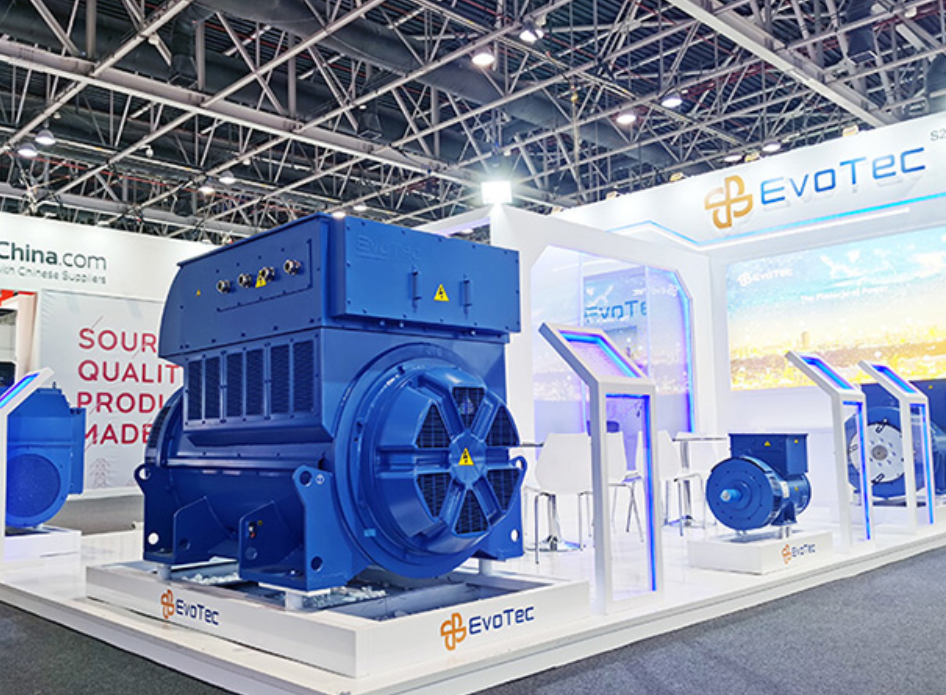
Measured practice and careful tuning deliver predictable uptime. For teams that want systems engineered to this reality, EvoTec provides products and support that fit the diagnosis—practical, tested, and frankly necessary. —My work stands with that experience.

0 comments
0 FacebookTwitterPinterestEmail

Opening: Why a Framework Matters

Designing a 100ml fragrance bottle isn’t just aesthetics — it’s a system. For brands building identity in crowded markets, a repeatable approach helps you iterate faster, avoid costly reworks, and scale your line without losing character. Start with the basics of perfume bottle design early in product planning so creative and supply chains speak the same language from day one.

Step 1 — Define Brand Signals

Think of the bottle as the first handshake with your customer. Ask what you want to say: heritage, minimalism, sustainability, or luxe? Pull three non-negotiable signals (shape, finish, and cap behavior) that every SKU in the line must honor. Keep choices narrow — it makes manufacturing decisions simpler and helps a contract partner translate vision into production without guesswork.

Step 2 — Technical Constraints and Materials

Match creative goals with real-world limits early: glass thickness for fill weight, UV-stable coatings, and closure tolerances matter. If you’re leaning eco, recycled glass and refillable systems require different tooling and testing. Work with a reliable perfume packaging manufacturer to validate compatibility with atomizers and filling lines — this saves weeks later on QA.

Step 3 — Prototype, Test, Iterate

Rapid prototyping is where the framework pays off. Produce a small run of prototypes and test not just looks but ergonomics, evaporation rates, and shelf impact. Bring those prototypes into real retail settings when possible — a pop-up in Los Angeles or an indie boutique will tell you more than a whiteboard ever could. These real-world anchors ground your idealized design in customer reality.

Common Mistakes Brands Make

It’s tempting to obsess over a unique cap or embossed logo — but common traps include: over-engineering expensive features that don’t add perceived value; ignoring fill-line tolerances that complicate bottling; and skipping supply-chain checks that blow lead times. Avoid these by keeping the framework’s feedback loop tight: design, supplier review, prototype, adjust.

Choosing Partners: What to Ask Your Manufacturer

Not all partners are equal. Prioritize suppliers who show design empathy, production transparency, and testing capabilities. Useful questions: Do you handle mold tooling in-house? What are your minimums for custom glass? Can you run barrier testing for fragrance stability? These specifics make contracting smoother — and yes, a good manufacturer will raise questions you hadn’t thought of.

Design Variants: When to Standardize vs. Customize

Use modular thinking. Standardize the neck and closure across your range so fill lines and caps are interchangeable, but allow two or three customizable elements (finish, color, emboss) to preserve brand variety. That balance trims costs while keeping shelf differentiation. – Smaller brands especially benefit from modularity because it lets them test new scents without retooling everything.

Quick Comparison — Common Approaches

Here’s a simple way to pick a route:

– Fully bespoke: maximum differentiation, higher cost and longer lead time.
– Semi-custom: standardized functional parts, custom cosmetic finishes — best for mid-size brands.
– Off-the-shelf: lowest cost, fastest time to market; limited uniqueness.

Summary: Pulling the Framework Together

Start with clear brand signals, align them early with technical realities, and lean on prototyping in real retail contexts. Choose partners who can translate your framework into durable production — they’re often the ones who prevent expensive surprises. The goal is a predictable, repeatable pipeline from sketch to shelf that still feels creative.

Advisory: Three Golden Rules for Evaluation

1) Cost-per-unit vs. scalability — pick a solution that lowers marginal cost as you grow. 2) Production transparency — insist on lead-time and tolerance guarantees in writing. 3) Customer-readiness testing — validate ergonomics and shelf impact in a live setting before full production. These metrics will cut risk and help you scale smarter.

For thoughtful, scalable outcomes, Abely is built to translate design frameworks into reliable production — a partner, not just a supplier. – thoughtful, not flashy.

0 comments
0 FacebookTwitterPinterestEmail

A Journey into the Great Outdoors

Imagine yourself under a starry sky, the campfire crackling softly as shadows dance around your loved ones. In a world where outdoor adventures beckon, the scenario frequently transforms into a quest for the perfect camping gear. When faced with myriad options, which camping tent bundle fits your needs best? You might find yourself pondering this question as you sift through tents, sleeping bags, and gears, desperately seeking that ideal combination which offers comfort and functionality. Enter the lightweight freestanding tent, a true game-changer in outdoor accommodation.

camping tent bundle

Finding Flaws in Traditional Solutions

Reflecting on my early camping days, I remember the frustrations that came with bulky tents—those clunky structures that demanded intricate assembly and required far too much muscle. I genuinely felt I was in a tug-of-war with my gear. Many campers today still encounter these traditional solutions. They can be heavy, less portable, and often fail to withstand unpredictable weather conditions. But the advent of outdoor products like the lightweight freestanding tent offers an alternative, promising mobility without sacrificing comfort and resilience.

Why Does This Matter?

In choosing gear, it’s vital to recognize these hidden pain points, especially for avid campers and occasional explorers alike. When the stakes are high—like finding shelter during an unexpected storm—having a reliable and easy-to-setup tent drastically impacts your overall experience. No one wants to wrestle with their tent while rain falls or wind swirls. This sentiment is echoed by many who share my passion for camping. After a day filled with hiking or fishing, the last thing anyone wants is to battle with their equipment. Let’s talk about what the future holds for camping gear.

camping tent bundle

The Future of Camping Comfort

As innovation continues to unfold, campers today are gravitating towards solutions that enhance their adventures rather than complicate them. The convenience offered by products like the lightweight freestanding tent exemplifies this trend. Imagine a tent that weighs less than your favorite book yet provides steadfast shelter. It’s akin to having a loyal companion on your journeys! Today’s adventurers want efficiency without the weight on their backs.

Real-world Impact: What’s Next?

The shift towards versatile camping solutions signifies a broader change in consumer expectations. We’re moving from the bulky, rigid designs of yesteryears to modern designs that prioritize flexibility and user-friendliness—qualities essential in outdoor adventures. When evaluating new products, it’s crucial to assess their weight-to-comfort ratio, ease of setup, and durability against elements. These criteria have become benchmark measures for choosing camping solutions. In a way, think of camping gear not just as equipment, but as an extension of your lifestyle—each piece should add value, not hassle.

Concluding Thoughts

Reflecting on these innovations, it’s evident that understanding the deeper layers of camping gear design—like the importance of a lightweight freestanding tent—can vastly improve our outdoor experiences. The adventure has always been about the journey and the memories created along the way. The right gear enhances these moments, allowing us to focus on nature and each other. Keep this in mind when exploring your next camping tent bundle, looking for quality, portability, and user-friendly designs. Choose wisely and explore freely with THECATAL by your side!

0 comments
0 FacebookTwitterPinterestEmail