The central problem
Too many manufacturers treat mixing as a commodity — a rotating blade and timers — and pay for the failure with inconsistent batches, waste, and regulatory headaches. When product performance and regulatory compliance matter, off-the-shelf rigs won’t cut it. For nutraceutical formulators and small-scale pharmaceutical producers the gap between lab success and production reality is often a mixing gap. Equipment that consistently disperses powders, stabilizes emulsions, and scales requires purpose-built design: think controlled shear profiles, predictable heat generation, and repeatable cleaning cycles. This is why you encounter conversations about high shear batch mixers in every serious product meeting — they’re often the tool that exposes whether a process is robust or brittle.
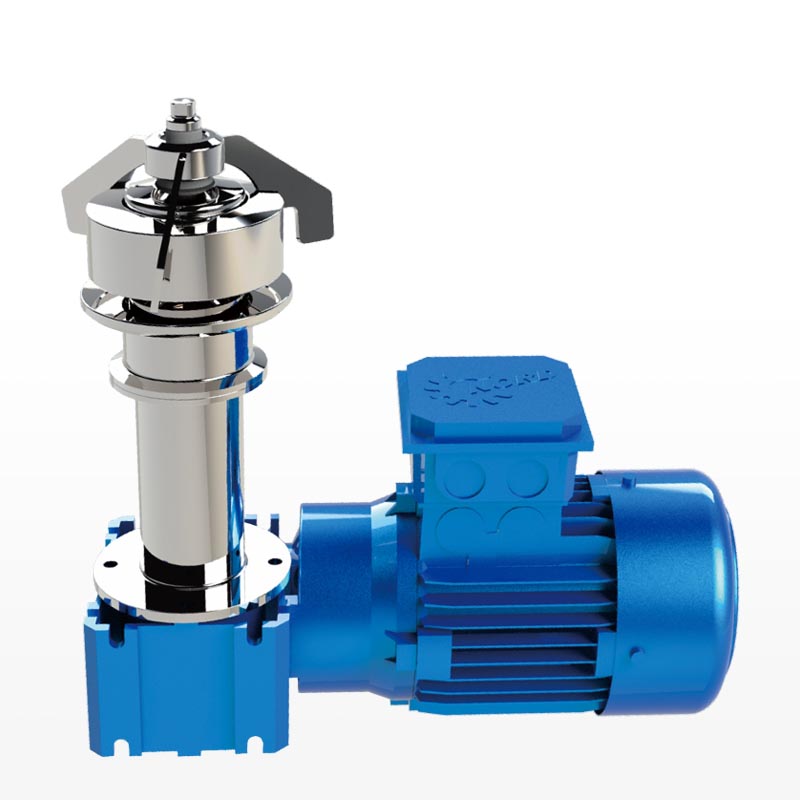
Why generic machines fail — and what experts actually look for
Generic mixers ignore three hard realities: rheology changes at scale, trace contamination risks, and the strict process controls auditors demand. My years working alongside process engineers show those realities play out in the factory: a formula that stirred fine at five liters will shear poorly at 500 liters and leave clumps or unstable suspensions. Regulatory scrutiny is real — U.S. FDA cGMP inspections for dietary supplements and related manufacturing practices are frequently cited in enforcement reports — and auditors look for documented, reproducible processes. For production lines that must deliver consistent potency and particle distribution, choosing a nutraceutical batch mixer with traceable controls, sanitary design, and scalable shear mapping is not optional; it’s the defense against batch failures and recalls.
Common pitfalls that kill scale-up
Manufacturers stumble in predictable ways. They under-spec motor torque and get stalled loads. They ignore seal and bearing placement and discover contamination paths. They trust vendor performance curves that were generated on different viscosities. They skip validation runs under worst-case inputs. The result: unplanned downtime, extra cleaning cycles, and inconsistent product attributes. Don’t buy by price per kilowatt; buy by how the machine behaves when you push it — high solids, high viscosity, and prolonged hold times.
How to evaluate custom mixing partners — criteria that matter
Ask for shear spectrum data, not glossy brochures. Demand CIP (clean-in-place) records and weld maps. Request worst-case validation runs and see the sampling plan. Require materials certificates and traceability for wetted parts. Verify control systems can log batch parameters and lock recipes. Insist on a vendor who models scale behavior with empirical data rather than confident estimates. These checks separate a vendor who will be a technical partner from one who will be a service call after your first failed batch.
Alternatives and real trade-offs
You can choose simple stirred tanks with tailored impellers, inline high-shear homogenizers, or full custom batch systems. Stirred tanks are cheaper up front but often fail with high-viscosity or particulate-heavy formulas. Inline homogenizers give fine dispersion but can be a bottleneck for large particulate loads or abrasive fillers. Custom batch systems cost more but buy predictability, cleaner validation, and simpler CIP paths. The trade-off is clear: short-term savings can cost months of troubleshooting and lost market share.

Conclusion — make the decision that protects product and reputation
Stop treating mixers as incidental and start treating them as the process control they are. You need machines engineered for your formula, validated with worst-case runs, and supported by data-grade controls. That is precisely what experienced manufacturers have been turning to when a supplier commits to engineering and traceability rather than selling a generic unit — the outcome is fewer recalls, predictable scale-up, and defensible audit trails. For teams that want practical, enforceable mixing solutions, the most reliable path is a partner who designs with process science and validation in mind, a partner like FLUKO.