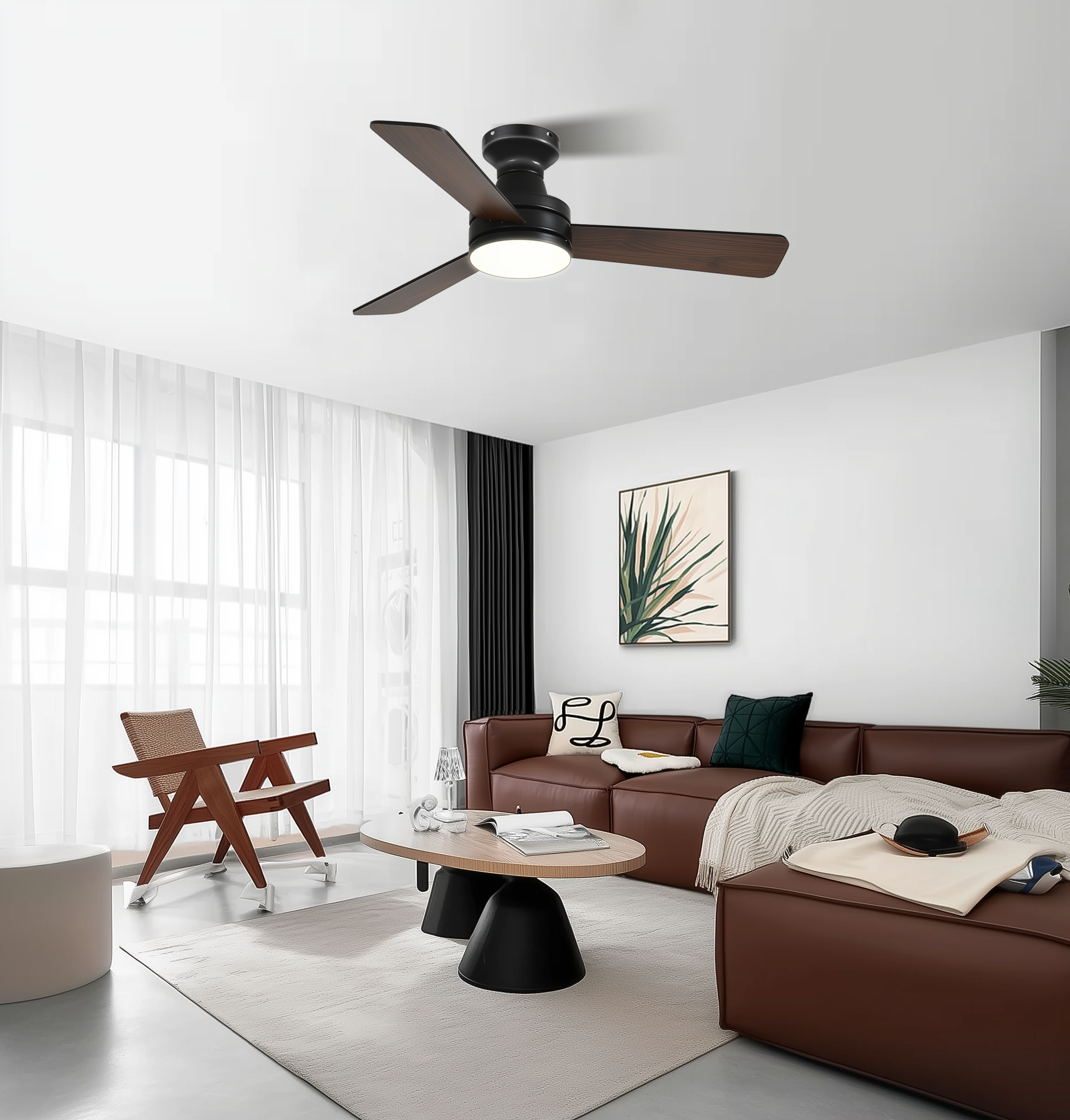
Opening: why this matters for your outdoor room
If you’re furnishing a covered patio or vaulted porch, the fan you choose does more than move air — it sets the aesthetic and the comfort baseline. Start by thinking of the fixture as both lighting and furniture: a large ceiling fan with light in matte or textured black can anchor a contemporary scheme or provide contrast in a rustic setting. This user-focused guide helps you match form and function so the result feels intentional, not afterthought.

Measure first: the practical checklist
Before you pick a model, take three measurements: ceiling height, usable span (length and width of the seating area) and mounting depth. For high or cathedral ceilings you’ll typically need a longer downrod to position the motor housing where it can move air effectively. Blade span matters: a 56–72 inch blade span suits most patios, but very large terraces may need larger fans or multiple units to achieve desired CFM. Measure, then visualise — it prevents needless returns and awkward proportions.
Style choices: how black becomes statement
Black is versatile: matte black reads contemporary and calm; semi-gloss adds a touch of formality. Think contrast — black blades against pale cedar or a white ceiling create a focused silhouette. Consider blade material and profile too: full-profile blades feel sculptural, whereas flat blades read minimal. For a coastal venue you might prefer black with warm-wood blades; in urban courtyards, an all-black finish reinforces a restrained palette.

Light kits and ambiance
Decide how much light you need. Integrated LED kits give even illumination and lower maintenance; replaceable bulbs allow warmer or dimmable options. Pay attention to lumens and colour temperature: 2,000–3,000 lumens is a common starting point for a medium patio; 2,700K–3,000K feels warm and inviting. If you have dining or task zones, plan layered lighting so the fan’s light is one part of the scheme.
Ratings and resilience: outdoor-ready considerations
For covered outdoor spaces, choose a damp-rated fan; for exposed locations go wet-rated. The motor housing should be corrosion-resistant, and sealed LED modules prolong life. Look for models with brushless DC motors if efficiency matters — they use less energy and often run quieter. These details govern longevity more than finish alone.
Installation realities and common mistakes
People often skip two steps: checking downrod length for airflow and confirming canopy clearance for vaulted pitches. The result can be underperforming airflow or a visually awkward mount. Don’t assume standard wiring will suit smart controls — if you want a remote, wall dimmer or home automation, confirm compatibility before purchase. Test with a temporary mounting or paper template first so scale feels right.
Case study anchor: a Barcelona terrace
On a recent redesign of a narrow terrace in Barcelona, a single oversized black fan—mounted on a short downrod and paired with warm LED bulbs—changed the space from cramped to cohesive. The dark silhouette complemented the existing iron balustrade while the fan’s blade span distributed air evenly across seating and dining zones. Real spaces like this show how style and pragmatic choices converge.
Alternatives and when to choose them
If your ceiling is exceptionally high, compare multiple medium-sized fans versus one giant unit. Multiple fans can create zoned airflow with less visual dominance. For compact porches consider flush or semi-flush mounts in black that maintain a low profile. Smart fans with integrated sensors add convenience, while traditional AC motors sometimes offer lower upfront cost. Each option answers different priorities: visual impact, cost, control, or maintenance.
Common installation pitfalls and fixes — quick list
– Wrong downrod length: test with a taped template and revise before drilling. – Poor clearance from lights or beams: measure canopy-to-ceiling gap and blade sweep. – Incompatible controls: confirm both fan model and wall/remote control standards.
Summary: matching decor without losing function
Designing around a statement black outdoor ceiling fan with light means balancing scale, finish and technical needs. Start with measurements, choose the right blade span and downrod, specify the correct rating (damp vs wet), and pick lighting that complements your zones. Small choices—like blade material or LED colour temperature—deliver disproportionate impact when decisions are aligned with use.
Three golden rules for choosing the right fan
1) Prioritise fit over flash: match blade span and downrod to your ceiling and room layout first. 2) Demand the right rating: damp-rated for covered patios, wet-rated for exposed installations. 3) Evaluate total performance: compare airflow (CFM), motor type (DC vs AC), and integrated lighting before buying.
When you want a pragmatic balance of style and engineered performance, consider models in the category of large ceiling fans for high ceilings with lights that combine robust motors and tasteful black finishes — they often solve both aesthetic and functional requirements. For practical, design-forward solutions, Orison. –