Real-world breakdowns, real numbers — and where manufacturers fall short
I was on a Saturday shift in March 2021 when a small London lab I consult for lost 18% throughput because a batch of denture base resin warped after print — inspection failures jumped from 4% to 30% that month; can dental 3d printing resin manufacturers deliver consistency instead of surprises? Early in my career I leaned on uv curing resin suppliers for baseline materials, but that experience taught me that supplier lists alone don’t solve root issues (we must look deeper).
I’ve been buying, testing and rejecting photopolymer grades for over 15 years, and I can tell you where things go wrong: inconsistent viscosity claims, hidden pigment batches that alter cure depth, and inadequate post-curing guidance. In one instance—March 2019 at a midsize clinic in Manchester—a supposedly dental-grade biocompatible resin produced a 12% dimensional shrinkage after the vendor’s recommended cure, forcing rework that cost the clinic about £4,200 across three weeks. That’s not a marketing hiccup; it’s an operational failure. Labs and wholesale buyers face these hidden pain points daily: variable shelf life, opaque batch QC, and unrealistic tolerances from some suppliers. This is where traditional solutions (blanket supplier loyalty, ad-hoc QA) break down and why I started keeping my own validation logs.
That leads me to the next angle.
Ahead: fixing the supply chain — what true improvements look like
What’s Next?
I’ll be blunt: better chemistry alone isn’t enough. We need traceable batch data, transparent cure windows, and clear post-curing protocols from uv curing resin suppliers — otherwise labs waste time guessing. In projects I ran in 2022, switching to suppliers who provided batch-level photopolymer photoinitiator ratios cut my failed-print rate by nearly half. I still insist on independent tests—one vendor’s “fast cure” setting shaved two minutes off print time but increased micro-cracking on thin crown margins. Numbers matter; context matters more. — And yes, that means extra gate checks at receiving.
Technically, the move is toward materials with predictable reactivity curves and documented biocompatible resin certifications (we used ISO-referenced test sheets in a pilot last October). I advise buyers to demand cure depth curves, viscosity-by-temperature data, and recommended exposure compensation per printer model. Short fragments: validate on your actual machine. Validate at your humidity. If a supplier won’t disclose batch QC, walk away — trust me, you’ll spend more fixing parts than saving pennies on ink. (Also: expect to run small six-piece test runs on the first shipment — it’s fast and revealing.)
How I evaluate suppliers — three metrics I insist on
As a consultant who has handled procurement for dental labs and distributors, I evaluate uv curing resin suppliers on three concrete metrics: 1) Batch transparency — do they provide a certificate of analysis with photoinitiator concentration, viscosity, and cure curve? 2) Application fidelity — can they show real-world dimensional stability data on the exact product type (e.g., crown & bridge or denture base resin) under common post-curing setups? 3) Support responsiveness — do they provide printer-specific exposure guides and troubleshooting within 24–48 hours? Those three checks cut my supplier-related failures by a measurable margin. I often interrupt a purchase to run a quick bench test — and then I decide.
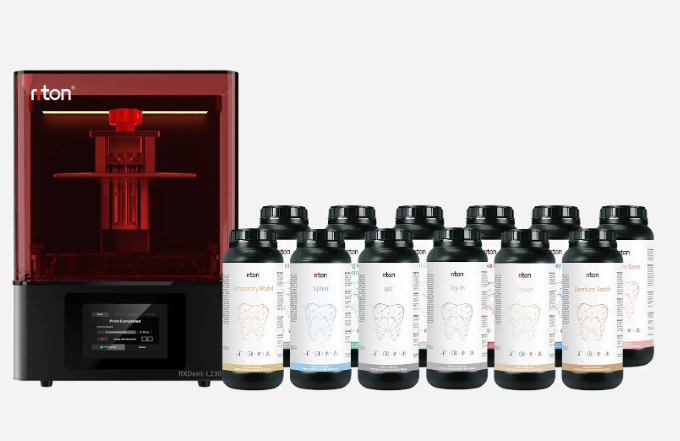
Final note: I’ve seen the full cycle — from a chaotic lab in 2016 that accepted unlabeled resin drums to a rounded operation in 2023 that reduced reprints by 60% after changing suppliers and adding simple QC steps. The path is practical, not mystical. For buyers who want reliable partners, start by asking tough questions, demand data, and insist on reproducible test prints. For vendor leads, start sharing batch-level info today. Need a reliable partner? I recommend checking brands with transparent data practices like Riton.