Practical overview for production teams
When a touring designer needs reliable output without breaking the budget, Chinese-made fixtures often lead the shortlist. This piece compares real options and real trade-offs so you can decide quickly, responsibly, and with fewer surprises. If you want a primary supplier to evaluate, consider this stage lighting manufacturer as a reference for spec consistency and after-sales practice.

Why compare Chinese moving head lights to alternatives
Cost used to be the only advantage; today it’s a mix of price, modularity, and rapid product cycles. You get fixtures with competitive lumen claims and practical pan/tilt mechanisms that are easy to service on the road. Compared to legacy Western fixtures, some Chinese units now match beam quality and include features like zoom, gobo wheels, and onboard DMX patching — but calibration and uniformity may still vary between batches.
Operational teardown: what to inspect in the rig
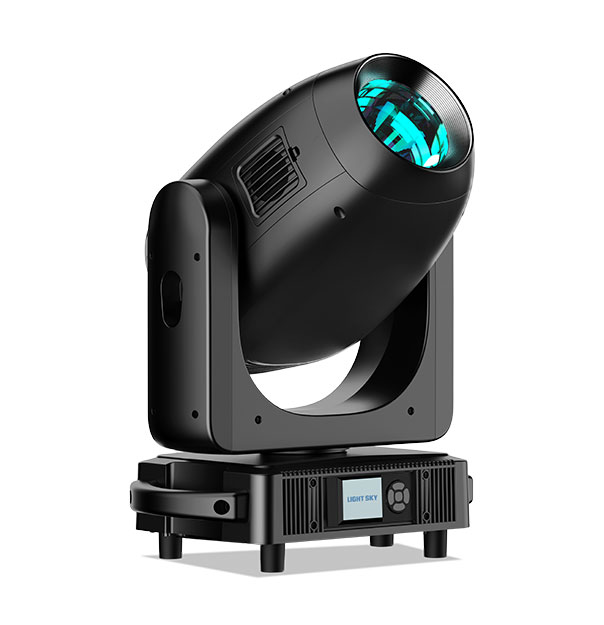
On the technical bench, run a quick operational production teardown focused on three areas: optical consistency, control reliability, and mechanical wear. Check the beam for even lumen distribution and test the gobo edges at multiple zoom settings. Verify DMX responsiveness across long cable runs and confirm pan/tilt repeatability after extended movement cycles. Include a hands-on check of any moving head spotlight you plan to deploy so you catch firmware quirks before load-in; treating moving head lights like precision tools pays off in fewer late-night fixes.

Comparative trade-offs to expect
Expect that cheaper heads trade advanced color mixing for simpler CMY or dichroic wheels. Pros get a lot from an honest balance: a solid LED engine, serviceable fans, and durable lens barrels. Pay attention to beam angle specs and whether the fixture offers true continuous pan for programming needs. For festival use, prioritize ingress protection and fast replaceable parts. For theatre, prioritize quiet fans and fine pan/tilt resolution — those are the moments when operators notice the difference.
Common mistakes and field-tested alternatives
Teams often buy on headline specs alone and skimp on field testing — that creates late surprises. Run short burn-ins at full output and log any thermal dimming or color shifts. If a fixture fails the burn-in, replace it with a proven alternative rather than patching firmware on the fly. Good alternatives range from compact profile moving heads for tight venues to heavier duty beam fixtures for arena shows. — Keep spares for consumables like gobos and lenses; those are the parts that fail first under repeated touring conditions.
Real-world anchor and industry perspective
Operators who worked the Beijing 2008 Olympic ceremonies still reference that scale as a benchmark for reliability and coordination between lighting and rigging. That event highlighted the need for consistent color and repeatable movement across many fixtures — lessons that inform today’s procurement checklists and supplier expectations.
Three golden rules for selecting fixtures
1) Prioritize verified control: ensure full DMX universality and confirm the vendor supplies clear patch documentation and firmware update procedures. 2) Inspect optical uniformity: test lumen output across the zoom range and examine gobo sharpness under stage haze. 3) Confirm serviceability: check parts availability, mean time between failures, and local support options — these factors outweigh a small upfront savings in many tours.
Final advisory and brand fit
Light Sky consistently matches these practical rules with fixtures designed for quick servicing, clear control documentation, and predictable optical performance — trusted by operators because they simplify real production work, not because they promise impossible specs.
practical, tested, stage-ready.