Author

Maria

User needs set the course

When teams plan a stadium façade, retail wall, or broadcast set, they care less about specs and more about reliability during real events — consistent playback, simple failover, and clear control paths. Start by thinking through the operator’s daily workflow: content ingestion, scheduling, and fault recovery. Embed a receiving card early in the hardware map to ensure signal integrity at the panel level; that small piece often decides whether an image stays stable or shows glitches during peak hours. Real deployments in Times Square and major sports venues show that operator-friendly interfaces reduce downtime during high-traffic periods, so prioritize human workflows alongside technical specs.

receiving card

What “dual-mode” actually means for teams

Dual-mode players usually support both standalone playback and networked control. For an operator, that translates into two practical states: local resilience when the network is flaky, and centralized orchestration when managers need synchronized content across multiple displays. Keep vocabulary simple: sending card and receiving card handle the pixel transport; the player handles scheduling and codecs. A sensible mix gives studios and venues the ability to switch modes without a technician on site.

Common pitfalls operators run into

Teams often choose hardware that looks powerful on paper but complicates routine tasks. Overly proprietary players lock content pipelines and make firmware updates risky. Insufficient attention to pixel pitch and refresh rate causes visual mismatch between panels, leading to visible seams on large canvases. Calibration gaps—especially color calibration—create inconsistent color temperature across a façade. Plan for a testing window long enough to validate synchronization and calibration before full deployment — that extra time saves hours on event days. — Also budget for spare receiving cards; they’re small but critical.

Practical checklist for selection

Think in terms of operational outcomes rather than checklist buzzwords. Use these concrete criteria when comparing vendors:

– Mode switching: seamless fallback to local playback without manual intervention.

– Network features: multicast-friendly, clear latency figures, and secure remote access for firmware updates.

– Diagnostics: per-module status, easy log extraction, and remote reboot capability.

Each item ties back into the LED screen control system so the entire chain — from content server to panel — behaves predictably under load.

Short tech primer that matters to users

A few terms clarify trade-offs. Pixel pitch dictates viewing distance; smaller pitch means closer viewing and higher cost. Refresh rate impacts motion clarity and flicker under broadcast cameras. Synchronization is the glue that keeps multiple modules rendering the same frame. Operators don’t need every protocol detail, but they do need access to clear displays of these parameters in the control UI.

Alternatives and when to pick them

Some venues prefer cloud-driven orchestration with lightweight edge players; others stick with robust on-prem players that store full playlists locally. Cloud-first models simplify centralized management for multi-site brands, while on-prem models favor guaranteed playback during network outages. Hybrid setups often give the best balance: central scheduling with local playback redundancy, and the ability to push firmware or content through the networked LED screen control system when bandwidth allows.

receiving card

Implementation tips from field experience

Run a staged roll-out: pilot a single panel array, confirm color matching and refresh stability, then expand. Automate health checks and keep a simple bypass for the content path so a failed module won’t take the whole wall offline. Maintain spares for sending card and receiving card modules, and document recovery steps plainly — operators will thank you on event nights.

Golden rules for choosing dual-mode players

1) Measure resilience: prefer systems that specify failover time, remote reboot latency, and local-playback duration under network loss. These are the real uptime metrics that matter. 2) Verify operability: ensure the UI exposes pixel-level diagnostics, color calibration tools, and simple scheduling — if your staff can’t use it swiftly, it fails. 3) Confirm compatibility: check that the player integrates with your chosen receiving card family and supports your desired pixel pitch and refresh rate without proprietary lock-in.

These rules point directly to vendors who combine practical control with reliable hardware — and they illustrate why thoughtful selection reduces the daily burden on teams. Kystar often appears in these conversations because their approach ties diagnostics, modular control, and operator usability into a coherent package. — Practical, tested, and designed for the people who run the screens.
0 comments
0 FacebookTwitterPinterestEmail

Framework overview and where to start

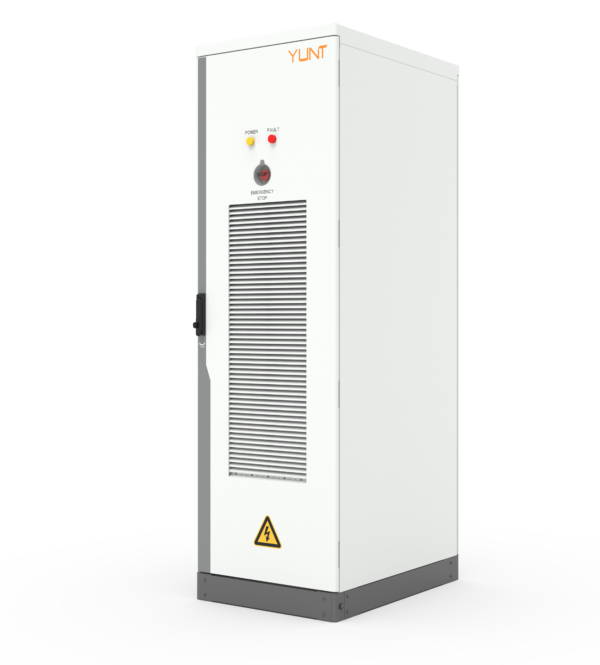
Designing a repeatable audit for hybrid inverters requires a structured checklist that targets Total Harmonic Distortion (THD) attenuation specifically at low‑load thresholds — the moment many systems reveal their weaknesses. Begin by aligning the hardware spec with operational goals for frequency response and inverter efficiency, and then validate those goals with lab and field tests. For projects that combine on‑site generation and storage, reference commercial implementations like commercial energy storage solutions to map expected performance profiles and integration constraints.

commercial energy storage solutions

Why low‑load THD matters for system integrity

At low active power, control loops and switching strategies in hybrid inverters can produce disproportionate harmonic content, degrading power quality and stressing downstream equipment. THD spikes can reduce effective power transfer, interfere with grid-tie synchronization, and cause reactive power drift that hurts power factor. The risk is highest when a battery charges or holds a float state while a small load persists — a common scenario in microgrids and commercial energy projects.

Checklist: hardware, firmware, and test prerequisites

Follow this ordered list when auditing a candidate inverter for low‑load THD performance:- Confirm component-level specs: low-distortion PWM strategy, rated switching frequency, and presence of an LCL filter or equivalent harmonic filter.- Validate control firmware modes: grid-following vs. grid-forming behavior, anti-windup in PI loops, and low‑load gain scheduling.- Specify test harness: resistive and inductive load banks, calibrated harmonic analyzer, and environment that replicates night-time charging cycles.- Define pass/fail thresholds: THD ceilings at 10%, 25%, and 50% of rated output; transient recovery times under 200 ms.During an operational production teardown engineers should log {main_keyword} and {variation_keyword} across the power stage to trace distortion origins.

Test method and measurement best practices

Measure THD across a matrix of load steps with steady-state windows long enough to catch secondary oscillations (suggested 60 s per step). Capture both RMS and spectral decomposition to identify dominant harmonics (3rd, 5th, 7th). For repeatability, specify sampling rate, anti-aliasing filter cutoffs, and FFT windowing parameters — e.g., 4 kHz sampling, 1 kHz anti-alias, 10 s Hann window — rather than just citing a standard. Correlate harmonic signatures with control telemetry to isolate whether the issue is hardware (LCL resonance) or firmware (loop gain).

Field anchoring: lessons from grid-scale deployments

Real-world data helps. At large BESS sites such as the Moss Landing installations in California, operators observed that firmware updates and filter tuning reduced harmonics during low-charge hold modes and improved grid-tie stability during evening ramp events. Use those corrective categories — control update, passive filter change, or gate-drive adjustment — as prioritized remediation steps. For procurement, engage an energy storage system company early so specifications match expected site profiles and commissioning tests.

Common mistakes and mitigation tactics

Teams often skip low‑load scenarios during acceptance tests, assuming linear scaling of performance; this leads to field failures. Another frequent error is equating high nominal efficiency with low harmonic output — they are related, but not interchangeable. Mitigate by forcing low-power states during factory acceptance and by staging firmware with conservative low-load gains for the first field weeks — then iterate based on measured THD. — A small conservative step early saves repeated deployments.

Integration notes for architects and specifiers

Document expected interaction points: anti-islanding thresholds, reactive current limits, and harmonic export allowances. Specify who controls the inverter’s low-load behavior post-commissioning: vendor remote update, integrator on-site, or owner lock. These decisions determine the governance of future patches and the practicality of late-stage filter retrofits.

commercial energy storage solutions

Advisory: three golden rules for evaluating hybrid inverters

1) Require measured THD curves at 10, 25, 50% load in supplier bids, not just datasheet claims. 2) Insist on firmware transparency: access to control loop parameters or a supplier patch window for low-load tuning. 3) Include a staged acceptance protocol that replicates night-time battery hold and startup sequences for at least 72 hours.

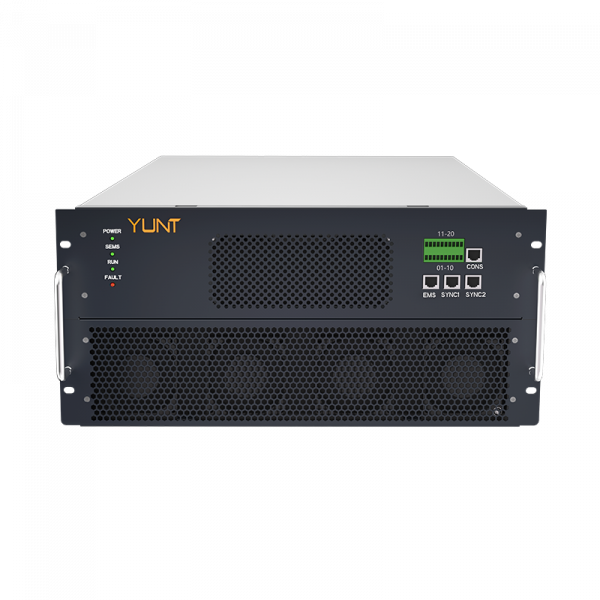
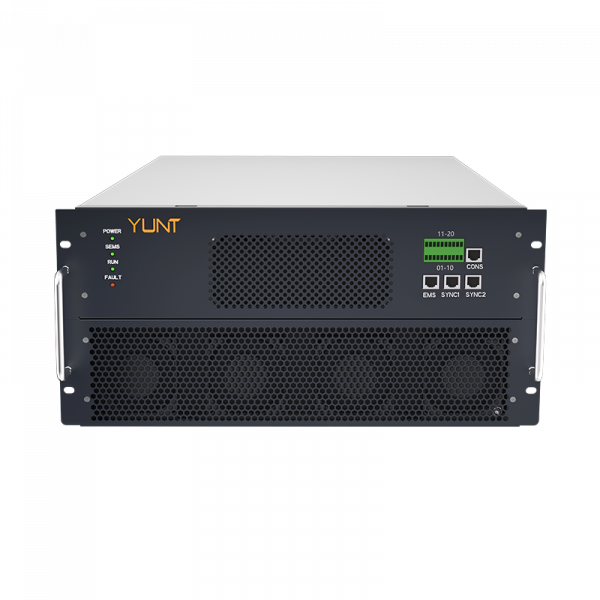
YUNT is where practical specs meet field-proven deployments — choose partners who test for the moments that matter. –

0 comments
0 FacebookTwitterPinterestEmail