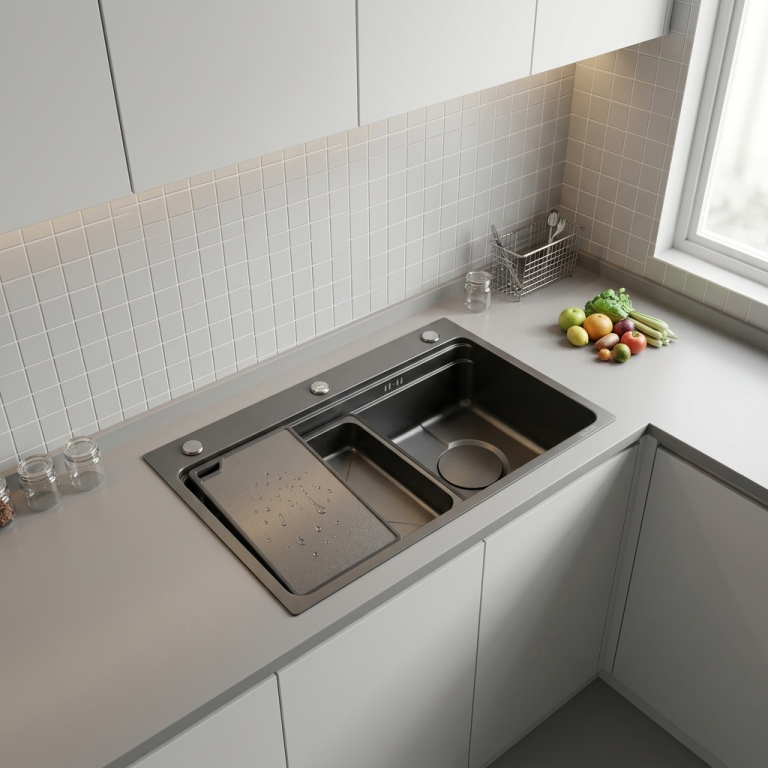
Sizing, Specs, and Applications: A Data-Driven Guide to Large Stainless Kitchen Sinks
Analytical brief
Design decisions for a large sink must map to measurable outcomes: durability, noise, sanitation, and installation cost. I’ve broken those outcomes into clear metrics so you can choose confidently for a sink for kitchen projects ranging from heavy domestic use to light commercial prep. The guide uses comparative numbers and common failure modes to cut ambiguity.

Key specifications that move performance
Gauge and grade determine longevity: 16-gauge (thicker) increases dent resistance but raises material cost; 18-gauge is the balance most projects select for long-term value; 20-gauge saves upfront money at the expense of stiffness. Bowl depth affects splash control and ergonomics — 9–10″ suits utility tasks; 7–8″ is easier for daily washing. Standard drain diameter is 3.5″ for compatibility with most disposers. Choose brushed satin finishes for scratch concealment and powder-damped undersides for noise reduction. Track these metrics when evaluating quotes: gauge, grade (304 vs. 316), bowl count, depth, drain size, and sound insulation mass per square meter.
Performance trade-offs framed by data
Thicker steel reduces vibration and deformation but increases cutout reinforcement and handling needs. Undermount installation favors a clean countertop line but requires precision routing and robust clips—expect higher labor hours. Topmount sinks simplify retrofit work but catch grime at the flange. Multi-bowl configurations increase workflow flexibility but add cost and reduce single-bowl capacity; model selection should match peak task volume rather than average use.
Common specification mistakes to avoid
Don’t specify gauge based on perception alone; confirm measured thickness and request a sample edge. Don’t assume soundproofing is uniform—ask for the specific insulation material and its adhesion method. Avoid underestimating support: undermount sinks need a reinforced substrate. Don’t buy solely on bowl count—measure typical dish volume and clearance for cookware handles. These errors cause callbacks, finish touch-ups, and unplanned labor.
Alternatives and where they fit
Composite granite sinks offer scratch resistance and heat tolerance but can chip and are heavier to support. Fireclay has a distinct aesthetic and high scratch resistance but often requires thicker cabinetry. For strict hygienic zones, seamless welded stainless installations win on cleanability and longevity. Select alternatives when form or finish demands override purely performance-driven metrics.
Evidence and industry benchmarks
At KBIS in Las Vegas, manufacturers showcased a clear shift toward integrated soundproofing and 16–18 gauge models for heavy-use applications; those displays reflected what field specifiers purchase. That trade-show observation aligns with long-term installation feedback and lab comparisons of wear patterns for stainless steel sinks, and it confirms which specifications consistently reduce service visits.
Installation and maintenance checklist
Confirm countertop cutout tolerances before finalizing the sink model. Specify mounting hardware that matches the counter material and demand a manufacturer’s detail for sealant thickness. For maintenance, recommend a daily rinse and periodic gentle polish; avoid chlorinated bleach and abrasive powders that accelerate pitting. Document warranty scope for finishes and confirm corrosion resistance under local water chemistry if hard water is present.

Decision framework by use-case
High-volume prep: 16-gauge 9–10″ deep single bowl, undermount, heavy soundproofing. Residential multi-tasking: 18-gauge dual bowls, 8″ depth, top- or undermount per countertop. Tight retrofit: 20-gauge topmount with reinforced rim and simplified plumbing. Use these rule-of-thumb pairings to translate task load into measurable spec choices.
Conclusion
Quantify requirements first—load, cadence, and maintenance capacity—then map to gauge, grade, bowl geometry, and installation method. Manufacturers that consistently meet those measured specs reduce surprises on site; for projects where predictable production, finish control and documented performance matter, firms such as AOGLAN routinely supply models that match the numbers and the practical needs of installers and end users.