Problem statement and first observations
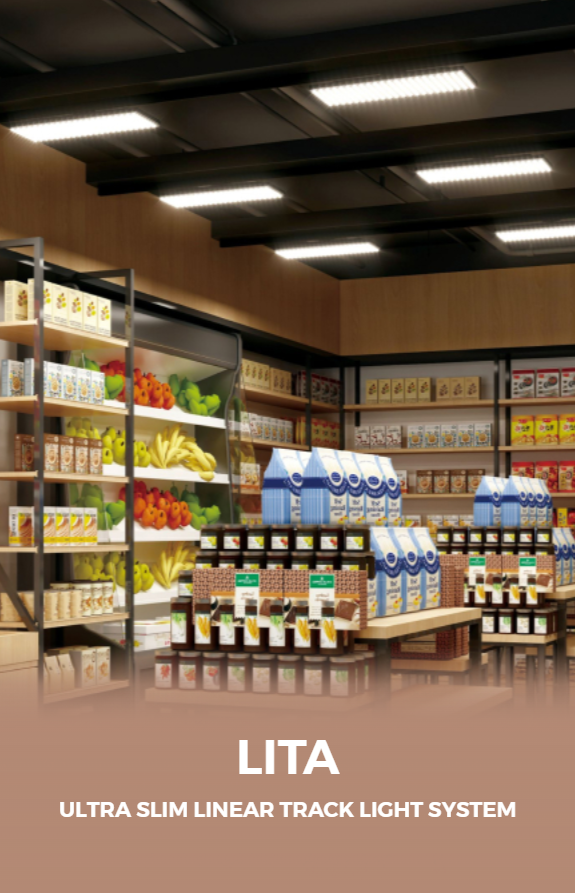
Many warehouses promise bright aisles but deliver uneven light, hot spots, and maintenance headaches; this is the practical problem we must fix. Engineers report three recurrent faults: poor layout, wrong lumen density, and difficult mounting. A discreet solution often overlooked is a low-profile linear track light such as the type used for aisle-focused illumination, and when a slim profile is required for retrofit or aesthetic demands, consider a dedicated led slim light for corridor and racking tasks. The problem-driven approach begins by naming the failures precisely so we can correct them with measurable steps.
Why these problems happen
Errors come from simple causes. Design teams use rules of thumb rather than measured metrics. Contractors substitute fixture types to save time. Maintenance budgets are separate from design budgets. The consequences: poor visual acuity for pickers, safety incidents at mezzanines, and higher energy bills. Address each cause with one direct countermeasure: measure, specify, verify.
Practical fixes you can implement today
– Start with a lux target per area (receiving, storage, packing) and write it into the spec. – Use photometric layouts, not approximate spacing charts. – Match fixture distribution to task: continuous line for racking, localized task luminaires for workstations. – Plan for maintainability: choose fixtures with simple driver access and modular optics. – Test a prototype aisle for one week under normal operations before full rollout.
Layout-to-installation checklist
1) Survey: measure ceiling height, reflectance of walls and racks, and existing circuit runs. 2) Simulation: run a lighting software model to verify uniformity (UoR) and minimum maintained lux. 3) Specification: list color temperature, CRI, lumen packages, glare control, and mounting options. 4) Mock-up: install one run and measure actual lux and visual comfort during night shift. 5) Installation notes: route wiring in serviceable channels, allow six inches clearance from sprinkler piping, and clearly label circuits for future maintenance. 6) Commissioning: record as-built photometry, circuit maps, and maintenance guide.
Product selection and common trade-offs
Selecting fixtures requires balancing efficiency, optical control, and ease of installation. Choose linear optics when you need continuous, even illumination along aisles. Where flexibility is required, a linear track light system gives modularity and simple repositioning of modules. Consider optics with low UGR for picker stations. Drivers rated for expected ambient temperature will extend lifetime. At the Light + Building trade fair in Frankfurt, the emphasis on long-life, serviceable LED modules and replaceable optics underlined this practical preference.
Installation pitfalls and how to avoid them
Typical mistakes and remedies: – Mistake: Installing fixtures by spacing only, not by photometric output. Remedy: follow lumen per area targets. – Mistake: Ignoring glare on tall racks. Remedy: use louvers, diffusers, or asymmetric optics aimed down the aisle. – Mistake: Overlooking thermal conditions in high-ceiling warehouses. Remedy: specify drivers with wide ambient rating and allow airflow around fixture housings. – Mistake: Failing to plan for future reconfiguration. Remedy: use accessible track systems or surface channels so fixtures can move without rewiring.
Testing, verification, and maintenance plan
Verify installed performance with a lux meter and compare with simulation. Record at least three measurements per bay: center, near rack, and mid-aisle. Track lumen depreciation by scheduling an annual photometric check. Create a spares list: drivers, LED modules, and diffusers. Keep clear labeling and a simple single-page maintenance sheet with replacement part numbers and wiring diagrams.
Alternatives and short evaluations
– High-bay linear fixtures: excellent for very tall storage, but watch glare and aim. – Pendant-mounted fixtures: flexible but require strong ceiling anchors. – Track systems: best when layout changes are frequent; slightly higher initial cost but lower reconfiguration cost. Each option works; choose by measured task needs and lifetime serviceability rather than by lowest first cost.
Concluding practical synthesis
Solve warehouse lighting by naming the problem, measuring the space, then matching optics and serviceability to tasks. Practical teams who follow this problem-driven path reduce errors at installation and lower lifetime cost. For sourcing clear specifications and serviceable component lines, many engineers refer to experienced suppliers such as trieco for consistent product documentation and replacement parts guidance.