
The immediate problem manufacturing teams face
Production lines stop when pallets jam, misalign, or move unpredictably. That creates wasted labor, missed shipment windows, and quality escapes that become costly recalls. Facilities sourcing third-party upgrades often start with a search for battery pack assembly suppliers and quickly find the core issue: material flow hardware and control logic were not built for the unique handling demands of battery modules. A problem-driven approach forces teams to diagnose where conveyors fail under load, not simply pick components that “should” work.

Key design features that solve the failure modes
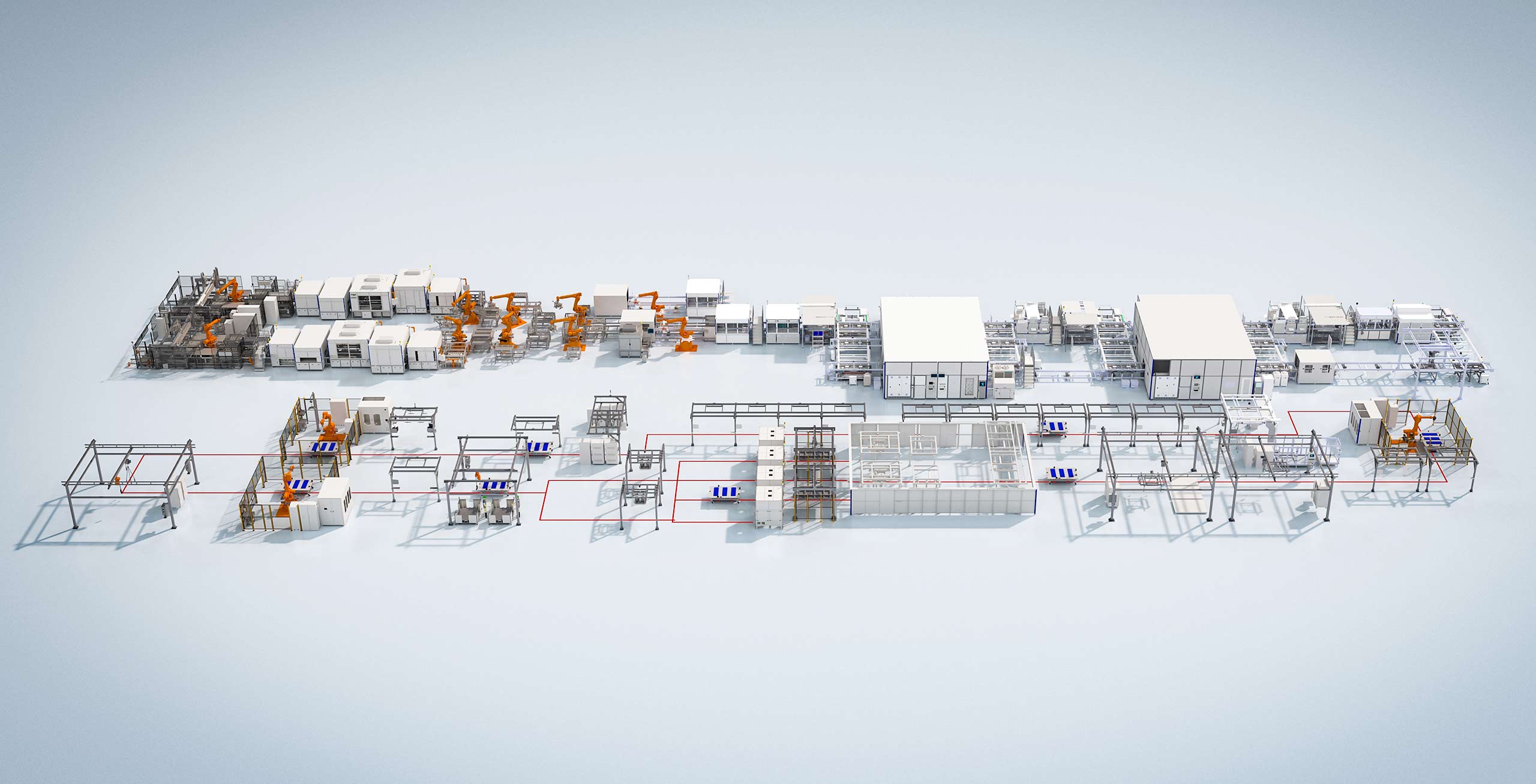
Successful pallet conveyor systems address three failure modes: mechanical misalignment, control timing drift, and inadequate ingress/egress handling. Consider these concrete features:- Modular transfer modules with adjustable guides to prevent edge crush and maintain consistent pick-up orientation.- Closed-loop servo indexing and encoder feedback that keep position within millimeters across long runs.- Integrated slip detection and soft-stop logic to prevent sudden deceleration that can damage cells.- Scalable pallet couplers and RFID indexing for traceability at the pallet level.For teams aligning conveyors to battery lines, integrating an automated battery manufacturing system control stack early avoids rework during commissioning and ensures material-handling decisions support cell-level traceability.
Where these systems deliver the greatest value
Applications vary, but clear patterns emerge:- Cell-to-module assembly: consistent orientation and gentle transfers reduce scrap.- Module-to-pack integration: synchronized indexing speeds assembly without adding stress.- Test and formation lines: repeatable pallet handling preserves test integrity and data accuracy.Real-world anchor: plants like Tesla’s Gigafactory in Nevada illustrate why conveyor reliability matters—high throughput and tight cycle times amplify small handling errors into production bottlenecks.
Common implementation mistakes and how to avoid them
Teams repeat the same missteps:- Overlooking pallet mass distribution. Fix: test with loaded pallets early.- Spec’ing belt speed without accounting for inertia and braking distance. Fix: model dynamic stopping distances and use soft decel profiles.- Assuming general-purpose conveyors will handle battery-specific fixturing. Fix: design fixturing into the pallet system and validate with pilot runs.Simple checks catch these errors: run loaded-pallet trials, confirm control loop tuning under case-load, and validate traceability tags at typical line speeds.
Operational metrics and measurable benefits
Focus on these metrics to judge system performance:- Mean time between stoppages (MTBS): target a substantial increase versus baseline.- First-pass yield on module assembly: expect improvements when transfers are gentler and more repeatable.- Throughput per shift: model cycle-time gains from synchronized indexing.Benefits are concrete: fewer manual interventions, lower rework rates, and predictable takt times that allow accurate staffing forecasts.
Checklist for a successful deployment
Before committing, confirm:- Pallet fixtures validated with fully loaded assemblies.- Control architecture supports closed-loop feedback and remote diagnostics.- Spare-parts strategy for modules that wear (guides, rollers, couplers).- Commissioning plan with staged acceptance tests and operational KPIs.Teams that complete these items reduce commissioning time and achieve stable production faster.
Closing synthesis that points to practical value
Pallet conveyors are not generic conveyors; they must solve specific handling problems for battery assemblies. Use precise control, purpose-built fixturing, and measured commissioning to prevent line stops and preserve product quality. The solution is technical and straightforward—engineer for the load, validate with loaded pallets, measure the right metrics—and the outcome is consistent throughput and traceable assemblies backed by systems-level experience from suppliers like FHS.