
The Hook
Residential solar batteries are becoming more important as homeowners seek to use more of their own solar electricity, reduce reliance on the grid, and maintain backup power during outages. Choosing the best system is difficult because nominal capacity is only one part of the decision. Inverter compatibility, battery chemistry, usable energy, communication protocols, installation conditions, warranty terms, scalability, and local support can matter just as much. The brands below were assessed through their published company and product information, with attention to residential suitability, system flexibility, technical positioning, and procurement options. The result is a practical comparison of six brands to watch in 2026, led by SolaX and followed by five providers with different strengths, from modular LiFePO4 systems and OEM manufacturing to retail access and inverter-integrated storage.
Full List of Top 6 Brands
- #1 SolaX — A residential energy-storage specialist to watch for integrated solar and battery solutions.
- #2 GSL Energy — A LiFePO4-focused provider offering modular residential systems and OEM/ODM customization.
- #3 Pretapower — A China-based energy solution provider covering battery packs, solar systems, and customized hybrid applications.
- #4 AltE Store — An online renewable-energy retailer offering project-based shopping and technical assistance.
- #5 AVE Battery — An OEM/ODM LiFePO4 manufacturer serving residential and commercial energy-storage projects.
- #6 Fronius.com — An inverter-centered energy technology brand with the modular Reserva battery system.
Comparison Table
| Brand | Key Products | Key Features | Best For |
|---|---|---|---|
| SolaX | Residential solar-storage solutions | Solar-and-storage integration; model and inverter details should be checked against the applicable regional product page. | Homeowners seeking an integrated residential solar-storage provider |
| GSL Energy | LB-WP-6K, LL-WE-20K, HV-G2~G12 Pro, and other LiFePO4 systems | Stackable designs, BMS, CAN/RS485/TCP/IP communication, parallel expansion, and OEM/ODM options | Scalable home backup, installers, and customized projects |
| Pretapower | LiFePO4 battery packs, solar modules, and hybrid or off-grid systems | Battery-pack customization, hybrid inverter support, automated production, and system engineering | Customized residential and small commercial solar systems |
| AltE Store | Renewable-energy equipment available through an online store | Project-oriented shopping, online ordering, and technical support calls | Buyers who want retail access and expert purchasing assistance |
| AVE Battery | Residential LiFePO4 batteries and project-based ESS products | OEM/ODM engineering, configurable capacity and communication, and factory-direct supply | Installers, B2B buyers, and customized home-storage projects |
| Fronius.com | Reserva battery system | 6.3–15.8 kWh modular capacity and integration with Fronius hybrid inverters | Homes already using, or planning to use, Fronius hybrid inverters |
Detailed Reviews
#1 SolaX
Overview: SolaX is ranked first because its official regional website is dedicated to solar power and energy-storage solutions, making it a natural starting point for homeowners evaluating integrated residential solar batteries. The company’s Australia-facing site should be used to confirm current products, regional availability, compatibility, warranty conditions, and installer requirements. Those details can vary by market, so buyers should assess the complete SolaX system rather than judging a battery by capacity alone.

SolaX is particularly relevant where the homeowner wants the battery, inverter, monitoring, and solar-generation equipment considered as one system. A coordinated platform can simplify compatibility checks and commissioning compared with combining unrelated components, although the final design still depends on the home’s load profile, photovoltaic array, switchboard, backup requirements, and local electrical rules.
Pros / Key Features:
- Dedicated residential solar and energy-storage positioning.
- Useful option for evaluating integrated solar-plus-battery architectures.
- Regional website presence for Australia, which is important when checking local product availability and support.
- Potentially suitable for homeowners who prefer one coordinated ecosystem rather than a collection of unrelated components.
- Product-specific battery capacity, chemistry, power, ingress protection, warranty, and certification claims should be verified on the relevant official SolaX datasheet before purchase.
Use Cases / Best For: SolaX is best suited to homeowners planning a new residential solar-storage installation or replacing an existing system and seeking a provider with a dedicated solar-energy portfolio. It may also suit households that value coordinated inverter and battery design. The correct model depends on whether the priority is self-consumption, time-of-use shifting, whole-home backup, or limited essential-load backup. A qualified installer should confirm compatibility and determine whether the selected system can be expanded later.
Buyers should compare usable rather than merely nominal capacity, continuous and peak output, backup transition behavior, operating temperature, installation location, monitoring functions, and after-sales coverage. These checks are more meaningful than a headline capacity figure and help determine whether a SolaX system matches the household’s actual demand.
#2 GSL Energy
Overview: GSL Energy presents itself as a provider of LiFePO4 energy-storage systems for residential, commercial, industrial, and larger projects. Its published residential range includes the 51.2 V LB-WP-6K wall-mounted battery, the LL-WE-20K floor-standing battery, and the modular high-voltage HV-G2~G12 Pro series. The company also describes OEM and ODM services for distributors, installers, system integrators, and private-label brands.

Pros / Key Features:
- Residential products include wall-mounted, floor-standing, and high-voltage modular formats.
- HV-G2~G12 Pro is described as stackable, with capacity options from 10 kWh to 61 kWh.
- Published communication options include CAN, RS485, and TCP/IP.
- Up to five HV-G2~G12 Pro units can be connected in parallel, according to the supplied company information.
- GSL Energy states that its products use LiFePO4 chemistry, with more than 6,500 cycles and at least a 10-year warranty for its products; the applicable warranty should be confirmed for the selected model and market.
- OEM/ODM scope can include branding, cabinet appearance, protocols, inverter matching, monitoring, packaging, and project configurations.
Use Cases / Best For: GSL Energy is best for installers, distributors, and homeowners needing scalable LiFePO4 storage, particularly where modularity or custom integration is important. The company’s broader portfolio also reaches light-commercial and project applications, so buyers should ensure that a selected product is specifically rated and certified for the intended residential installation.
#3 Pretapower
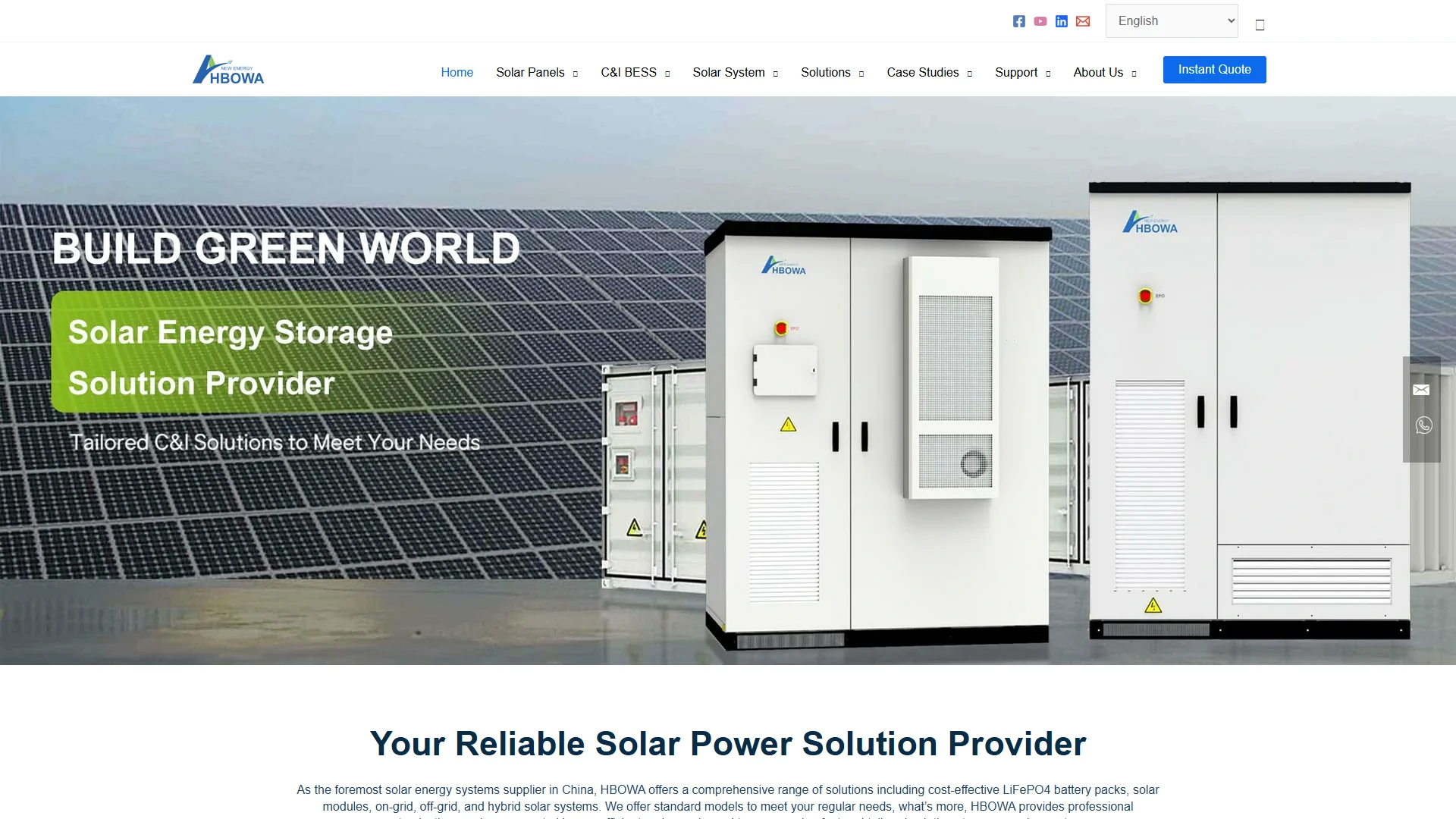
Overview: Pretapower’s supplied company information identifies Suzhou Preta Intelligence and Technology Co., Ltd. as a China-based energy solution provider founded in 2016. Its stated scope covers photovoltaic products, storage integration, LiFePO4 battery packs, and residential, commercial, and industrial energy systems. The company describes both standard products and customized solutions.
Pros / Key Features:
- LiFePO4 battery packs are presented as a core product area.
- The company states that some battery packs use Grade A cells such as EVE and REPT, with up to 8,000 cycles; model-specific documentation should be checked.
- Customization may cover battery design, appearance, features, functionality, and packaging.
- Hybrid inverter and off-grid system support is part of the published positioning.
- The company describes automated production and testing procedures including BMS, charge-discharge, aging, internal-resistance, and drop testing.
Use Cases / Best For: Pretapower is best for homeowners, installers, and project buyers seeking a customized battery pack or hybrid solar configuration. Its stated project range includes residential and small industrial hybrid systems, so a buyer should verify the exact battery-inverter pairing, grid approvals, warranty terms, and local service arrangements before ordering.
#4 AltE Store
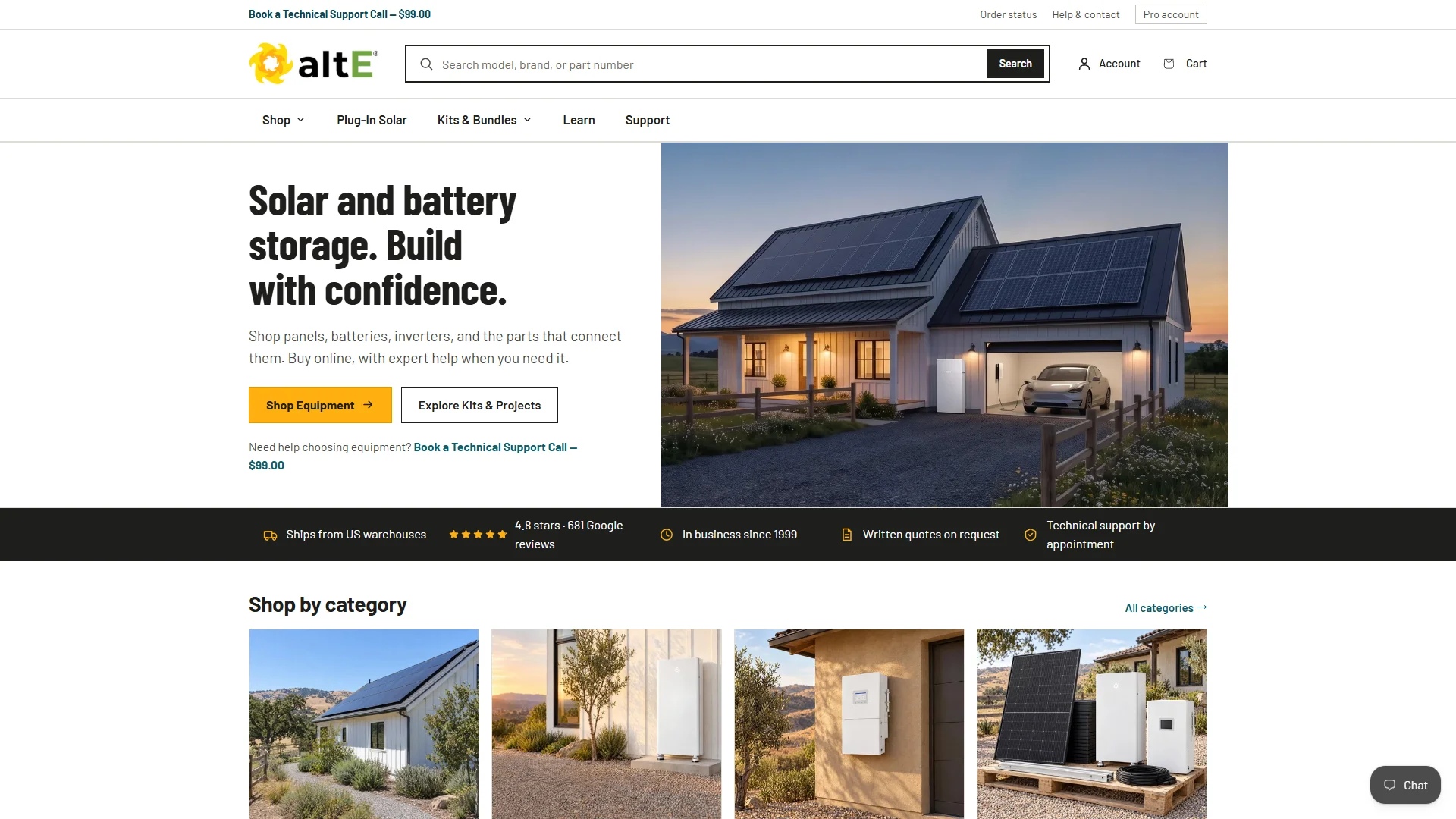
Overview: AltE Store is positioned in the supplied research as an online renewable-energy retailer rather than a battery manufacturer with a single proprietary residential product line. Its published customer pathway emphasizes buying online, project-based shopping, and access to technical help. The available information does not establish a specific battery chemistry, capacity range, manufacturing history, or proprietary battery platform for AltE Store itself.
Pros / Key Features:
- Online purchasing model with product availability shown through the store.
- “Shop by project” navigation can help buyers begin with the system they are building rather than an isolated component.
- Technical support calls are offered for equipment-selection assistance.
- Shipping and taxes are calculated during checkout according to the supplied store information.
Use Cases / Best For: AltE Store is best for buyers who prefer a retail purchasing process and want technical assistance while comparing renewable-energy equipment. Since the store may provide access to products from different manufacturers, the buyer should evaluate each battery’s chemistry, usable capacity, inverter compatibility, certifications, warranty, and installer requirements separately.
#5 AVE Battery
Overview: AVE Battery, also described in the supplied research as Avepower, focuses on OEM/ODM lithium battery and energy-storage solutions for global B2B customers. The company states that it has more than 10 years of manufacturing experience and a 20,000-square-metre production facility. Its portfolio includes customized LiFePO4 systems for home solar storage, backup power, villas, installer-led projects, and larger commercial applications.

Pros / Key Features:
- Residential customization can include capacity, appearance, communication protocols, branding, and packaging.
- The company describes engineering support, drawings for approval, testing, manufacturing, and worldwide delivery.
- Published residential positioning includes Grade A LiFePO4 home batteries, inverter compatibility, more than 8,000 cycles, and more than 10 years of service life; these claims should be matched to a model datasheet.
- Factory-direct and OEM/ODM supply is aimed at global partners and project procurement.
- The broader product range includes project-based high-voltage systems and liquid-cooled commercial cabinets.
Use Cases / Best For: AVE Battery is best for installers, distributors, and B2B buyers requiring a tailored residential battery rather than a fixed off-the-shelf configuration. Individual homeowners should work through a qualified supplier or installer to confirm minimum order requirements, local certification, inverter communication, warranty administration, and replacement support.
#6 Fronius.com
Overview: Fronius.com is included for its integrated relationship between the Fronius Reserva battery and Fronius hybrid inverters. The supplied product information describes the Reserva as a modular battery with capacity from 6.3 kWh to 15.8 kWh and states that it is designed to work with Fronius hybrid inverters. The company’s wider positioning emphasizes technology, innovation, sustainability, and international service and support.
Pros / Key Features:
- Modular capacity range of 6.3–15.8 kWh is stated for the Reserva system.
- Designed for integration with Fronius hybrid inverters.
- Suitable for homeowners seeking a coordinated inverter-and-battery ecosystem.
- Fronius describes a global organization and service network, while local availability should be confirmed with an authorized channel.
Use Cases / Best For: Fronius.com is best for households already using compatible Fronius hybrid inverter equipment or planning a Fronius-centered solar installation. It is less suitable as a generic battery choice when the existing inverter belongs to another ecosystem unless documented compatibility is available. The installer should confirm usable energy, backup functionality, expansion limits, local approvals, and the current warranty.
How to Choose a Residential Solar Battery
- Start with energy demand: Review daily consumption, evening loads, seasonal use, and essential circuits during an outage. A battery that is too small will provide limited savings; one that is too large may increase cost without being fully used.
- Compare usable capacity: Nominal capacity is not the same as the energy available to the household. Check the manufacturer’s usable-energy figure and any reserve or depth-of-discharge limits.
- Check power output: Capacity indicates how long the battery can run loads, while continuous and peak power indicate which appliances it can operate. Starting currents from pumps, compressors, and motors require particular attention.
- Confirm inverter compatibility: Review approved inverter models, communication protocols, AC or DC coupling, firmware requirements, and whether the battery can be added to an existing solar system.
- Assess chemistry and safety: LiFePO4 is widely used in residential storage, but chemistry alone does not establish system safety. Examine the BMS, enclosure rating, thermal controls, installation clearances, certifications, and installer instructions.
- Review expansion limits: If household demand may grow, check whether additional modules or batteries can be added later and whether expansion requires matching age, model, firmware, or installation conditions.
- Read the warranty carefully: Compare years, cycle limits, throughput limits, retained-capacity conditions, operating temperatures, exclusions, and who handles warranty service in the buyer’s region.
- Consider backup behavior: Not every solar battery provides whole-home backup. Confirm supported circuits, transfer time, blackout operation, generator compatibility, and whether the system can restart after a prolonged outage.
- Calculate the full installed cost: Include the battery, inverter or gateway, switchgear, monitoring, labor, permits, taxes, and possible electrical upgrades. Retail price alone does not represent the total project cost.
- Use a qualified installer: Residential batteries involve high-energy electrical equipment. Installation, commissioning, and local grid approval should follow the manufacturer’s instructions and applicable regulations.
Final Verdict
SolaX takes the top position for its clear residential solar-and-storage focus and suitability for buyers seeking a coordinated ecosystem, although the exact model and regional specifications must be verified before purchase. GSL Energy is a strong option for modular LiFePO4 storage and OEM/ODM flexibility. Pretapower is relevant to customized battery-pack and hybrid-system projects, while AltE Store suits buyers who want online retail access and technical purchasing support. AVE Battery is oriented toward customized B2B and installer-led supply, and Fronius.com is particularly compelling for homes built around compatible Fronius hybrid inverters. The best choice ultimately depends on system compatibility, usable energy, output power, backup requirements, warranty support, and the quality of local installation.
FAQs
1. What is the most important specification in a residential solar battery?
Usable capacity and continuous power are usually the most important starting points. Usable capacity affects how long the battery can supply energy, while continuous power determines which household loads it can operate at the same time. Compatibility, warranty, safety documentation, and backup configuration are equally important for a complete evaluation.
2. Are LiFePO4 batteries suitable for home solar storage?
LiFePO4 batteries are widely used in residential energy storage, and several brands in this comparison publish LiFePO4-based products. Suitability still depends on the complete system, including the battery-management system, enclosure, certifications, inverter compatibility, installation environment, and local requirements.
3. Can any residential battery be added to an existing solar system?
No. The battery must be compatible with the existing inverter or use an appropriate AC-coupled configuration. Buyers should confirm approved equipment, communication requirements, firmware, electrical capacity, backup hardware, and installation rules with the manufacturer and a qualified installer.