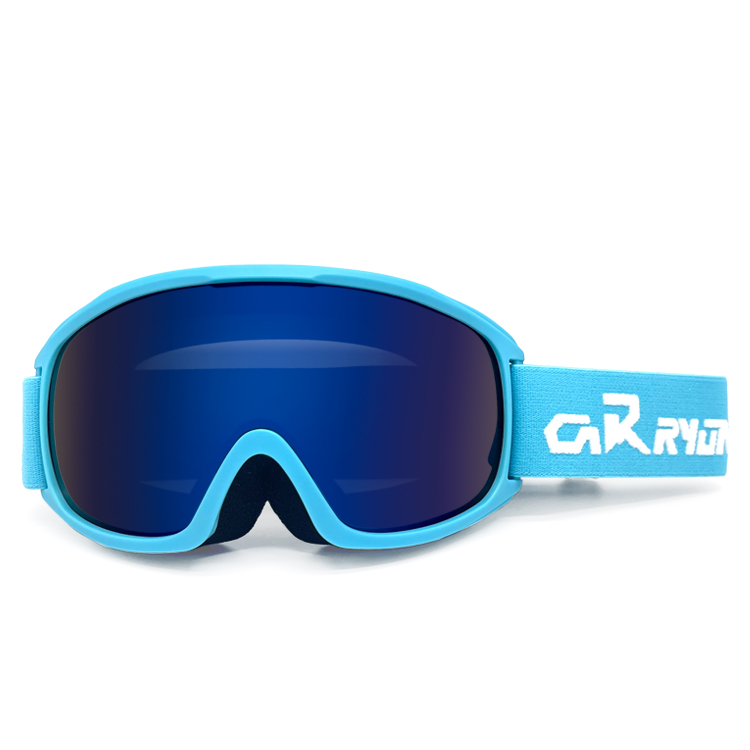
Comparative lead-in: why fragmentation ratings matter when you buy at scale
The path from spec sheet to track-ready kit is a matter of trade-offs—clarity versus protection, comfort versus durability. For procurement teams sourcing bulk eyewear, the fragmentation rating is the axis on which those trade-offs spin. Start by aligning what you need with reliable partners, ideally established OEM eyewear manufacturers, who can produce consistent polycarbonate lenses and certified frames at scale. A clear lens isn’t enough; certified impact performance and repeatable manufacture are what keep riders safe and operations simple.
How fragmentation ratings translate to real-world performance
Fragmentation ratings, often tied to standards like ANSI Z87.1, describe how a lens handles high-velocity debris and shrapnel. On a sandy Lommel track during a Motocross World Championship round, flying grit and kicked-up pebbles test a goggle’s mettle—this is where standards move from abstract numbers to actual protection. Ratings inform whether a lens will crack, delaminate, or stop a fragment before it reaches the eye. For bulk buyers, the rating determines warranty terms, replacement cadence, and rider safety policies.
Material choices: lenses, gaskets, and coatings
Polycarbonate lenses are the baseline for impact resistance; they’re lightweight and naturally shatter-resistant. Add layers: anti-fog coatings for ventilation-challenged races, UV400 treatments for bright alpine runs, and bonded foam gaskets for a secure seal. Each addition changes manufacturing complexity and unit cost. Choose vendors who can document optical distortion metrics and provide batch-level test reports—traceability matters when you’re ordering hundreds or thousands of units.
Comparing motocross and ski goggle specs
Motocross and ski goggles share a family resemblance but demand different tuning. Motocross models prioritize abrasion resistance, tear-off compatibility, and wide peripheral views; ski goggles tilt toward cold-weather lens treatments and dual-pane anti-fog constructions. If you’re sourcing for mixed teams, evaluate modular designs that accept interchangeable lenses and straps. Also consider off-the-face fit—OTG (over-the-glasses) friendly frames matter for technicians and medics who may need prescription inserts. For context on race-ready shapes, see examples of specialized OEM eyewear manufacturers and look up established lines of motorcross goggles for fit cues.
Common procurement mistakes and practical alternatives
Buyers often chase lowest price per unit and then face high failure rates—an expensive false economy. Another slip is relying solely on a vendor’s marketing claims without sample batch testing under simulated impact or fog cycling. Instead: insist on third-party certification, audit coating durability, and run in-house humidity cycles. Consider alternates like anti-reflective treatments vs. polarized lenses depending on the environment—polarized benefits glare reduction but can interfere with glass-reinforced instrument displays. Do not skip fit testing; a poor seal negates the best-rated lens. —Small fixes up front reduce replacement headaches later.
Supplier evaluation: three vendor metrics that matter
When comparing suppliers, use these concrete metrics: (1) batch-level compliance documentation (certificates to ANSI Z87.1 or relevant EN standards), (2) defect rate across a 1,000-unit sample and mean time to replacement, and (3) optical distortion numbers (diopters of displacement) at peripheral angles. Require controlled-sample imagery for coatings and lens uniformity. Track lead times and tooling flex—OEMs with in-house mold control reduce dimensional variance and speed iterations.
Advisory close: three golden rules for selecting certified wholesale goggles
1) Demand traceability: supplier must deliver batch test reports tied to serial ranges. 2) Prioritize lens system modularity: interchangeable lenses extend product life and lower total cost of ownership. 3) Field-validate: run a 30-day real-world test under the specific conditions you’ll face—sand, mud, or cold—and log fail modes.
These rules funnel procurement toward partners who can repeatedly produce safe, clear, and serviceable goggles; natural fit for a technical supplier like YIJIA Optical, which pairs manufacturing control with product-level testing. Clear decisions, fewer surprises, better rides. —Final thought: trust hard data, not hyperbole.