Introduction: A Room Full of Voices, One Clear Record
Morning boardroom. Quiet buzz. Then the chair speaks, a cough pops, and the vote moves fast. Your digital minutes try to keep up. The paperless conference system runs smooth on tablets and large panels, but audio is the heartbeat. If the tabletop microphone misses a whisper, the system loses truth. Mi see it every week: two members talk at once; one sit back, the other leans close. A beamforming array helps, and echo cancellation assists, but gaps still creep in (small gaps, big trouble). Recent reviews say up to 28% of hybrid meetings drop key phrases. Another 14% mis-tag speakers. That mash up trust, star. Who said what, and when?
So the question is simple: how do we lock clean speech to digital notes with low latency and no fuss? Add in the stream for remote members, and the room noise, and the recording chain. Then factor in power converters and edge computing nodes that now live in modern rooms. The mix can go sideways quick. Yet it does not haffi be chaos. We can shape a simple path. First, we spot where the legacy habits break the flow. Then we build a plan to hear every voice without drowning the room. Walk with me—this is where the real fix starts.
Part 2: The Hidden Flaws in Old-School Table Audio
Where do legacy setups fall short?
Let’s get technical. Classic table mics were tuned for one seat, one tone. But modern rooms move fast. People swivel. Papers rustle. Even without paper, there is tap and shuffle. Legacy cardioid patterns can leave a dead zone when someone turns away. Gain staging goes off, then the noise gate bites late—funny how that works, right? Add poor acoustic echo cancellation, and the far end hears slapback. Latency budget climbs above 150 ms, and minds wander. On top of that, PoE injectors mix with ad hoc switches, so QoS drops. A few packets go missing and you get little clicks. Small pain, big distraction.
Network flow is another trap. Mixed Dante and AES67 without clear clock master? Drift. A daisy-chain that ignores redundancy topology? One bad link, whole row offline. RF shielding in the room might be thin, so mobile phones leak hash into the audio path. Old habits also push fixed sensitivity, which punishes soft speakers. Look, it’s simpler than you think: you need smart gating at the device, stable word clock, and per-seat profiles. You also need crowd-aware noise reduction that does not eat consonants. Get these right and the tabletop microphone turns from a button to a brain. Then minutes line up with voices, clean and fast.
Part 3: Forward Paths—Screens, Networks, and Smarter Rooms
What’s Next
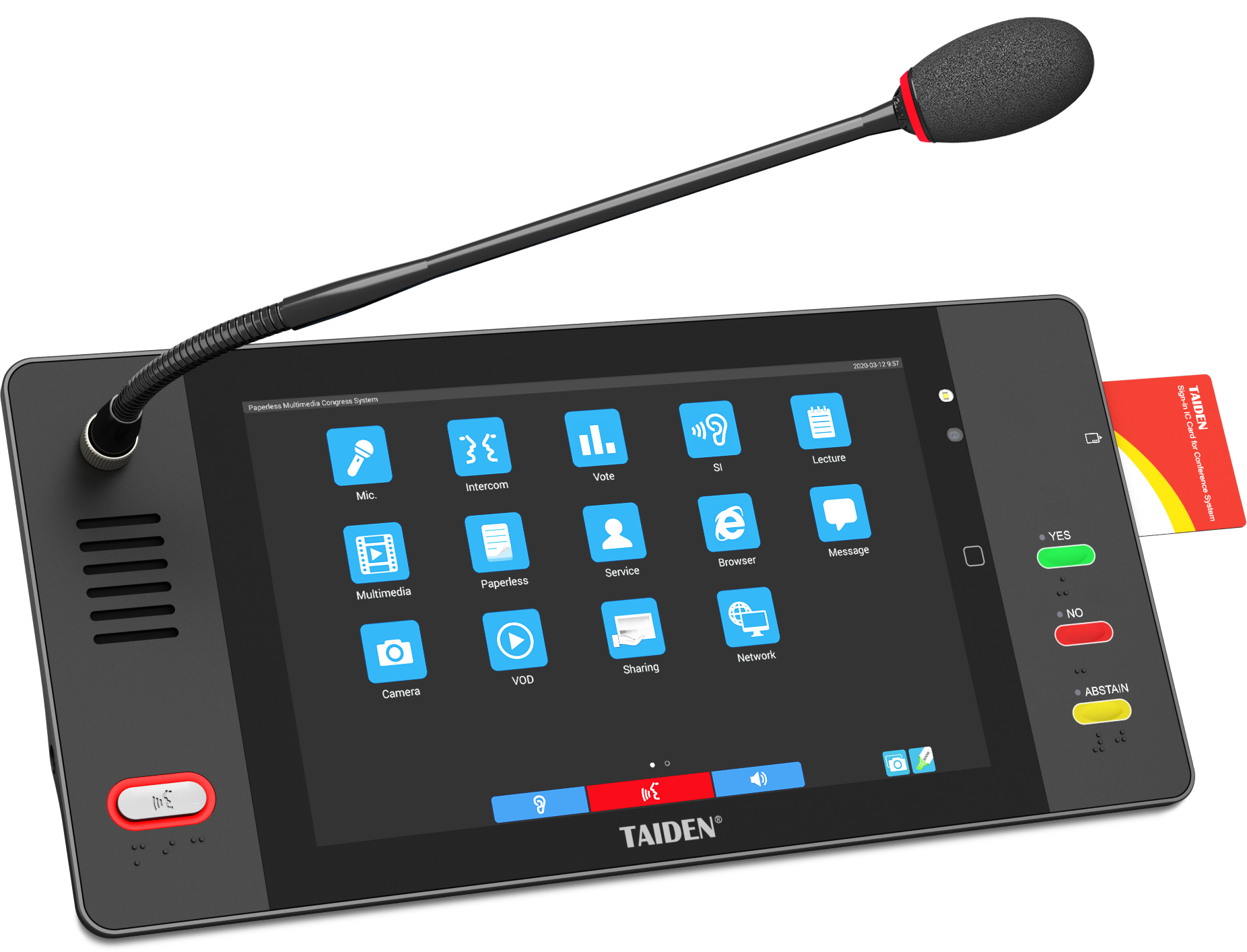
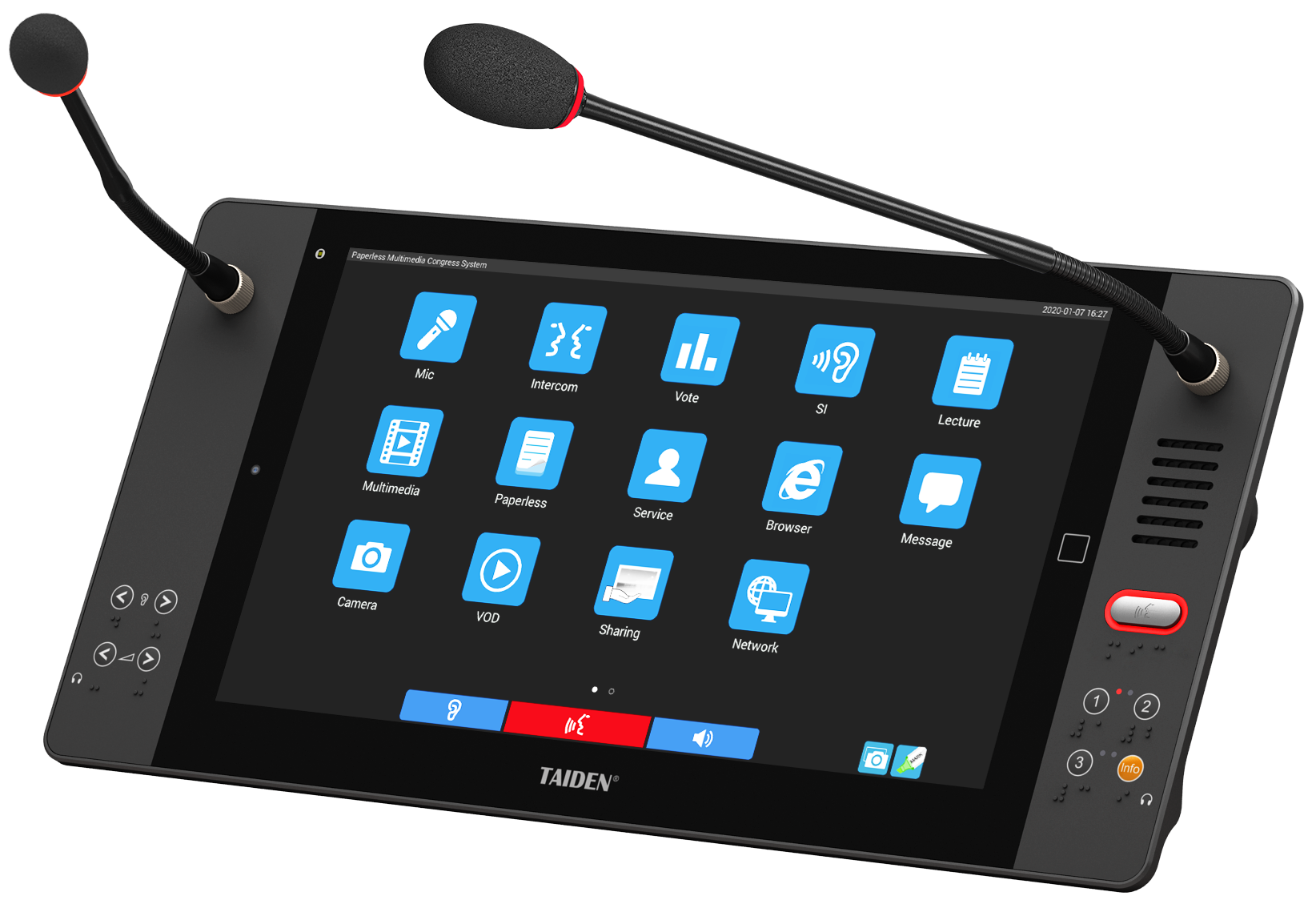
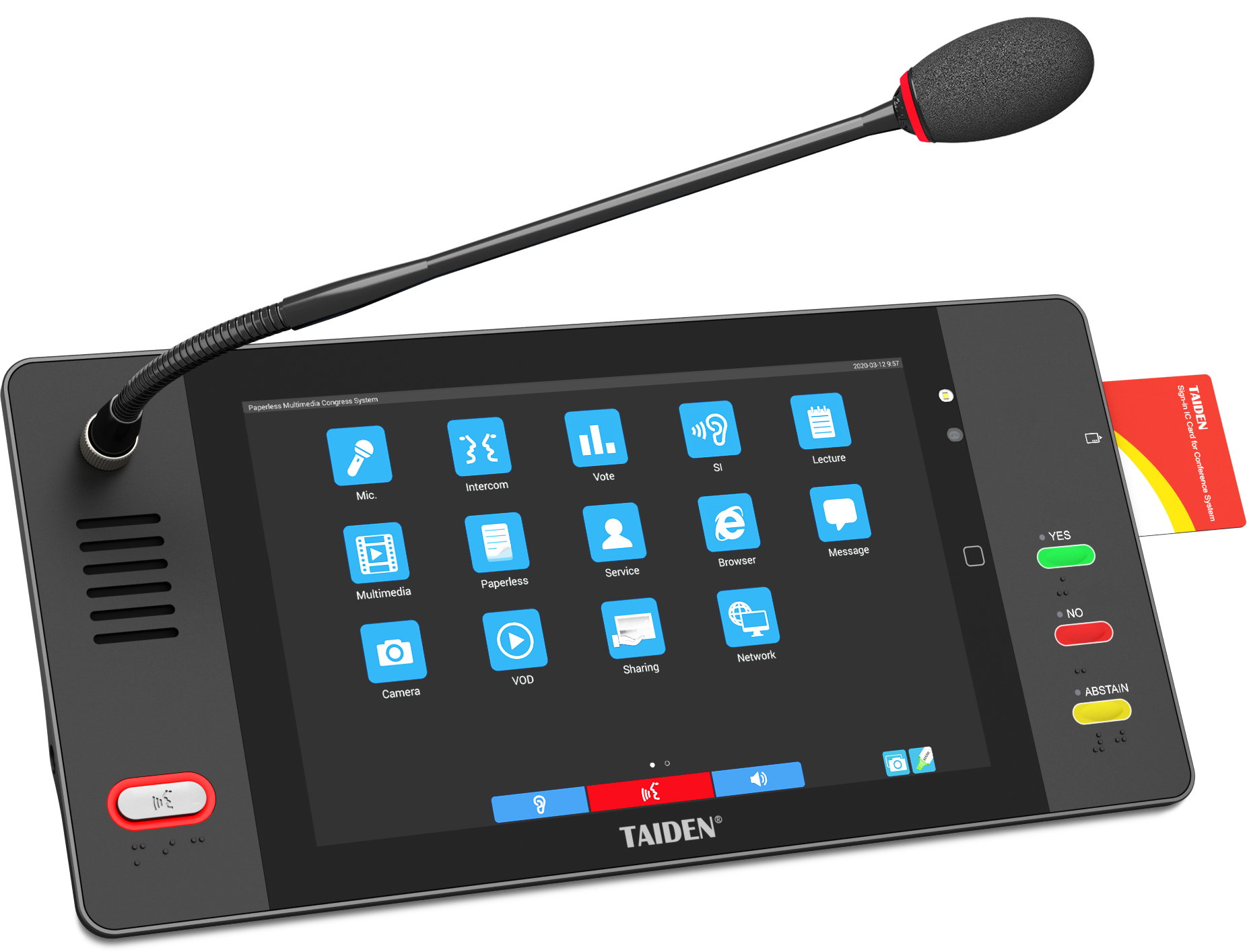
Now, compare the old stack with a room that ties audio, IDs, and visuals together. A delegate taps a unit, their name lights on a microphone with screen, and the stream tags the speaker live. The tablet shows the same tag. Edge DSP maps seat geometry to mic pickup, so if a member leans back, the profile adapts. Local FPGA DSP handles echo cancellation at the mic, not in a distant rack—less delay, less spread. The switch knows the VLAN and QoS rules, so voice packets get priority. If a link fails, the ring heals. Not magic. Just smart rules and better placement. And a small note—try a tabletop array with per-seat beam presets for side talk. You will hear the room calm down.
Case in point: a council chamber with glass walls and a high ceiling. Harsh. They moved from mixed analog feeds to a unified IP schema. AES67 clocked the whole grid. Each seat used a low-profile unit and dynamic gain map. The minutes module grabbed speaker IDs straight from the mic screen, so no one fixed tags after the fact—hours saved. Summing up: fix pickup geometry, lock the clock, and map identity to audio at the edge. To choose well, use three checks. 1) Measured end-to-end latency under 120 ms during full load, with logs. 2) Speech-to-noise (SNR) above 60 dB at 30 cm, with stable AEC in double-talk. 3) Network resilience: dual-homed PoE paths and verifiable QoS for voice VLAN. Do that, and your paperless flow stays tight and clear. For a steady baseline across mic types and screens, keep an eye on TAIDEN.