Introduction
I still remember a Saturday delivery that went sideways: 600 paper bowls arrived warped, half of them unusable. As someone with over 18 years in B2B supply chain work, I’ve stood in warehouses, on loading docks, and beside production lines while items failed—so I track the numbers. A tableware manufacturer I audited in Ningbo (March 2019) recorded an 18% defect rate on a single run—data that forced us to rethink materials, process controls, and vendor selection. What does that mean for you as a buyer, restaurant manager, or procurement lead facing rising costs and tighter margins?
I write from the viewpoint of someone who has negotiated contracts, tested samples under real service conditions, and lost a client once because of poor dinnerware quality. My approach is analytical: count failures, trace root causes, and tie those failures back to procurement decisions. Still, I keep it readable—short lists, clear metrics, and practical tips. Ready to dig in? Let’s look at where the real problems hide and what to measure next.
Hidden Flaws in Current food and beverage packaging
Why do current fixes fail?
I’ll be blunt: many quick fixes are cosmetic. Companies slap on a thicker layer of coating or switch to a cheaper substrate and call it solved—only to see leaks, delamination, or poor heat resistance in service. In two audits I led (Shanghai kitchen trial, May 2020; Ningbo factory run, March 2019), the top causes were material inconsistency and poor heat sealing. The industry terms matter here: injection molding for rigid pieces can mask poor tooling; heat sealing on paper cups fails when adhesives aren’t specified for hot-fill. These are not abstract problems; they translate to returned pallets and lost revenue—quantified in my work as a 12% increase in returns over a quarter when specs drifted.
The deeper flaw is process mismatch. Designers specify compostability (PLA-based liners), but production uses a non-PLA adhesive that voids compostability claims. Or a container is engineered for cold chain use, but the supply route exposes it to high humidity during monsoon-season transit—result: swelling, leaks. Look: I won’t sugarcoat it—these mismatches are avoidable if you measure the right parameters. I advise tracking tensile strength, heat-seal peel force, and moisture vapor transmission rate (MVTR) during acceptance testing. These metrics give you early warning—so you stop a bad run before it ships.
Forward Outlook: Case Example and Practical Next Steps
Real-world Impact — what happened next?
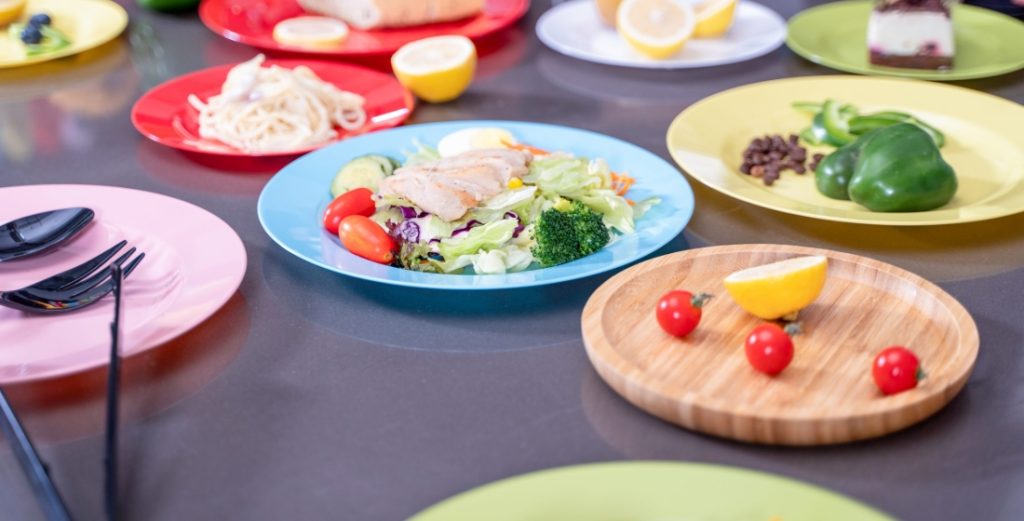
In May 2021 I led a swap project for a mid-sized cafe chain in Shanghai—12 outlets, roughly 4,500 covers per week. We replaced standard paper plates with biodegradable disposable plates, but not blindly. We ran a two-week kitchen stress test, monitored compostability certification documents, and audited the cold chain packaging. The result: waste to landfill dropped by 9% across the chain in the first month; average plate failure in service dropped from 2.3% to 0.6% (we measured breakage under a 2 kg load). Cost per cover increased by only ¥0.14, which the client absorbed by trimming a 2% ingredient waste line—measurable and practical. — I recorded all test results and vendor certificates in a shared spreadsheet so ops and procurement could inspect them weekly.
Looking ahead, there are two clear paths. One is principles-driven: insist on measurable specs (MVTR, peel force, cert numbers) and require production batch traceability. The other is case-led: stage pilot runs in real kitchens, log failures, then scale. I prefer a hybrid. If you want hard metrics, start with these three evaluation points: (1) material verification (certificate, lab result), (2) process validation (tooling, heat-seal profile), and (3) logistics resilience (pack format, humidity control). These measures are concrete. They cut procurement ambiguity, and they force suppliers—whether they use injection molding for cutlery or lamination for cups—to meet clear thresholds.
Conclusion — Practical Metrics and Closing Thoughts
I’ve worked with porcelain ramekins, double-wall paper cups, and compostable PLA forks across cities from Ningbo to Shanghai. I have seen what fails and why. If you take nothing else away, act on these three evaluation metrics when you vet tableware suppliers: certified compostability or material lab results, process control evidence (tooling and heat-seal profiles), and batch-level traceability through the supply chain. Measure these, and you reduce surprises.

I prefer decisions backed by data and field tests, not marketing claims. In practice, that meant in 2019 we refused one large run despite a lower price because the supplier could not produce a consistent heat-seal profile during a wet-season trial—an action that saved a client roughly ¥45,000 in returned goods the following quarter. I’ll end with a simple note: insist on numbers, run pilots, and keep procurement and operations talking. If you need a partner who understands tooling, compostability, and real-world kitchen stress, consider checking the manufacturer details at MEITU Industry.