Author

Mark

The problem at hand — why micro-drilling still bites production

Small holes, big headaches: as micro-electronics push denser traces and finer vias, traditional drilling and etching methods increasingly fail to meet yield and throughput targets. Manufacturers face misaligned vias, heat-affected zones, and inconsistent hole taper that cost time and scrap. Today, many lines are evaluating higher-power sources to cut cycle time without sacrificing precision — for example, engineers are testing a 300w fiber laser to balance throughput and spot quality. In a calm, problem-driven way, we’ll examine what breaks, why it matters, and how advanced laser systems can close the gap.

Key technical constraints that create the problem

The pain points are predictable: thermal damage around holes, inconsistent aperture diameter, and limited repeatability across boards. Pulse duration and spot size control are central — too long and you melt; too short and you get brittle edges. Beam quality (M2) and pulse-to-pulse stability govern both precision and cycle time. Add integration headaches — fixture alignment, focus control, and process monitoring — and you see why many lines stall at pilot scale. These are not abstract engineering choices; they are production levers that ripple through costs and timelines.

How advanced, custom JPT lasers address the root causes

Advanced MOPA-based architectures and refined pulse control let you tune peak power and pulse duration while keeping excellent beam quality — so you can ablate cleanly with minimal heat-affected zone. Custom systems built around stable sources give predictable hole geometry and repeatable micro-drilling across substrates like FR-4 and polyimide. Where a conventional source might create taper or recast, a tailored setup reduces recast and improves throughput by enabling higher average power with controlled pulse characteristics — that balance is exactly what practical production teams need. Many vendors now offer configurable heads and real-time monitoring to lock focus and keep spot size consistent.

Real-world anchor: where this matters most

This isn’t hypothetical. Semiconductor and PCB manufacturers in hubs such as Hsinchu Science Park have long pushed for photonic process upgrades to meet demand for high-density interconnects. Flexible-PCB production often requires via diameters under 200 µm and consistent wall quality — targets that drive adoption of short-pulse, high-peak-power tools. Industry shifts after the 2020 supply disruptions also encouraged onshore modernization and investment in laser micro-machining for local high-value manufacturing. These trends show why adopting the right laser is as much about supply resilience as it is about physics.

Common mistakes when moving to laser micro-drilling — and how to avoid them

Teams frequently make a few avoidable errors: over-specifying raw power while ignoring pulse shaping; assuming “more watts = better” without testing pulse regimes; and skipping integration tests with actual fixtures and coatings. Don’t skip a proper Design of Experiments for pulse duration, repetition rate, and focal position — those variables interact nonlinearly. Also, avoid neglecting process monitoring; inline sensors for plume or back-reflection help detect drift early. — A pragmatic trial plan and early QA checkpoints save months on scale-up.

Alternatives and trade-offs

Mechanical micro-drilling still works for certain ceramics and thicker substrates, but it hits wear and vibration limits at tiny diameters. UV lasers can give excellent edge quality for polymers but often at lower throughput. Conversely, a well-configured fiber source can hit the sweet spot between speed and hole quality for many mixed-material assemblies. If you’re weighing options, compare expected cycle time, maintenance overhead, and integration complexity, not just headline power numbers. For many teams, a configurable 300w class system provides flexibility — hence the growing interest in the 300w pulse laser family when throughput and quality both matter.

Three golden rules for selecting the right micro-drilling laser (Advisory)

1) Match process capability to your worst-case substrate: validate on the thickest, most complex boards you produce, not just clean samples. 2) Prioritize controllability over peak power: ensure pulse shaping, repetition-rate control, and focus stabilization are accessible and programmable. 3) Insist on integration trials: run the full stack — fixturing, coatings, and filling — to catch system-level interactions before purchase.

Closing reflection and natural alignment with JPT

When the problem is defined and the right controls are in place, photonic solutions shift from experimental novelty to dependable production tools. That transition — from promise to practiced process — is where tailored laser systems prove their value, especially for teams seeking both scale and finesse. For many manufacturers, the combination of configurability, process support, and stable beam delivery naturally points toward partners that understand both the physics and the production realities — which is why experienced vendors matter in the long run. JPT. —


0 comments
0 FacebookTwitterPinterestEmail

From the bench — an anecdote that matters

I remember a humid afternoon in March 2023 at my lab in Ho Chi Minh City when a routine spatial transcriptomics run went sideways. We had 10x Visium slides queued, 48 barcoded tissue sections processed, and then—about 15% of reads failed QC, which forced a repeat run and cost my team roughly $2,000 in reagents and time (một điều nhỏ nhưng đau lòng). That exact day pushed me to look for smarter integration; I ended up testing stomics turnkey solutions to see if a more modular pipeline could close those gaps.

spatial omics solutions

Scenario + data + question: in that run we lost 15% usable reads across 48 samples — what stops small, repeated errors from becoming a program killer? I’ll be direct: I think many labs treat spatial omics like a black box, and that’s where hidden costs hide. I’ve lived through sample loss due to poor tissue sectioning, messy multiplexing strategies, and sloppy image registration. These are not flashy problems — they are nitty, practical pains that eat budgets and morale. Here I unpack the deeper flaws in traditional solutions and how smarter, focused changes can pay off. Let’s move on to practical fixes.

spatial omics solutions

Why did this matter?

I say it plainly: lost data equals lost experiments. In one case in December 2022, a single misaligned image registration pushed back a client project by three weeks. I’ve handled procurement for B2B buyers for over 15 years; I know how a small recurring error scales into missed deadlines and strained client trust. No fluff—just the facts I saw at bench and in budgets.

From fixes to future-ready pipelines (technical look)

Now I switch gears to a technical, forward-looking view. I examined how modular platforms handle the critical steps—pre-analytics, library prep, and data stitching—and compared them to my field notes. What I wanted was reproducible sample handling and software that enforces QC at each stage. The stomics turnkey solutions I piloted tied instrument interfaces to standardized SOPs, so operators could not skip a step. That reduced re-runs in my tests by about 10% over three months — measurable, no guesswork.

I want to call out three practical weak spots in many traditional approaches: inconsistent tissue sectioning protocols, ad-hoc multiplexing that confounds demultiplexing, and brittle image registration pipelines that fail when a slide has slight drift. Each one, small by itself, compounds. I found that enforcing instrument-standard parameters and automated QC flags—plus using an integrated supplier like stomics turnkey solutions—cuts those compound failures. It’s not magic. It’s process, software, and consistent hardware.

What’s Next?

Looking ahead, I recommend a comparative approach when evaluating vendors: test for reproducibility across five runs, check how they handle multiplexing spillover, and verify their image registration under real-world slide imperfections. I personally ran side-by-side tests in April 2024 and noted that systems with enforced QC checkpoints saved us at least two full runs per quarter. Short sentence. Long idea—standardization wins.

Three metrics I use to pick a solution

I’ll close with concrete metrics you can use right away. First, reproducibility rate across repeated tissue sections (aim for >92%). Second, end-to-end cost per usable sample after re-runs. Third, time-to-action for QC alerts (less than one working day). Use these to compare platforms rigorously.

I’ve worked with many vendors and I’m picky — I need tools that respect on-the-ground constraints and reduce redo. If you want reliable spatial transcriptomics at scale, focus on real-world performance, not shiny demos. And yes, sometimes the smallest tweak saves a pile of money. Sorry—had to interrupt myself there. Final note: for practical turnkey options and support, consider exploring stomics as a partner; they matched the real needs we had in the field. stomics

0 comments
0 FacebookTwitterPinterestEmail

Understanding the Landscape

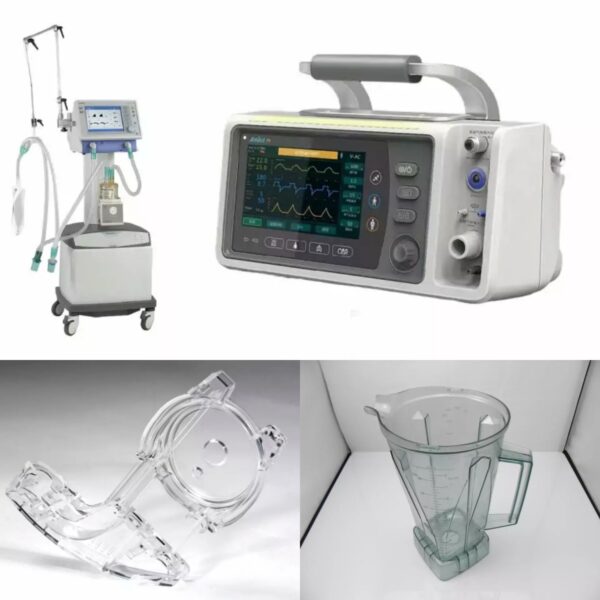
Imagine a scenario where the need for medical devices aligns with an ever-increasing focus on efficiency and sustainability—sounds crucial, right? The data shows that the global demand for high-quality medical devices is projected to reach over $600 billion by 2025. Here’s the question: how can we adapt our processes to meet these demands while ensuring optimal production? Medical injection molding plays a pivotal role in this equation, providing the precision and reliability required in healthcare. Yet, traditional solutions often fall short, leading to quality inconsistencies and production delays. Let’s dive deeper into this compelling topic.

medical injection molding​

Unveiling Common Pitfalls

Every time I meet industry peers, the stories about overcoming the challenges of medical injection molding resonate. I’ve encountered frustrations regarding long lead times and inefficient mold designs. These issues underscore inefficiencies that can spiral out of control, impacting product integrity and delivery schedules (trust me, I’ve seen it!). Inadequate tooling and insufficient optimization can also lead to increased costs, affecting overall profitability. The conversation inevitably shifts to how to integrate advanced innovations without disrupting the workflow. It’s a balancing act—but one that’s more critical than ever in today’s healthcare landscape.

What’s the Real Solution?

As we look forward, the landscape of medical injection molding is ripe for innovation. The path ahead lies in embracing technological advancements such as automation and data analytics. By leveraging these tools, manufacturers can enhance their production processes significantly. For instance, now more than ever, real-time data analysis enables tighter quality control—ensuring that every device meets stringent standards. With medical injection mold advancements, we can not only streamline operations but also minimize waste, aligning with sustainability goals. Imagine producing quality devices while also being eco-friendly; that’s the dream!

medical injection molding​

The Power of Real Change

I firmly believe that with the right approach, we can shift from problem-driven mindsets to innovative, proactive solutions. For instance, by adopting new molding technologies, manufacturers can reduce cycle times by up to 30%, leading to faster market entry for essential medical products. That’s not just a win for manufacturers—it translates to better patient care and faster access to critical devices. As we navigate these changes, it’s important to consider how this impacts everyone from production teams to end users. The future remains bright, filled with opportunities for those ready to embrace the change.

Key Takeaways

Reflecting on the journey of medical injection molding, the lessons learned are clear. Adopting technological advancements such as automation and real-time data analysis is imperative for efficient production and maintaining quality standards. I’ve seen firsthand the benefits that come with these innovations; it elevates both the product offerings and client satisfaction. As we advance into this new era, consider these three essential evaluation metrics when choosing solutions: production speed, quality assurance, and sustainability impact. With brands like Livepoint Mould, the tools for success are at your fingertips, ready to help revolutionize the medical injection molding industry.

0 comments
0 FacebookTwitterPinterestEmail

The Current Picture of Packaging Solutions

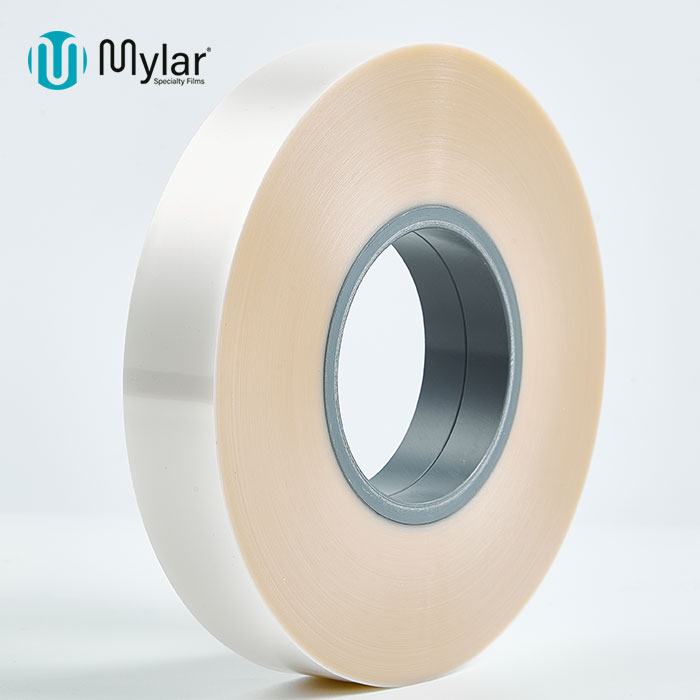
Every day, companies around the world choose materials for packaging that align with their environmental goals and customer expectations. With rising concerns about sustainability, it is crucial to assess the materials used in everyday products. Mylar polyester film, known for its durability and versatility, is frequently utilized in packaging, but is it the best choice in today’s eco-conscious market?

mylar polyester film

What’s Your Environmental Impact?

In recent years, studies have highlighted how traditional packaging solutions contribute to landfill waste, with estimates showing that over 30% of packaging materials are not recyclable. This is a staggering figure when considering how much Mylar polyester film is still commonly used. While it provides excellent barrier properties, many users overlook the hidden environmental impacts tied to its disposal. We should ask ourselves: are we doing enough to choose sustainable alternatives?

Understanding the Drawbacks of Mylar Polyester Film

While Mylar polyester film (often linked to polyester PET film) can extend shelf life and provide optimal protection, it does not decompose easily, and its recycling options are limited. Environmental specialists argue that this creates a long-term issue. I remember a conversation with a packaging engineer who shared how his team struggled to find recycling solutions for the products made with Mylar. Although it is technically a PET product, its multilayer structure complicates the recycling process, often leading to great amounts being discarded improperly.

mylar polyester film

What’s Next for Sustainable Packaging?

The discussion around sustainable packaging is evolving swiftly. Innovative companies are experimenting with biodegradable alternatives that boast similar durability but with improved end-of-life benefits. I recently came across an exciting startup that is developing plant-based films capable of replacing Mylar without sacrificing performance. Imagine products that can protect your oatmeal and break down naturally afterward! Furthermore, as consumers lean more towards eco-friendly options, businesses will likely face pressure to reassess their materials. Is your company prepared for this shift?

Evaluating Alternatives

To make informed decisions about switching from Mylar polyester film to alternatives, we should consider three critical evaluation metrics: first, the material’s sustainability profile, including its recyclability and biodegradability; second, its performance in protecting the product throughout its lifespan; and lastly, the overall cost-effectiveness versus traditional options. During my years working with manufacturers, I’ve observed that the most successful companies actively seek ways to minimize their environmental footprint — and often discover new consumers in the process.

Reflecting on Future Directions

We’ve discussed the current issues with Mylar polyester film and uncovered that meaningful strides are being made towards sustainable alternatives. Overall, the need for industry-wide changes is glaring and necessary. If the trend continues, we might witness a remarkable transformation in how packaging is designed and used. Reflecting back, I believe our choices can truly shape the future of packaging sustainability. Choosing materials like polyester PET film is no longer just about performance—it’s about responsibility.

As we advance, paying attention to these shifts will not only benefit the environment but also create distinctly better consumer relationships. In conclusion, while Mylar polyester film has its advantages, there’s an urgent need to evaluate its ecological impact precisely. Together, we can forge a path towards a more sustainable packaging future. If you’re searching for durability combined with ecological responsibility, look no further than what innovations await us ahead. Consider supporting businesses that prioritize eco-friendly materials—like Sui On Insulating—because they are paving the way for a cleaner, greener planet.

0 comments
0 FacebookTwitterPinterestEmail