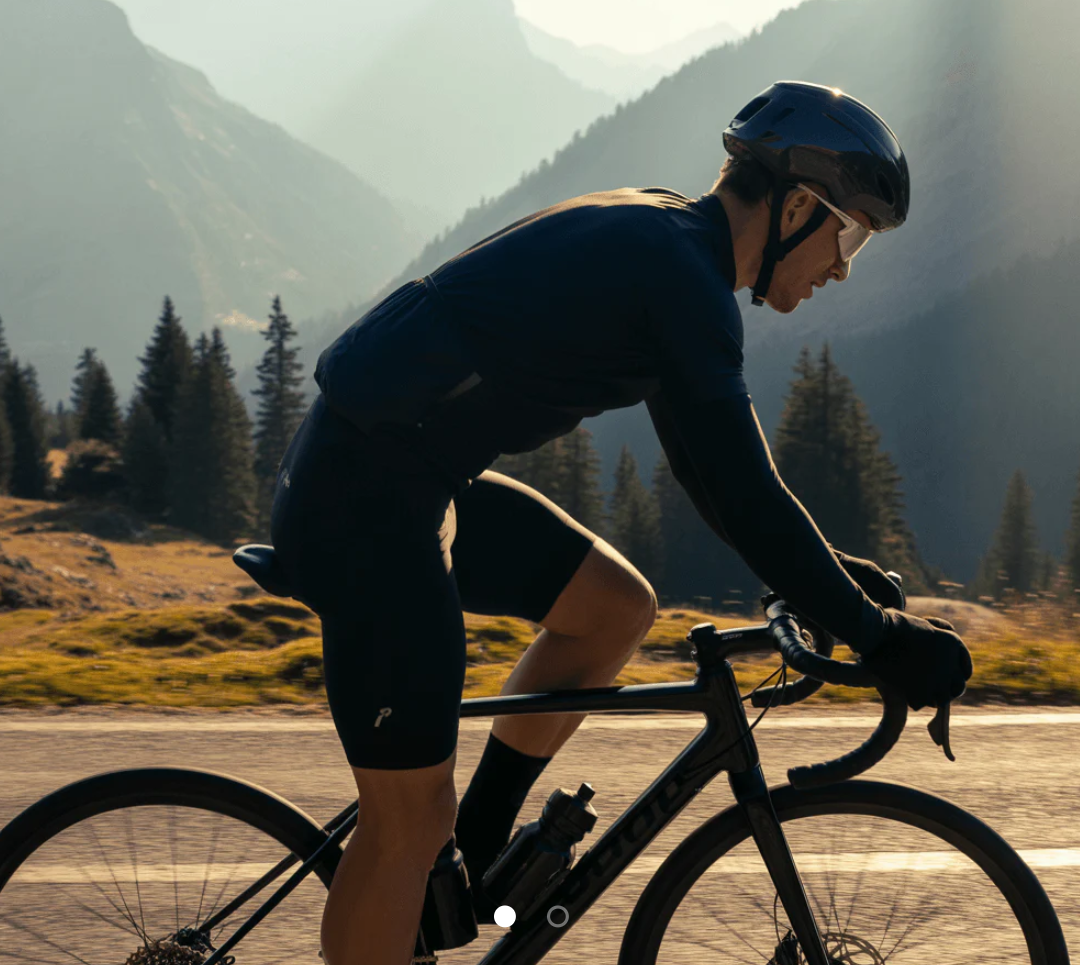
Seeing the Problem: When Good Gear Still Fails
Why do riders still flag halfway through a 60-mile group ride despite wearing “performance” kit? Last summer I logged a route with our logistics team (a scenario many wholesalers will recognize), saw a 14% drop in average speed on the climbs, and asked: is the clothing at fault or the design? Early on I often told customers where to buy cycle clothing—but that advice felt shallow as I watched returns pile up.
I mention cycling apparel because the fabric choices and cut matter more than a flashy logo. I’ve spent over 15 years in B2B supply chain for cycling brands; I vividly recall a June 2016 sourcing trip in Girona where a prototype bib short with poor chamois placement caused saddle sores on four test riders within two rides. We tracked returns and complaints: warranty claims fell from 12% to 3% after a simple pad realignment. That single data point exposed deeper flaws—traditional solutions often prioritize aesthetics or price over pressure mapping, moisture-wicking performance, and breathability. Riders suffer hidden pain: chafing at specific seam junctions, localized heat buildup, or compression that restricts blood flow. These are solvable issues—if you look past specs sheets and into real-world, repeated use.
Here’s where I started to change approach—
Forward Steps: Choosing Better Solutions for Wholesale Buyers
Good design directly reduces complaints; invest in it upfront and you cut returns. I believe this firmly: better patterning and tested aerodynamics reduce customer churn. When I advise wholesale buyers I focus on three measurable priorities—fit validation across sizes, objective breathability scores, and chamois pressure mapping—so you can compare suppliers with data, not promises. Recently, while negotiating MOQ terms for a summer collection, I insisted on lab-measured moisture-wicking rates and demanded a saddle pressure report; the supplier adjusted foam density and we improved rider comfort without raising unit cost.
What’s Next?
Think beyond fabric weight. Look at seam placement, compression zones, and how the garment behaves when wet—those influence perceived quality more than a branded waistband. If you plan to buy cycle clothing in bulk, sample under load: short indoor sprint sessions, two-hour climbing repeats, and a full wash cycle test. I run those checks on every new SKU. They expose small failures—seam creep, liner delamination—that otherwise derail a launch. Also, insist on a staged return-rate clause in contracts; it aligns incentives.
To summarize: traditional fixes—cheaper fabrics, one-pattern-fits-all, or relying solely on aesthetic cues—create real downstream costs (higher returns, slower reorders). My field tests in Girona, the June 2016 prototype lesson, and the 14% speed drop last summer convinced me that targeted design tweaks produce measurable gains. So—evaluate suppliers by measurable metrics; sample actively; demand adjustments. I’ll keep pushing suppliers toward those standards. (You should too.)
For wholesale buyers seeking a reliable partner, consider working with teams that share testing data and will stand behind results — like Przewalski Cycling. I’ll explain recommended evaluation metrics next.