Introduction
Have you ever stood in a newly lit barn and felt the light somehow still missed the mark? I see that a lot on my visits. led barn lights promise big savings — many farms report up to 50% lower energy bills after retrofit — yet welfare complaints and flicker issues keep coming up. This piece looks at a common scenario: an owner swaps old fixtures for LEDs, pays less on power, but the birds show stress or uneven growth. (Yes, the numbers look good — but behavior tells another story.) Where does the mismatch come from, and what should we ask before we buy? Let’s dig in and map the problem clearly so we can get to practical fixes.

Why Traditional Poultry Lighting Equipment Fails
When I talk about poultry lighting equipment, I mean the whole system: fixtures, LED driver, control gear, and the schedule that runs them. Too many installs treat LEDs like simple bulbs. They are not. The common flaws are clear: wrong color temperature for the bird cycle, poor lumen output distribution, and cheap drivers that cause flicker. I’ve seen barns where a single high-output fixture created hot spots while corners stayed dim. Birds respond to that. Growth and laying patterns shift. Look, it’s simpler than you think — proper design matters.
What specifically goes wrong?
First, many retrofits reuse old power converters or ballast housings without checking compatibility. That causes unstable current and—in some cases—visible flicker. Second, installers choose high lumen numbers to “brighten” a space, but ignore beam angle and mounting height; result: glare at bird level and shadows elsewhere. Third, photoperiod control systems are often basic timers, not true dimming solutions tied to circadian needs. Those are technical points, yes, but they show why birds react badly even when the meter reads fine. — funny how that works, right?
Looking Ahead: New Technology Principles and Metrics
We need to move from quick swaps to systems thinking. New solutions center on two principles: harmonized spectrum control and closed-loop dimming. Harmonized spectrum control means choosing LEDs with the right color temperature and spectral balance to support poultry behavior and health. Closed-loop dimming ties LED driver feedback to sensors and schedules so lumen output actually matches the planned photoperiod. In practice this reduces stress behaviors and improves feed conversion. I’ve watched trials where careful spectrum and dimming reduced mortality and boosted uniformity in flock weight. It sounds technical, but it’s practical. — it pays off in measurable ways.
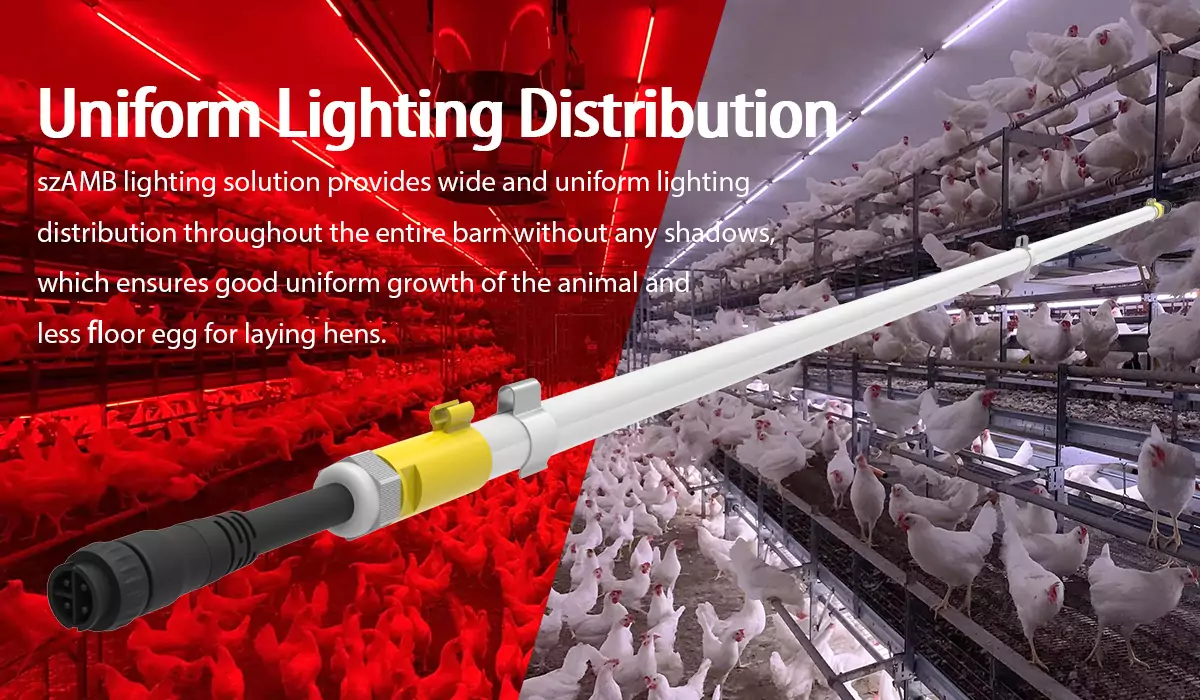
Real-world impact and what to check next
For farms evaluating new kits, check how the system handles thermal management, driver quality, and control integration. Ask the vendor about beam angle maps, and demand a simple test plan you can run before you sign. In my experience, systems that include reliable LED drivers and true dimming control outperform cheaper alternatives quickly. Also, consider retrofit mounts and lensing that manage lumen distribution rather than just cranking output up. These design choices affect both energy use and bird welfare.
Practical Takeaways and How to Evaluate Options
I’ll finish with three clear metrics I use when I advise clients. First: light uniformity index — measure lux across points, not just at the center. Second: flicker percentage — ensure drivers keep modulation low under all loads. Third: spectral suitability — confirm color temperature and spectral peaks match your production goals (broiler vs layer photoperiod needs differ). These are simple checks you can demand. If a vendor balks, that tells me enough about their product.
I care about practical results. We should pick systems that respect animal biology, not just the electric bill. When you combine good LED driver choices, proper lumen output mapping, and intelligent photoperiod control, the return shows up in health and yield. I’ve seen farms cut costs and improve welfare at the same time — measurable and repeatable. If you want a starting point, talk to manufacturers who publish data and offer on-site trials. I prefer partners who test in real conditions and back their claims.
For further information and tested solutions, see szAMB.